
Hey there, adventurer. Ready to level up your outdoor game?
The UK wilderness is stunning. It's also unpredictable. Rain rolls in fast. Temperatures drop without warning. Mobile signals vanish.
That's the reality of any camping adventure UK enthusiasts face.
These 10 survival skills will keep you safe, confident, and ready for anything. Master them before your next trip.
Let's get into it.
1. Fire Starting
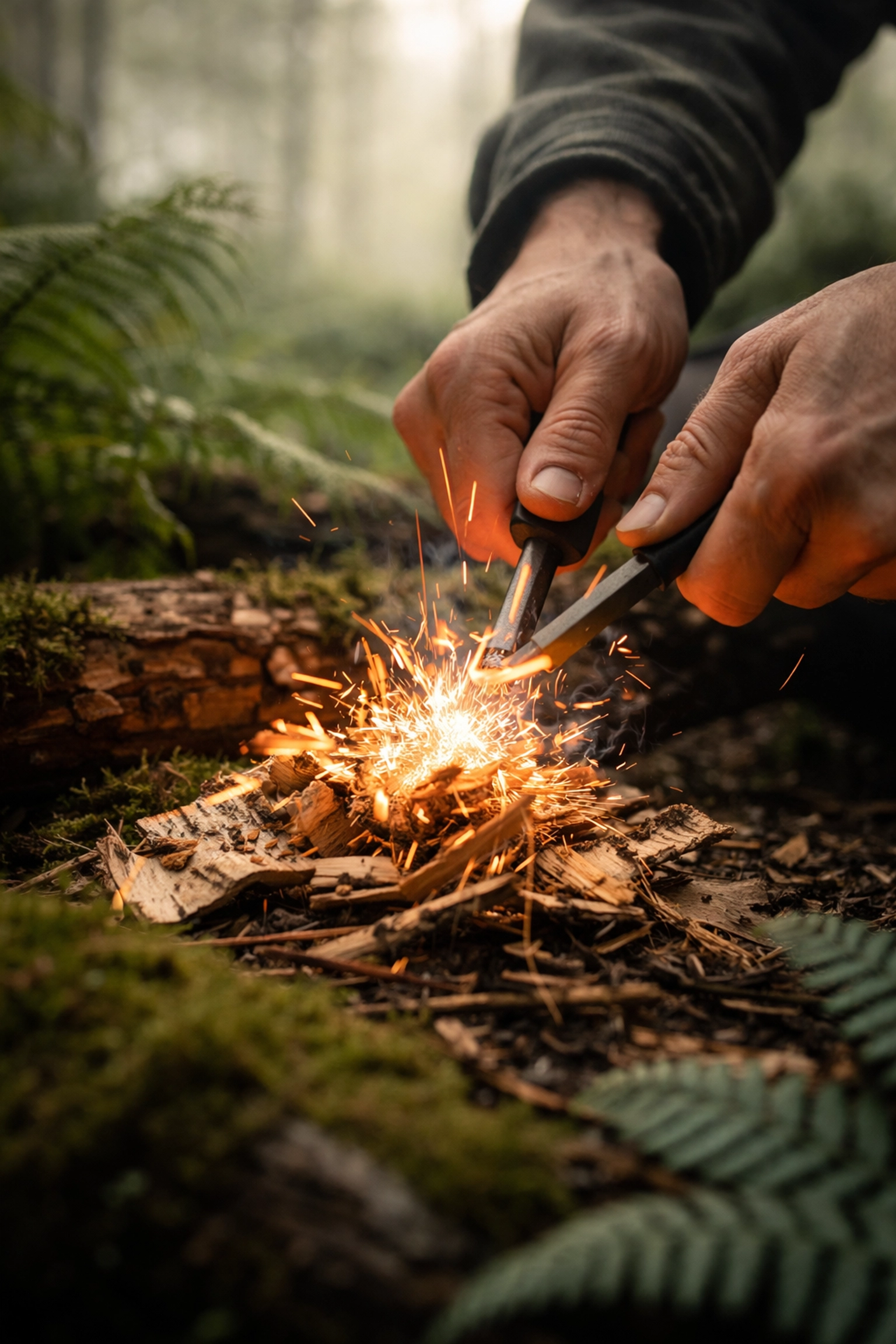
Fire changes everything. It keeps you warm. It cooks your food. It purifies your water. It signals for help.
Learn multiple methods. Don't rely on just one.
Your toolkit:
- Flint and steel : works in damp conditions
- Ferro rod : generates reliable sparks
- Friction fire techniques : bow drill for emergencies
Practice different fire lays too. The teepee works for quick flames. The log cabin burns longer. The Dakota fire hole hides your fire from wind.
UK weather is wet. Carry dry tinder in a waterproof container. Birch bark and cotton balls with petroleum jelly work brilliantly.
2. Shelter Building
Hypothermia kills. Shelter prevents it.
The UK's unpredictable weather demands you know how to build protection fast. Your tent might fail. You might get separated from your gear.
Know these shelter types:
- Lean-to : quick to build, uses minimal materials
- A-frame : excellent rain and wind protection
- Tarp and paracord : lightweight, portable, versatile
- Debris hut : uses natural materials when you have nothing else
Location matters. Find ground that's dry and slightly elevated. Avoid valleys where cold air settles. Stay away from dead trees that could fall.
Build your shelter before you need it. Don't wait until you're cold and exhausted.
3. Water Finding and Purification
You can survive three days without water. But you'll be in trouble long before that.
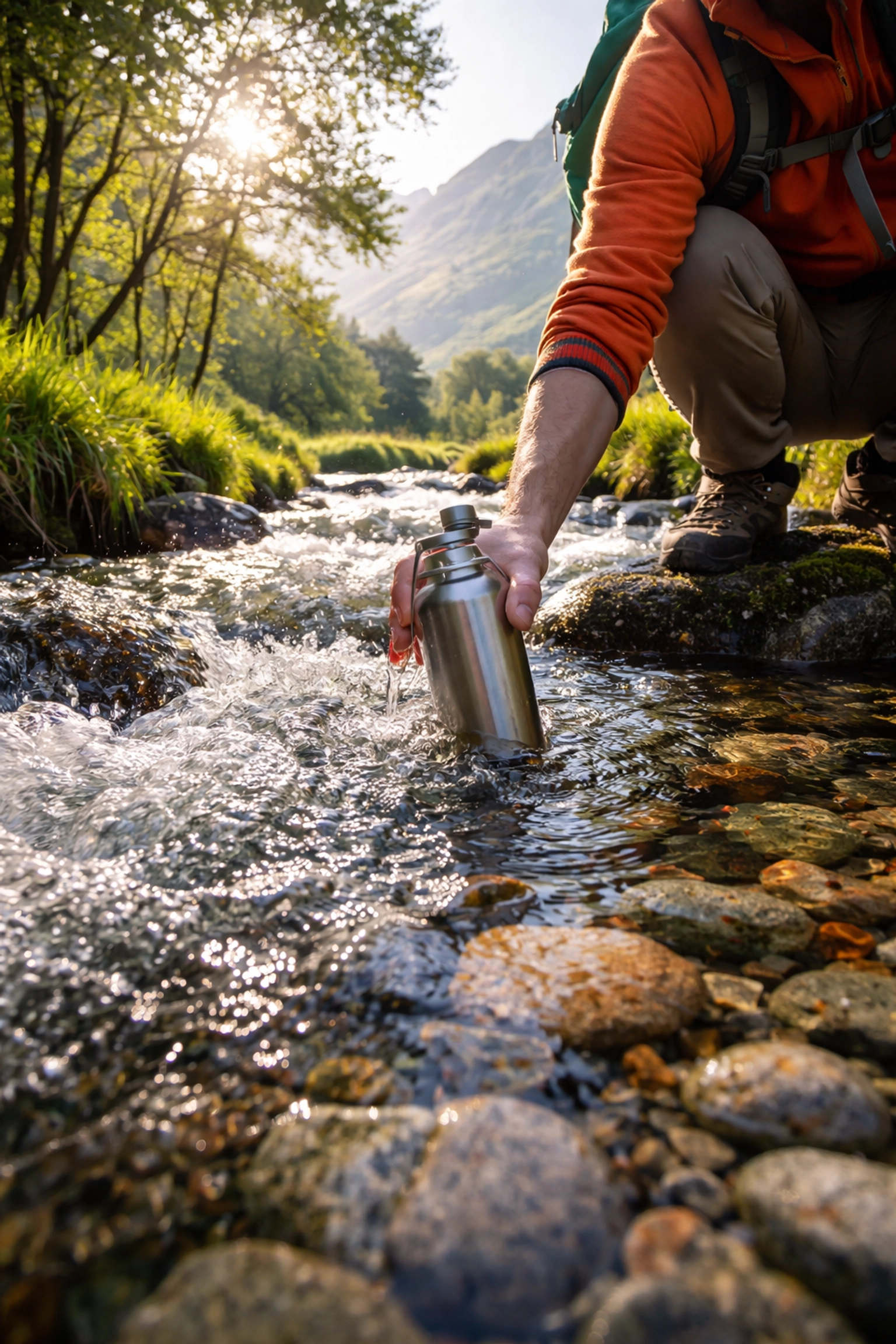
Finding water in the UK isn't usually difficult. Streams, rivers, and lakes are common. Morning dew collects on plants.
The rules:
- Moving water is safer than stagnant water
- Clear doesn't mean clean
- Always purify before drinking
Boil water for at least one minute. Water purification tablets work when fire isn't an option. Carry both methods on every trip.
Look for animal tracks leading downhill. They often point to water sources.
4. Navigation Without Technology
Your phone battery dies. GPS signal disappears. Now what?
Wild camping guided UK trips teach navigation for good reason. Getting lost in remote areas is dangerous.
Master these skills:
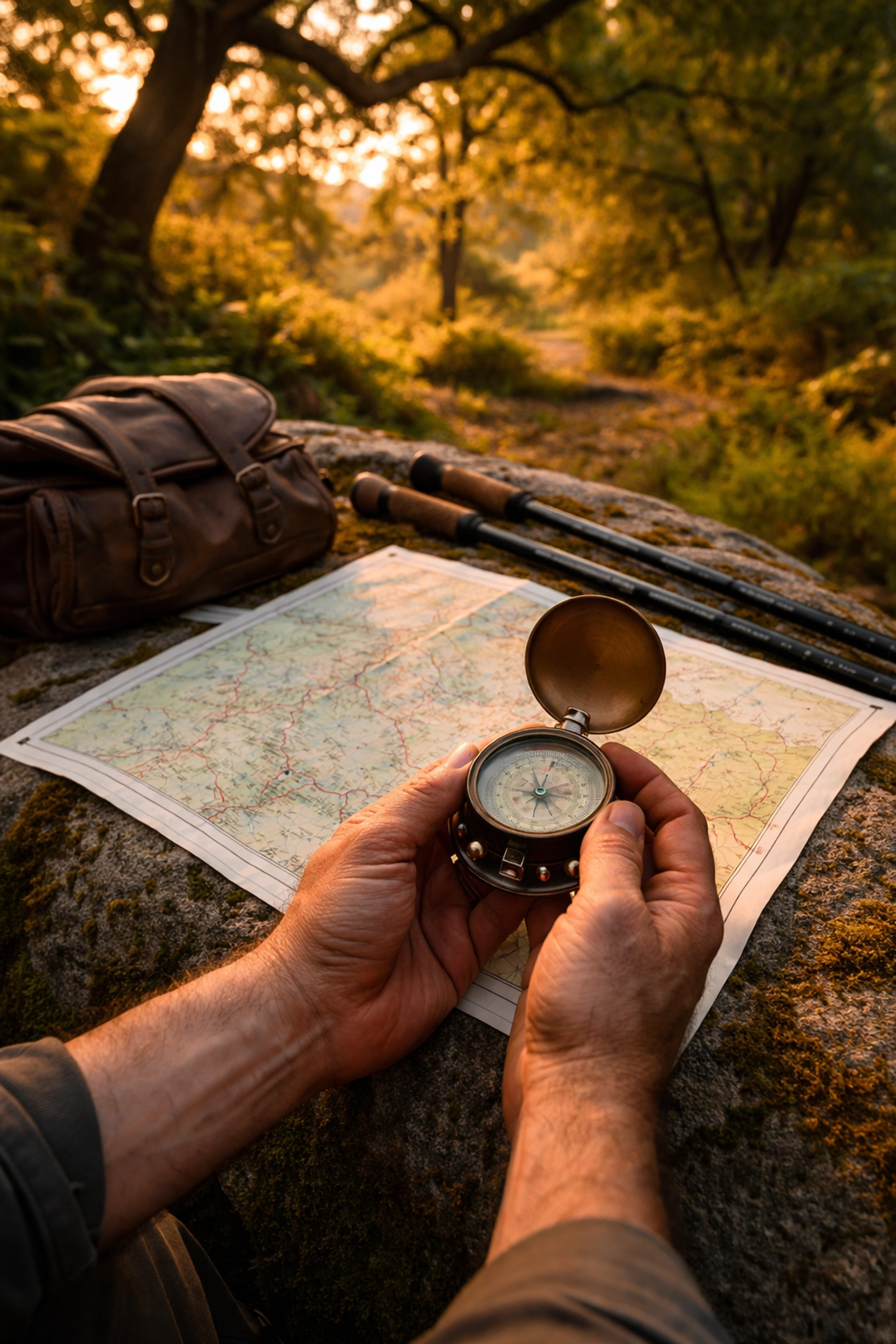
- Read topographic maps : understand contour lines, symbols, and scale
- Use a compass : know how to take and follow a bearing
- Natural navigation : use the sun, stars, and landscape features
The sun rises in the east, sets in the west. Moss grows thicker on the north side of trees. The North Star points north.
Practice before you need these skills. Navigate familiar trails without GPS first. Build confidence gradually.
5. Essential Knot Tying
Three knots handle most outdoor situations. Learn them properly.
The bowline creates a fixed loop that won't slip under load. Use it for rescue situations and securing heavy items.
The taut-line hitch allows adjustable tension. Perfect for guy lines and tent stakes. Tighten or loosen without untying.
The clove hitch quickly secures rope to posts or trees. Fast to tie, easy to release.
Practice until you can tie them in the dark. Cold hands and low light are common camping conditions.
6. First Aid
Minor injuries become major problems without proper care. First aid knowledge is non-negotiable.
Your priorities:
- CPR and rescue breathing
- Wound care and infection prevention
- Fracture and sprain management
- Recognising hypothermia and heat exhaustion
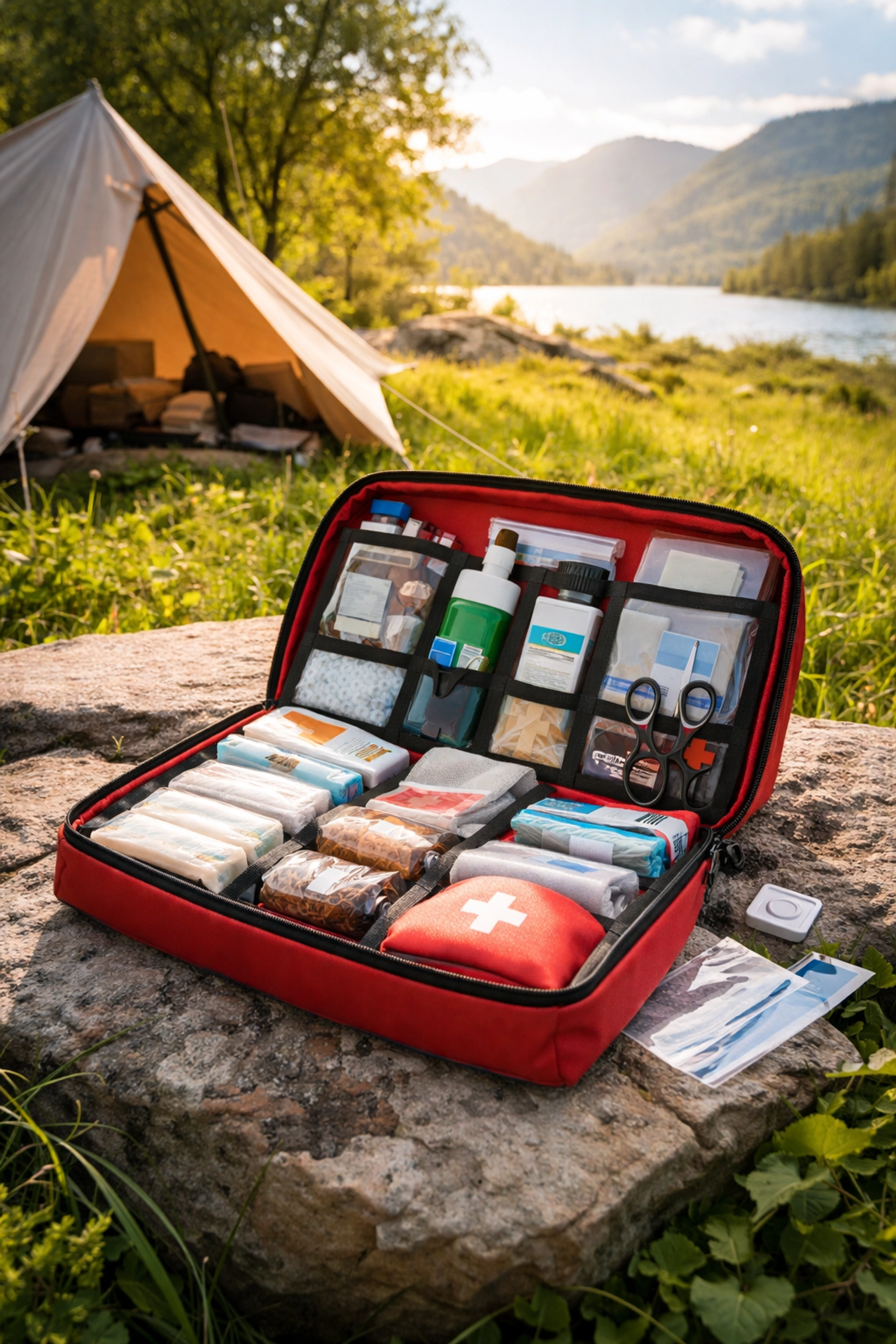
Carry a well-stocked first aid kit. Know how to use everything in it.
Take a wilderness first aid course. Book knowledge only goes so far. Hands-on practice builds real competence.
Check your kit before every trip. Replace used items. Check expiration dates on medications.
7. Distress Signalling
When things go wrong, you need to be found. The universal distress signal is three.
Three fires arranged in a triangle, 100 metres apart.
Three whistle blasts every minute.
Three light flashes at regular intervals.
Learn SOS in Morse code: three short, three long, three short (••• ─── •••).
Ground signals work for aerial searches. Spell SOS or make an X at least 3 metres tall. Use bright materials that contrast with the ground.
Carry a whistle on every trip. It's small, light, and could save your life.
8. Foraging and Plant Identification
Free food grows everywhere in the UK. But mistakes can be fatal.
The golden rule: If you're not 100% certain, don't eat it.
Many edible plants have toxic lookalikes. Hemlock looks similar to wild carrot. The consequences of confusion are severe.
Start simple. Learn to identify five common edible plants with absolute certainty. Expand your knowledge gradually.
Avoid foraging near roadsides or polluted areas. Chemicals accumulate in plants.
Understand seasonal availability. Know preservation techniques like drying for extended trips.
Consider joining a wild camping guided UK experience to learn from experts. Hands-on teaching accelerates learning safely.
9. Understanding Survival Priorities
The Rule of Threes guides your decisions in emergencies.
- 3 minutes without air : clear airways, check breathing
- 3 hours without shelter : build protection, stay dry
- 3 days without water : locate and purify
- 3 weeks without food : forage or trap
This hierarchy tells you what matters most. Address immediate threats first.
Panic wastes energy. Stop. Breathe. Think. Then act.
Your mental state affects everything. Stay calm. Work the problem systematically.
10. Cold Weather Survival
UK weather turns cold fast. Hypothermia is a real risk even in summer.
Recognise the signs:
- Uncontrollable shivering
- Slurred speech
- Confusion
- Loss of coordination
Take immediate action:
- Remove wet clothing
- Provide dry insulation
- Apply gentle warming with body heat
- Give warm sweet drinks if the person can swallow
Never give alcohol. It accelerates heat loss despite feeling warm initially.
Prevention beats treatment. Dress in layers. Keep spare dry clothes in a waterproof bag. Eat regularly : calories generate heat.
Your Essential Gear Checklist
Skills matter most. But proper gear supports those skills.
Pack these items:
- Water bottle with purification method
- Weather-appropriate clothing in layers
- First aid kit
- Map and compass
- Fire-starting tools (multiple types)
- Knife or multi-tool
- Emergency shelter or tarp
- High-calorie food
- Headlamp with spare batteries
- Whistle
Test everything before your trip. Know how each item works.
Put These Skills Into Practice
Reading about survival skills isn't enough. You need hands-on experience.
Start in controlled conditions. Practice fire-starting in your garden. Build shelters in familiar woodland. Navigate local trails without GPS.
Progress to more challenging environments. Extend your trips. Push your comfort zone gradually.
Consider joining experienced guides for your camping adventure UK. Learning alongside professionals accelerates your development and keeps you safe while building competence.
Visit Open Sky Adventure to explore guided wilderness experiences across the UK.
Now get out there. Practice these skills. Your next adventure awaits.