
Hello, farmer, pub owner, hotel operator or rural landowner.
Your land may support a temporary campsite.
Check the planning route first.
In Wales, Class BA camping now provides a permitted development route for temporary recreational campsites.
The main rules are simple:
- Up to 60 days per calendar year on most land.
- Up to 28 days per calendar year in National Parks, National Landscapes or AONBs, and World Heritage Sites.
- No Class BA camping within 100 metres of a protected dwelling.
- An annual application to your local planning authority.
- Checks for toilets, wastewater, waste and vehicle access.
Use this guide before you advertise, take bookings or move equipment onto the field.
This article gives general information. It is not legal advice. Ask your local planning authority or planning professional to check your site.
What is Class BA camping in Wales?
Class BA is a permitted development right under the Welsh General Permitted Development Order.
It allows you to use land as a temporary recreational campsite.
It also allows moveable structures that are reasonably needed for that use.
This can support:
- Farm diversification camping in Wales.
- Temporary pub campsites.
- Hotel overflow camping.
- Rural hospitality businesses.
- Outdoor event accommodation.
- Small seasonal camping areas.
Read the official Class BA legislation.
Class BA is not automatic permission.
You must meet every condition.
You must also apply to your local planning authority each year before the campsite begins operating.
The 60-day and 28-day limits
The temporary campsite 60 days rule applies to most land in Wales.
You can use the land as a recreational campsite for up to 60 days in total during one calendar year.
The limit is lower in certain protected areas.
| Location | Maximum Class BA camping period |
|---|---|
| General land in Wales | 60 days |
| National Park | 28 days |
| National Landscape or AONB | 28 days |
| World Heritage Site | 28 days |
Count the days carefully.
Use a site calendar.
Include every day when the land is used as a campsite.
Do not assume that changing the booking system resets the count.
The old 28-day rule has also changed.
From 1 June 2026, Class BA provides the main temporary campsite route in Wales. The old general camping allowance is removed from Class B, apart from camping linked to a festival. Further transitional arrangements apply before 1 September 2026.
Check the position with your local planning authority before opening.
What is the 100m buffer zone in Wales?
The 100m buffer zone is the main Class BA restriction.
Class BA does not permit camping on land within 100 metres of a protected dwelling, except for the use of a private way.
A protected dwelling means a dwellinghouse or flat occupied by someone other than the campsite owner or operator.
This normally includes:
- A neighbour’s house.
- A nearby cottage.
- A village home.
- A flat outside your control.
- A house beside a pub field.
- A dwelling beside a hotel’s unused land.
The buffer can affect pubs and hotels in particular.
A pub may have a field behind nearby homes.
A hotel may have cottages beside its grounds.
A farm may have a paddock close to a neighbour’s bungalow.
If the proposed camping area sits within the buffer, Class BA does not apply to that area.
Prior approval cannot remove the 100m restriction.
Move the campsite outside the buffer, or discuss a full planning application.

Step 1: Find land outside the buffer
Start with a map.
Mark every nearby house and flat.
Include dwellings that do not appear on your immediate property plan.
Check neighbouring plots.
Check cottages near access lanes.
Check homes on the edge of the village.
Then measure 100 metres from each protected dwelling.
Mark each exclusion area on your site plan.
Use a reliable mapping tool, scaled drawing or professional survey.
Ask your local planning authority how it expects the distance to be measured if the boundary is unclear.
Pay attention to:
- Large gardens.
- Shared access tracks.
- Uneven boundaries.
- Buildings split into flats.
- Dwellings close to field corners.
- Homes hidden by trees or hedges.
Your pitches must sit outside the restricted area.
Your toilets, wastewater facilities, waste points and campsite amenities should also sit outside it.
Do not draw a buffer around only the tent area.
Plan the full campsite operation.
Step 2: Check other land restrictions
The 100m buffer is not the only test.
Class BA cannot be used on certain sensitive land.
Check whether the site includes:
- A scheduled monument.
- A Special Area of Conservation.
- A Site of Special Scientific Interest.
- A Ramsar site.
- A Special Protection Area.
- A listed building site.
- A safety hazard area.
- A military explosives storage area.
- Flood Zone 2.
- Flood Zone 3.
Check whether the site is inside a National Park, National Landscape or World Heritage Site.
This affects both eligibility and the number of operating days.
Keep copies of your checks.
Save map extracts.
Record the date of each search.
Ask for written clarification when needed.
Step 3: Choose your camping dates
Set your operating period before you apply.
Use no more than 60 days on general land.
Use no more than 28 days in a relevant protected area.
Add the dates to your site plan.
Use the same dates in your booking system.
Keep a daily record.
Record:
- Opening date.
- Closing date.
- Number of pitches in use.
- Days when facilities are installed.
- Days when guests are present.
- Any changes to the approved layout.
This helps you manage the annual limit.
It also gives you evidence if the local planning authority asks questions.
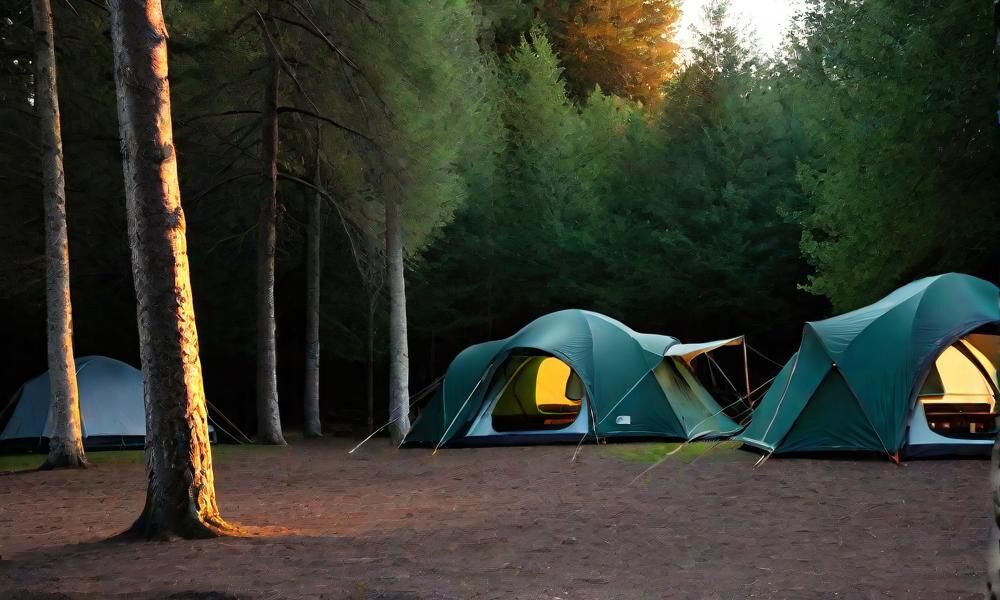
Step 4: Design a clear campsite layout
Keep the design practical.
Show every part of the operation.
Your plan should include:
- Campsite boundary.
- Tent pitches.
- Campervan or motorhome areas.
- Toilets.
- Wastewater facilities.
- Waste storage.
- Parking areas.
- Vehicle routes.
- Emergency access.
- Access from the public highway.
- Dates of site use.
- The 100m buffer zones.
Use a clear scale.
Add measurements.
Label each facility.
Make the plan easy to check.
Avoid placing every service beside the entrance.
Separate guest parking from pitching areas where possible.
Keep emergency vehicles in mind.
Use existing tracks where they are safe and suitable.
Do not rely on a route that becomes unusable after rain.
Step 5: Prepare the annual prior approval application
Before beginning development in each calendar year, apply to your local planning authority.
The first application asks the authority to decide whether prior approval is required.
The matters include:
- Toilet and wastewater facilities.
- Waste disposal facilities.
- Vehicular access to the site.
Use the Welsh Government campsite prior approval form.
Include the required fee, if applicable.
Include your site plan.
Include:
- Pitch locations.
- Toilets.
- Wastewater arrangements.
- Waste facilities.
- Highway access.
- Operating dates.
- Buffer measurements.
- Relevant land checks.
The local planning authority normally has 28 days to issue its determination or identify an incomplete application.
If it says prior approval is required, submit the further application.
Do not open until you receive written approval.
If the authority confirms that prior approval is not required, follow the details submitted with your determination application.
Do not change the layout without checking the effect first.
Step 6: Explain toilets, wastewater and waste
Keep the facilities plan specific.
State how many campers the site will support.
Explain how toilets will be cleaned.
Explain where wastewater will go.
State how often tanks will be emptied.
Identify the contractor or waste carrier.
Do not rely on an informal discharge.
Check whether you need an environmental permit, drainage consent or other approval.
For waste, show:
- Bin locations.
- Collection dates.
- Recycling arrangements.
- Food waste controls.
- Storage security.
- Final disposal arrangements.
Keep waste away from watercourses.
Prevent animals from reaching the bins.
Use written procedures for staff and guests.
Step 7: Explain vehicle access
Access is a common prior approval issue.
Show the route from the public highway.
Explain how guests will enter and leave.
Check:
- Entrance width.
- Visibility.
- Passing places.
- Turning space.
- Road conditions.
- Emergency access.
- Delivery access.
- Waste collection access.
Consider tractors, ambulances, fire engines and service vehicles.
If the campsite could materially increase traffic or change local traffic patterns, expect a detailed highways assessment.
Give the authority enough information to assess the route.
Do not leave access details until the end.

What Class BA means for different businesses
Farmers
Choose a field away from neighbouring homes.
Use existing farm access where possible.
Start with a manageable number of pitches.
Link camping to local produce, walks or farm activities.
Keep campers away from livestock areas.
Plan guest safety around gates, machinery and water.
Pubs
Check nearby homes before using a beer garden, paddock or overflow field.
A site behind a village pub may fall inside the 100m buffer.
Consider land further from the main building.
Plan parking and guest access separately from pub traffic.
Tell guests how to reach toilets, food services and the campsite without crossing unsafe areas.
Hotels
Check all cottages, flats and homes near the grounds.
Use a site plan that separates hotel traffic from campers.
Consider camping as seasonal overflow accommodation.
Plan wastewater and waste capacity for peak periods.
Link the campsite to guided walks, local attractions or outdoor packages.
Class BA planning rights do not replace other requirements.
Check campsite licensing, fire safety, insurance, health and safety, food registration and environmental rules.
Use the Open Sky Adventure legal information page for general guidance, then confirm requirements with the relevant authority.
Use Open Sky Adventure for licensed camping support
The 2026 rules require care.
Map the land first.
Check the 100m buffer.
Confirm the annual day limit.
Prepare a clear site plan.
Submit the correct application.
Wait for the written outcome.
Open Sky Adventure helps landowners and rural businesses assess land potential, plan responsible camping activities and understand the steps involved in licensed camping.
See our land and site potential service.
You can also contact Open Sky Adventure before you commit to a campsite layout.
Join the Open Sky Adventure group and sign up on the website.
We will happily help you, signup live now if you have an interest in joining our license agreement.