
Hello, farmer, hospitality owner, or rural landowner.
Your unused field may support a campsite.
Start with the legal route.
Then plan the site, control the costs, and build a booking calendar that works.
This guide explains how Class BC in England and Class BA in Wales can support a compliant campsite business in 2026.
It also explains the 28-day rule, the 60-day temporary campsite rule, site layout, safety, facilities, and revenue planning.
Planning law changes. Check your Local Planning Authority, licensing team, insurer, and fire authority before you take bookings.
Class BC and Class BA at a glance
| Rule | England: Class BC | Wales: Class BA |
|---|---|---|
| Temporary campsite limit | 60 days per calendar year | 60 days per calendar year |
| Protected landscapes | Check local restrictions | 28 days in National Parks, AONBs, and World Heritage Sites |
| Maximum pitches | 50 | Check the exact local application requirements |
| Tents | Yes | Yes |
| Motorhomes and campervans | Yes | Yes |
| Towed caravans | Not under Class BC | Not under Class BA |
| Toilets and waste | Required on site | Details required in the annual process |
| Annual process | Written notification | Determination application |
| Flood Zones 2 and 3 | Prior approval required | Class BA excluded |
| 100-metre dwelling buffer | No Class BC buffer | Applies to protected dwellings |
Read the official Class BC legislation and the official Class BA legislation.
Start by choosing the correct planning route
Permitted development rights, or PDR, are not a general business licence.
They only grant a planning route for specific development.
They do not remove your duties for:
- Site licensing
- Fire safety
- Insurance
- Waste disposal
- Water and wastewater
- Highway safety
- Environmental protection
- Building control
- Food or hospitality operations
Use Class BC for an eligible temporary recreational campsite in England.
Use Class BA for an eligible temporary recreational campsite in Wales.
Do not assume that an old camping article still applies.
What happened to the 28-day rule?
The old 28-day rule is often used as a shortcut for temporary camping.
That approach is now unsafe.
In England, Class B no longer permits ordinary recreational camping. It limits camping under that class to festival-related use.
Class BC now provides the main PDR route for a temporary recreational campsite in England. It allows use for up to 60 days in total during one calendar year.
In Wales, Class B also excludes ordinary camping except in connection with a festival.
Class BA now provides the Welsh route.
Class BA allows:
- Up to 60 days on most land
- Up to 28 days in a National Park, AONB, or World Heritage Site
Count calendar days.
Do not count only occupied nights.
Do not count only weekends.
Keep a day-by-day operating record from 1 January to 31 December.
Do not combine nearby fields to avoid the limit. The Local Planning Authority may consider the wider use and operating pattern.
Check whether your land qualifies
Complete the checks before you design pitches.
England: Class BC checks
Class BC does not apply to certain locations, including:
- Scheduled monuments
- Safety hazard areas
- Military explosives storage areas
- Sites of Special Scientific Interest
- Sites of listed buildings
Class BC also excludes towed caravans.
It can cover tents, motorhomes, campervans, and moveable campsite facilities.
If any part of the site sits in Flood Zone 2 or Flood Zone 3, you need prior approval before opening in that calendar year.
Submit a site-specific flood risk assessment, include warning and evacuation arrangements, pay the required fee, and wait for written approval or the expiry of the statutory period before starting.
Use the Planning Portal prior approval form.
Wales: Class BA checks
Class BA has wider exclusions.
Check for:
- Scheduled monuments
- Special Areas of Conservation
- Special Protection Areas
- Sites of Special Scientific Interest
- Ramsar sites
- Listed buildings
- Flood Zones 2 and 3
- Safety hazard areas
- Military explosives storage areas
Then check the 100-metre buffer.
Class BA does not permit a campsite on land within 100 metres of a protected dwelling, except for a private way.
A protected dwelling means a dwellinghouse or flat occupied by someone other than the campsite owner or operator.
Map every nearby home.
Mark the 100-metre line on your plan.
Remove pitches, facilities, and campsite use from the restricted area.
If the remaining land cannot support safe access, toilets, waste facilities, and emergency routes, choose another field or seek full planning advice.
Submit the correct annual application or notice
England: notify the LPA
Before starting each year, notify your Local Planning Authority in writing.
Include:
- A site plan
- The operating dates
- Pitch locations
- Toilet facilities
- Waste disposal facilities
- The site entrance
- Access routes
- Emergency access
Keep the notice, plan, proof of delivery, council correspondence, and operating day log.
The LPA must pass the information to the fire and rescue authority where it is a separate body.
Wales: apply for a determination
Wales uses an annual determination process.
Apply before beginning the development each year.
Include:
- Toilet and wastewater arrangements
- Waste disposal arrangements
- Pitch and amenity locations
- Access from the highway
- Operating dates
- The required fee
The council has 28 days to issue its determination or identify an invalid application.
If it decides that prior approval is required, apply again and wait for written approval before opening.
The main matters include:
- Toilet and wastewater facilities
- Waste disposal
- Vehicular access
- Traffic impact
- Highway safety
Follow the Welsh Government guidance.
Design a campsite that works
Do not begin with the maximum pitch number.
Begin with the land.
Walk the field after heavy rain.
Check the slope, drainage, ground condition, access, turning space, views, neighbours, livestock routes, and emergency vehicle access.
Then draw a scaled site plan.
Show:
- The site boundary
- The entrance
- A one-way route where possible
- Turning areas
- Pitch locations
- Toilets and showers
- Drinking water
- Waste and recycling
- Fire points
- Reception or check-in
- Emergency access
- Areas kept out of use
Class BC allows up to 50 pitches in England.
That does not mean 50 pitches will suit your land.
Start with a number you can clean, inspect, and manage.
For many farms and hospitality businesses, 8 to 20 pitches provide a more workable pilot.
Leave room between pitches.
Keep vehicles away from narrow field edges.
Separate campers from farm machinery, livestock, deliveries, and private areas.
Use temporary facilities where the PDR only supports temporary use.
Do not add permanent tracks, buildings, hardstanding, or fixed accommodation without checking whether separate planning permission is required.

Provide facilities before taking bookings
Toilets and waste disposal are core compliance requirements under Class BC.
Wales also requires you to show toilet, wastewater, and waste arrangements in the annual process.
Provide facilities that match your pitch numbers.
Plan for:
- Toilets
- Handwashing
- Drinking water
- Wastewater collection
- General waste
- Recycling
- Regular servicing
- Accessible facilities where needed
- Clear visitor instructions
Do not rely on informal arrangements.
A poor waste system creates complaints, pests, extra costs, and enforcement risk.
Use written contracts with toilet, waste, and wastewater suppliers.
Keep service records.
Build a fire and safety system
Camping creates fire risk.
Set the rules before guests arrive.
Complete a fire risk assessment.
Set fire points.
Keep emergency access clear.
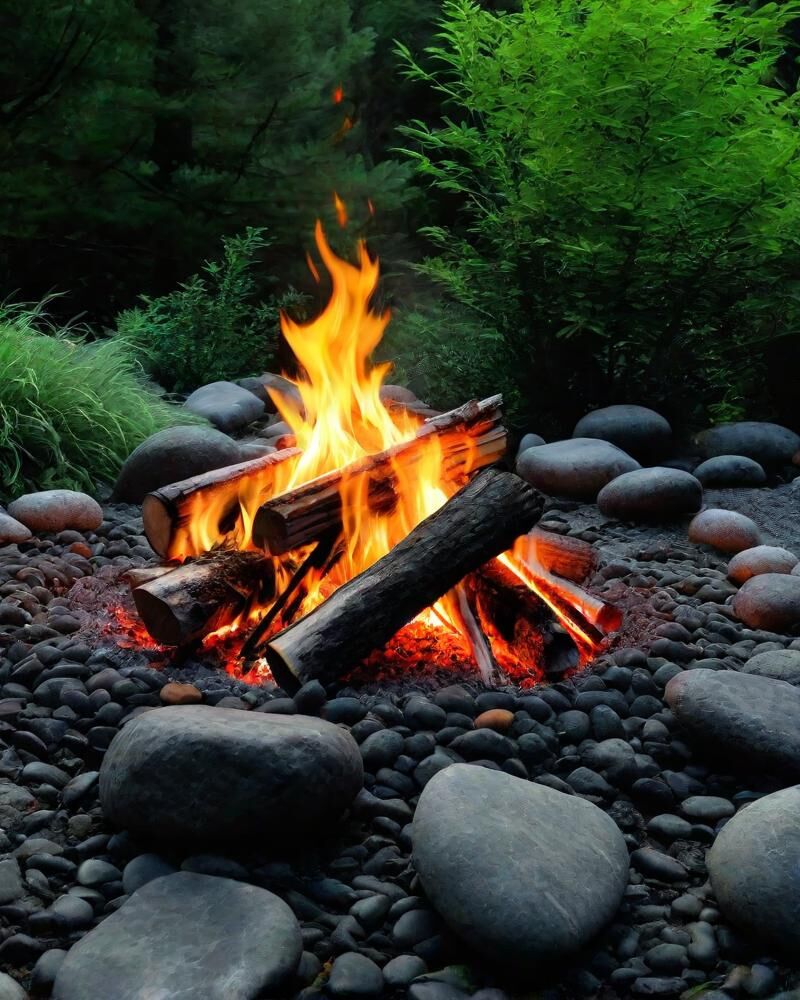
Control barbecues, stoves, candles, and open fires.
Ban fires where the ground, weather, vegetation, or local conditions make them unsafe.
Provide an emergency contact number.
Mark the site entrance clearly.
Give guests simple instructions for evacuation, fire reporting, waste, vehicles, and quiet hours.
Inspect the site each day.
Record incidents and corrective action.
Ask your insurer and local fire authority what they expect for your site type.
Do not treat a fire bucket or extinguisher as a complete fire plan.
Plan the 60-day season
Use the annual limit as a planning tool.
Do not open whenever demand appears.
Create a fixed operating calendar.
For example:
- Easter weekends
- May half-term
- Selected summer weeks
- Bank holidays
- September weekends
- Autumn walking periods
Leave contingency days.
Keep a live record of every operating day.
Do not let a late booking push you beyond the legal limit.
In Wales, reduce the calendar to 28 days if the land sits in a protected landscape.
Close the site between operating periods if your planning route requires temporary use.
Record opening and closing dates.
Calculate revenue before spending
Use simple assumptions.
For example:
- 15 pitches
- £30 average pitch price
- 60 operating days
- 50% occupancy
That produces:
15 × £30 × 60 × 50% = £13,500 gross pitch revenue
This is not profit.
Subtract:
- Toilet hire
- Waste collection
- Insurance
- Cleaning
- Staff time
- Booking fees
- Marketing
- Water and power
- Repairs
- Equipment
- Tax
- Licensing costs
- Open Sky Adventure service costs, where applicable
Test three scenarios.
Conservative
Use low occupancy and limited opening dates.
Target
Use your expected bookings based on local demand.
High
Use strong weekends and peak holiday demand.
Do not base the business on the high scenario.
Add revenue only where it is practical and lawful.
Options may include:
- Firewood
- Breakfast supplies
- Local produce
- Guided walks
- Outdoor skills sessions
- Equipment hire
- Dog washing
- Picnic packs
- Partnerships with pubs and local attractions
Check planning, licensing, insurance, and food rules for each extra service.
Do not forget campsite licensing
Planning permission and campsite licensing are separate.
GOV.UK guidance states that a campsite licence may be required when land is used for camping, including trailer tents.
For tent-only camping, exemptions can apply where the site is used for fewer than 42 consecutive days or fewer than 60 days in any 12-month period.
Vehicle accommodation may create different licensing questions.
Check with your local council before opening.
Read the GOV.UK camping licence guidance.
Keep one compliance file containing:
- Planning notices
- Prior approval decisions
- Site plans
- Operating dates
- Licensing documents
- Insurance
- Fire assessments
- Waste contracts
- Inspection records
- Incident records
Turn land into a managed business
A compliant campsite needs more than empty grass.
It needs a legal route, a workable layout, safe facilities, accurate records, and a clear revenue plan.
Open Sky Adventure supports farmers, hospitality businesses, and rural landowners with site assessment, licensed camping, safety planning, operational systems, and land diversification guidance.
Start with The Legals, review how to unlock your land and potential, then check the available cost options.
Join the Open Sky Adventure group and sign up on our website.
We will happily help you, signup live now if you have an interest in joining our license agreement.
Further reading
- Class BC England legislation
- Class BA Wales legislation
- Welsh Government temporary campsite guidance
- Open Sky Adventure: Class BC and Class BA explained
- Contact Open Sky Adventure
This article provides general information for landowners and rural businesses. It is not legal or planning advice. Confirm the current rules with the relevant authorities before you proceed.