
Meta description: Compare Class BC England and Class BA Wales camping rules in 2026, including the 60-day limit, 28-day rule, 100m buffer and prior approval.
Hello, farmer, pub owner, hotel operator or rural landowner. Your land may support a campsite.
Check the planning route first.
The rules differ between England and Wales. Class BC applies in England. Class BA applies in Wales.
This guide compares both routes, explains the 28-day rule, and shows how to plan a compliant campsite.
Class BC vs Class BA: the quick comparison
| Rule | England: Class BC | Wales: Class BA |
|---|---|---|
| Standard annual limit | 60 days | 60 days |
| Protected landscapes | Check local restrictions | 28 days in National Parks, Areas of Outstanding Natural Beauty and World Heritage Sites |
| Pitch limit | Up to 50 pitches | No express pitch limit in Class BA |
| 100m buffer | No specific Class BC buffer | No camping land within 100m of a protected dwelling |
| Annual process | Written notification | Determination application |
| Prior approval | Required in Flood Zones 2 and 3 | Required if the council determines it is needed |
| Towed caravans | Not allowed | Not allowed |
| Moveable structures | Allowed where reasonably necessary | Allowed where reasonably necessary |
Read the official Class BC legislation for England and the official Class BA legislation for Wales.
The 28-day rule baseline
The 28-day rule is the historic starting point for temporary land use.
It allowed land to host temporary activities for up to 28 days in a calendar year under Class B of the General Permitted Development Order.
Ordinary recreational camping has since been removed from the main Class B route in England. You should use Class BC for a normal temporary campsite.
Wales has a transition point in 2026.
Class BA came into force on 1 June 2026. The Welsh change removing ordinary camping from Class B comes into force on 1 September 2026.
Until 31 August 2026, the old Welsh Class B position may still matter. From 1 September 2026, use Class BA for ordinary temporary recreational camping.
The 28-day limit still applies under Class BA in certain Welsh locations:
- National Parks
- Areas of Outstanding Natural Beauty
- World Heritage Sites
Do not treat the 28-day rule as an extra allowance. Do not add 28 days to the Class BC or Class BA limit.
Count your campsite days across the calendar year. Keep one operating log.
Class BC camping England in 2026
Class BC is the main route for a temporary campsite in England.
It allows you to:
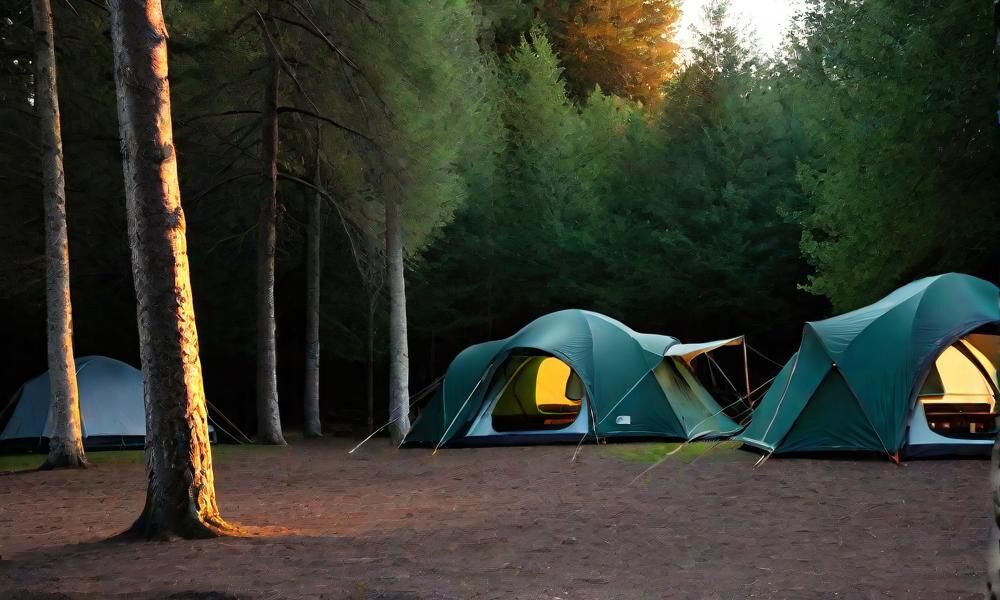
- Use land as a recreational campsite for up to 60 days in total each calendar year.
- Provide up to 50 pitches.
- Install moveable structures reasonably needed for the campsite.
The 60 days do not need to be consecutive.
You could operate from 1 March to 31 October, for example, but that date window is an operating choice. It is not a fixed legal season.
You still have a maximum of 60 days.
Count the days carefully. Do not count 60 days per pitch. Do not count 60 days per booking. Do not exceed the annual limit.
Class BC conditions
You must provide on-site toilet and waste disposal facilities.
Your site plan must show:
- The campsite boundary.
- Pitch locations.
- Toilet facilities.
- Waste disposal facilities.
- The access point.
- Emergency access.
- Operating dates.
You must notify your Local Planning Authority in writing before starting the campsite in each calendar year.
The council must pass the information to the relevant fire and rescue authority where it is a separate body.
Keep:
- A copy of your notification.
- The submitted plan.
- Proof of delivery.
- Your operating calendar.
- Facility inspection records.
- Waste collection records.
Flood Zones 2 and 3 in England
Class BC needs prior approval when the proposed campsite is in Flood Zone 2 or Flood Zone 3.
Apply before operating.
Include:
- A site-specific flood risk assessment.
- Flood warning arrangements.
- An evacuation plan.
- The required fee.
- The campsite plan and operating dates.
The Local Planning Authority must consult the Environment Agency.
You cannot start until you receive written prior approval, or until 56 days have passed without the council notifying you whether approval is granted or refused.
Apply again for each calendar year.
Use the GOV.UK flood risk service before choosing your field.
Class BA camping Wales in 2026
Class BA gives Welsh landowners a separate permitted development route.
It allows:
- Up to 60 days per calendar year on most land.
- Up to 28 days per calendar year in National Parks, Areas of Outstanding Natural Beauty and World Heritage Sites.
- Moveable structures reasonably needed for the campsite.
Class BA does not allow towed caravans. It can allow motorhomes and campervans that meet the legal definition of a caravan used as a motor vehicle designed or adapted for human habitation.
Wales also has wider exclusions.
Class BA does not apply on:
- Scheduled monuments.
- Special Areas of Conservation.
- Special Protection Areas.
- Ramsar sites.
- Sites of Special Scientific Interest.
- Sites of listed buildings.
- Flood Zones 2 and 3.
- Safety hazard areas.
- Military explosives storage areas.
- Land within 100m of a protected dwelling.
Check designations before you invest in facilities or marketing.
The 100m buffer zone campsite Wales rule
The 100m rule is the main difference between Class BC and Class BA.
Class BA cannot be used on land within 100 metres of a protected dwelling, except for a private way.
A protected dwelling means a dwellinghouse or flat occupied by someone other than the campsite owner or operator.
In practice, this can include a neighbour’s home, a tenant-occupied farmhouse or another residential property near your proposed site.
The buffer is an exclusion from the permitted development right. Prior approval cannot remove it.
Do not place these within the restricted area:
- Tents.
- Motorhomes.
- Campervans.
- Toilets.
- Waste facilities.
- Guest parking.
- Reception facilities.
- Other campsite amenities.
A private access way may pass through the area. Use it only for access and egress.
Ask your Local Planning Authority how it measures the 100 metres. Prepare a conservative plan. Show nearby dwellings, residential curtilages and the buffer area.
If the campsite use falls within the buffer, consider a different field or seek full planning advice.
The Welsh prior approval process
Class BA uses a two-stage process.
Stage one: apply for determination
Before beginning the development each year, apply to the Local Planning Authority for a determination.
Ask whether prior approval is required.
Include:
- A site location plan.
- The campsite boundary.
- Toilet and wastewater arrangements.
- Waste disposal arrangements.
- Pitch and amenity locations.
- Access from the highway.
- Operating dates.
- The required fee.
Use the Welsh Government campsite determination guidance.
The council should issue a notice within 28 days.
It may confirm that prior approval is not required.
If the application is complete and no notice is issued within the relevant period, check the statutory wording before relying on the time limit.
Stage two: apply for prior approval
The council must determine that prior approval is required where the proposal is likely to create a material increase or material change in local traffic.
The council can also request information about the relevant impacts and risks.
Prepare details about:
- Highway access.
- Vehicle numbers.
- Turning space.
- Access width.
- Waste collection.
- Toilet arrangements.
- Wastewater arrangements.
- Emergency access.
If prior approval is required, apply again under the second stage.
Do not open until you receive written approval.
Practical strategies for farmers, pubs and hotels
Start with a site survey.
Map:
- The land boundary.
- Nearby dwellings.
- The Welsh 100m buffer, where relevant.
- Flood zones.
- Environmental designations.
- Vehicle access.
- Drainage.
- Emergency access.
- Waste collection routes.
- Seasonal ground conditions.
For farms, place pitches on land that does not disrupt livestock, machinery or public rights of way. Keep guest traffic separate from farm traffic.
For pubs, connect camping with food, toilets, walks and local activities. Keep guest parking separate from pub customer parking. Set arrival times and quiet hours.
For hotels, review nearby cottages, staff housing and holiday accommodation. Check who occupies each dwelling. Do not assume ownership alone answers the protected dwelling question.
Use hedges and existing features for screening. Manage lighting. Control noise. Keep waste areas away from watercourses.
A good layout supports compliance. It also supports a better guest operation.
Farm diversification camping: plan for profit and compliance
Do not buy tents first.
Choose your legal route. Then design the site.
Set a realistic pitch number. A smaller campsite may reduce costs and make access, waste, fire safety and guest management easier.
Consider:
- Tent pitches.
- Motorhome pitches.
- Campervan stays.
- Guided walking weekends.
- Wildlife experiences.
- Corporate team activities.
- Pub and camping packages.
- Hotel and outdoor activity packages.
Keep temporary structures removable where possible.
Planning permission and licensing are separate matters. Check whether you need a campsite or caravan site licence. Confirm insurance, fire controls, water, wastewater and environmental health requirements.
Keep one compliance file.
Open Sky Adventure is a specialist authority in licensed camping and land diversification. We help landowners understand their options, plan safe sites and prepare practical operating systems.
Read The Legals, explore how to unlock your land and potential, then contact Open Sky Adventure.
Your 2026 camping legislation checklist
Follow this order:
- Confirm whether your land is in England or Wales.
- Identify Class BC or Class BA.
- Check the 60-day or 28-day limit.
- Map nearby dwellings.
- Apply the Welsh 100m buffer.
- Check Flood Zones 2 and 3.
- Check protected designations.
- Plan pitches and moveable facilities.
- Arrange toilets, wastewater and waste disposal.
- Prepare a scaled site plan.
- Submit the correct notification or determination application.
- Apply for prior approval when required.
- Confirm licensing and insurance.
- Keep an operating day log.
- Open only after each requirement is met.
Join the Open Sky Adventure group and sign up on the website before you take bookings.
We will happily help you, signup live now if you have an interest in joining our license agreement.
Start your enquiry with Open Sky Adventure.
This article provides general information about camping legislation UK 2026. It is not legal or planning advice. Confirm your site with the relevant Local Planning Authority before operating.