
Hello, farmer, pub owner, hotel operator or rural landowner.
Your land may support a temporary campsite.
Check the correct planning route first.
The 100m buffer is a Wales rule under Class BA. It is not a national condition of Class BC camping in England.
This difference matters.
Use the wrong rule, and you may lose time, bookings and income.
Class BC camping in England
Class BC is the main permitted development route for temporary recreational campsites in England.
It allows you to:
- Use land as a recreational campsite for up to 60 days in one calendar year
- Provide up to 50 pitches
- Use moveable structures needed for the campsite
- Provide temporary toilets and waste facilities
- Host tents, motorhomes and eligible campervans
You must notify your local planning authority before starting each year.
Your written notice must include:
- A site plan
- Toilet locations
- Waste disposal arrangements
- Operating dates
If the site is in Flood Zone 2 or 3, you need prior approval before opening.
Class BC does not include a national 100m buffer from homes or public buildings.
It also does not include a 400m buffer under the campsite rules.
Check the Class BC legislation before you plan your layout.
Class BA camping in Wales
Class BA applies to temporary recreational campsites in Wales.
From 1 September 2026, do not rely on the old general 28-day route for ordinary camping.
Use Class BA or apply for full planning permission.
Class BA allows:
- Up to 60 days per calendar year on most eligible land
- Up to 28 days in a National Park, National Landscape or World Heritage Site
- Moveable structures needed for the use
- Temporary campsite facilities
You must begin the annual prior approval process before opening.
The process covers:
- Toilets and wastewater
- Waste disposal
- Pitch and amenity locations
- Highway access
- Operating dates
Read the Class BA legislation for Wales.
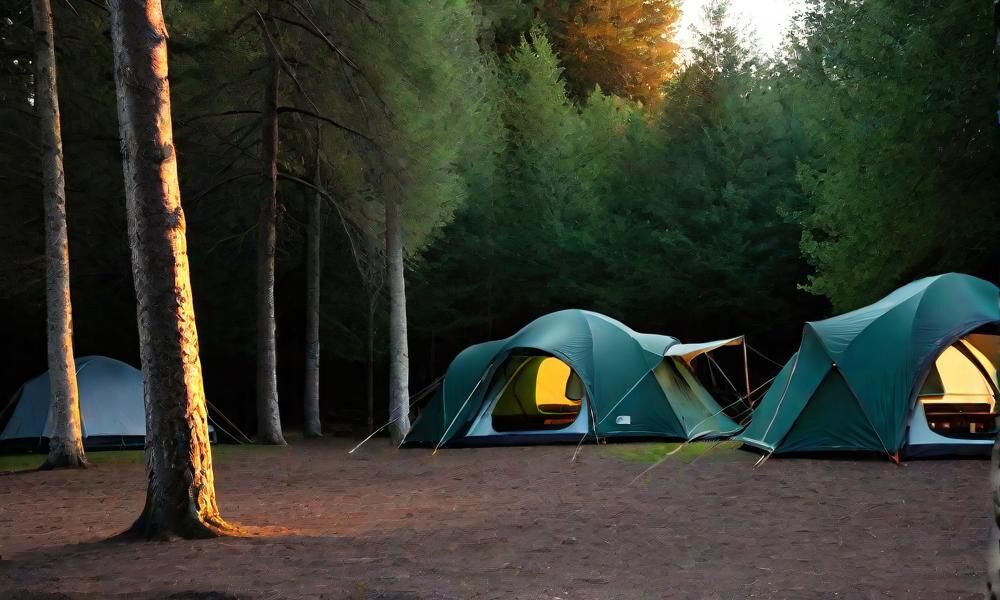
What the 100m buffer means in Wales
Class BA does not permit campsite use on land within 100 metres of a protected dwelling.
The rule is strict.
It applies whether you plan to operate for one day, 28 days or 60 days.
The 28-day limit does not override the buffer.
If your proposed camping land falls inside the zone, Class BA is not available for that area.
You may need full planning permission.
What counts as a protected dwelling?
A protected dwelling is:
A dwellinghouse or flat occupied by someone other than the campsite owner or operator.
This can include:
- A neighbour’s house
- A nearby bungalow
- A flat
- A rented home
- A residential unit occupied by another person
Your own home may not count as a protected dwelling if you are the campsite owner or operator.
Confirm the ownership and occupation position before relying on this point.
Do not make assumptions about a converted building or a holiday unit.
Ask your local planning authority or planning adviser to confirm the position.
Do public buildings create a 100m buffer?
No, not by themselves.
The Class BA 100m restriction relates to protected dwellings.
A school, village hall, church, office or community building does not automatically create a 100m exclusion zone if it has no residential use.
A building with a flat or dwelling may be different.
The residential part may count as a protected dwelling if it is occupied by someone other than the campsite owner or operator.
Other rules can still affect a site near a public building.
Check:
- Highway safety
- Noise
- Fire safety
- Environmental health
- Public access
- Waste collection
- Local planning restrictions
The absence of a buffer does not remove your other responsibilities.
How to measure the 100m buffer zone
Start with an accurate site plan.
Do not measure from a postcode or a rough map pin.
Use this process:
- Mark every nearby dwelling.
- Confirm who occupies each dwelling.
- Mark the dwelling and its associated curtilage.
- Draw a 100m zone around each protected dwelling.
- Mark all proposed pitches.
- Mark toilets, wastewater facilities and waste points.
- Mark access routes and operational areas.
- Remove any campsite use inside the affected zone.
- Ask the local planning authority to confirm any unclear boundary.
For practical planning, measure from the dwelling and its curtilage shown on the site plan.
Keep a clear record of:
- The map source
- The measurement method
- The date checked
- The person who prepared the plan
- Any advice received
Use a scaled plan where possible.
Keep the full holding on the drawing.
Show the buffer as a separate layer.
This makes your application easier to review.

How to reposition pitches and facilities
A buffer does not always remove the whole opportunity.
Change the layout first.
Move pitches towards the centre of the field.
Use a separate field if it sits outside the buffer.
Reduce the number of pitches.
Keep toilets, wastewater points and waste facilities outside the zone.
Use existing tracks where they do not create unlawful campsite use inside the buffer.
Treat access carefully.
Class BA includes an exception for the use of a private way. Do not treat this as permission to place pitches, toilets or camping facilities inside the 100m zone.
Use the smallest compliant layout that works.
A smaller site may also reduce:
- Traffic
- Noise
- Waste
- Staff time
- Site preparation costs
For a pub or hotel, place pitches where guests can reach existing services without crossing a neighbour’s land.
For a farm, keep camping away from working yards, livestock areas and private homes.
For a rural landowner, compare every parcel before choosing the site.
What if all suitable land sits inside the buffer?
You still have options.
Apply for full planning permission
Full planning permission may allow camping inside the 100m zone.
You will need to address:
- Site access
- Traffic
- Noise
- Landscape impact
- Wastewater
- Drainage
- Ecology
- Fire safety
- Neighbour impact
Start early.
Do not advertise opening dates before you understand the planning timetable.
Use another parcel
Review land across the wider holding.
Check ownership, access and services.
A separate parcel may provide a compliant route under Class BA.
Create a smaller site
You may have enough land outside the buffer for fewer pitches.
Rework your business plan.
Use selected weekends and holiday periods.
Keep the annual day limit under control.
Review England and Wales separately
If you operate near the border, check the country where each field sits.
Class BC applies in England.
Class BA applies in Wales.
Do not copy an English site plan into Wales.
Do not apply the Welsh 100m rule to an English Class BC site as though it were a national requirement.
Do not forget the other exclusions
The buffer is only one test.
In Wales, Class BA does not apply to land:
- On a scheduled monument
- In a Special Area of Conservation
- In a safety hazard area
- In a military explosives storage area
- On a Site of Special Scientific Interest
- On a Ramsar site
- On a listed building site
- In a Special Protection Area
- In Flood Zone 2 or 3
- Within 100m of a protected dwelling, apart from a private way
In England, Class BC does not apply to land:
- On a scheduled monument
- In a safety hazard area
- In a military explosives storage area
- On a Site of Special Scientific Interest
- On the site of a listed building
An Article 4 Direction may also remove permitted development rights.
Check designations before you spend money on pitches or facilities.
Build a profitable operating plan
Use the permitted days with care.
Choose dates that match local demand.
For a pub or hotel, link camping dates to:
- Food service
- Local events
- Walking routes
- School holidays
- Weekend demand
For a farm, plan around farming operations.
Protect access for machinery.
Keep guests away from livestock and storage areas.
Track every operating day.
Use one calendar from 1 January to 31 December.
Record:
- Opening and closing dates
- Pitch numbers
- Guest numbers
- Facilities used
- Waste collections
- Complaints
- Incidents
- Changes to the site plan
Planning permission is separate from licensing.
Check whether you need a campsite licence, caravan site licence, insurance, fire controls, wastewater permissions or environmental health approval.
Ask your local authority licensing team before opening.
Use the 2026 compliance checklist
Before opening, confirm the following:
- Identify whether the land is in England or Wales.
- Choose Class BC or Class BA.
- Check the 60-day or 28-day limit.
- Map nearby protected dwellings in Wales.
- Measure the 100m buffer.
- Reposition pitches outside the buffer.
- Keep facilities outside the buffer.
- Check flood zones.
- Check environmental and heritage designations.
- Check for an Article 4 Direction.
- Prepare a scaled site plan.
- Submit the correct annual notice or determination application.
- Complete prior approval where required.
- Confirm campsite licensing.
- Keep written records.
- Do not exceed the permitted days or pitches.
Get support before you take bookings
Camping legislation UK 2026 creates opportunities for farmers, pubs, hotels and rural landowners.
It also creates clear limits.
Get the site plan right.
Measure the buffer correctly.
Choose the correct permitted development route.
Open Sky Adventure is an industry-leading authority in licensed camping, land diversification and outdoor adventure operations.
We help landowners review sites, plan safe layouts and connect land with outdoor adventure.
Unlock your land and potential, read The Legals, then contact Open Sky Adventure.
Join the Open Sky Adventure group and sign up on our website.
We will happily help you, signup live now if you have an interest in joining our license agreement.
This article provides general information. It is not legal or planning advice. Confirm your proposal with the relevant local planning authority before starting campsite use or accepting bookings.