
You're about to head into the wild. Your backpack is ready. Your boots are laced. But here's the truth, gear alone won't keep you safe, warm, or fed.
The real game-changer? Bushcraft skills.
Master these five essentials and you'll transform every camping adventure UK trip from anxious guesswork into confident outdoor living. Whether you're planning your first wild camping guided UK experience or going solo into the Yorkshire Dales, these skills will become your safety net.
Let's get started.
1. Firecraft – Your Most Powerful Outdoor Tool
Fire is everything. It cooks your food, purifies your water, keeps you warm, signals for help, and dries wet gear.
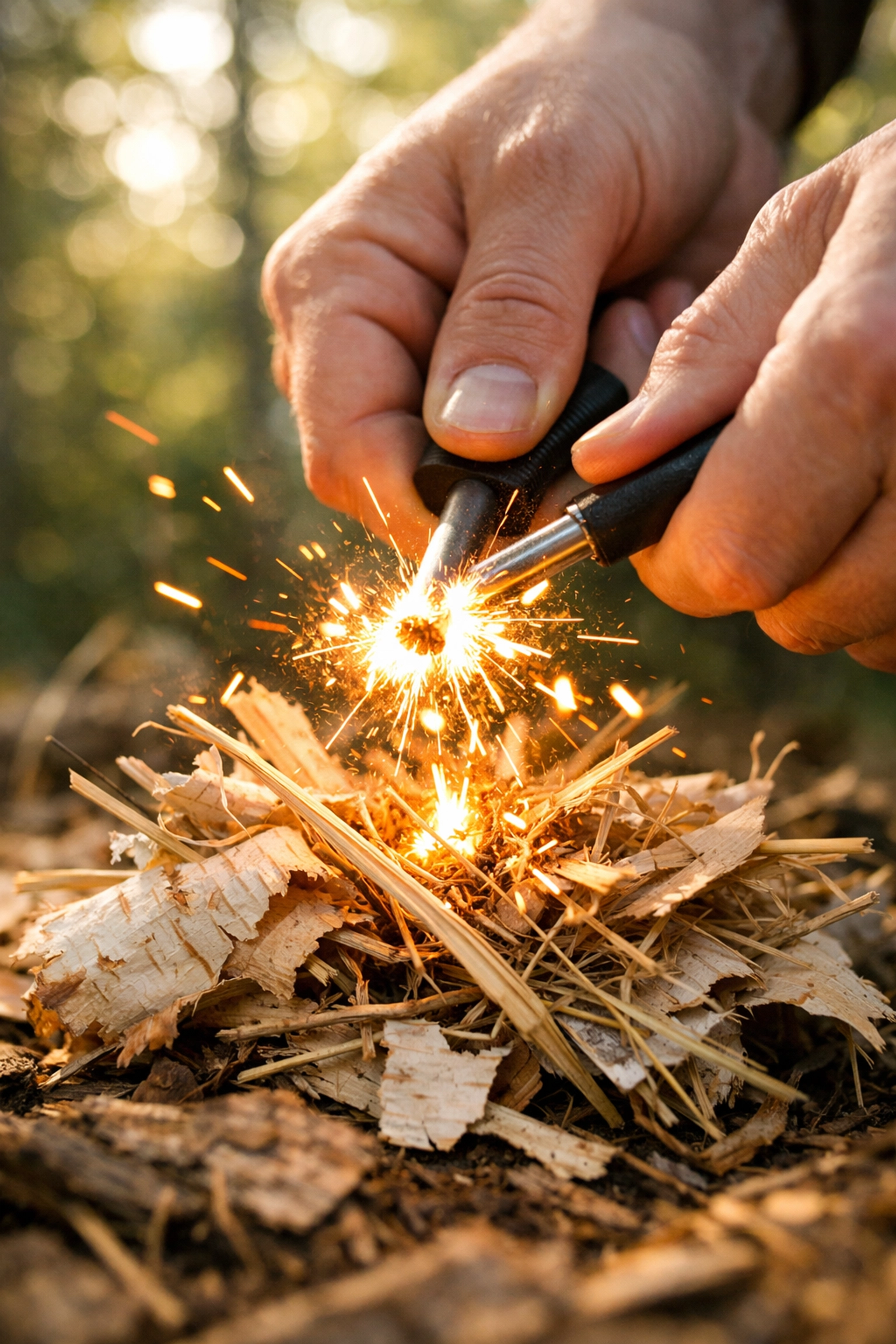
Start with the basics. Learn three fire-lighting methods before your next trip.
Ferrocerium rod – scrape the rod with a sharp edge, aim sparks at dry tinder. Practice this twenty times in your garden. No shortcuts.
Flint and steel – older method, requires char cloth. Worth knowing as backup.
Friction-based methods – bow drill, hand drill. These are advanced. Don't rely on them until you've practiced dozens of times.
Now learn fire structures. Each serves a different purpose.
Teepee fire – quick, hot flame. Perfect for boiling water fast. Arrange small sticks in cone shape around tinder bundle.
Log cabin fire – steady, long-lasting. Build it like stacking logs for a house. Great for cooking.
Dakota fire hole – concealed, efficient. Dig two connected holes. Fire burns in one, air feeds through the other. Use this in windy conditions.
Collect tinder before you need it. Birch bark burns even when wet. Dry grass works perfectly. Make feather sticks by shaving thin curls into dead wood.
Follow fire safety rules. Check local regulations. Some UK wild camping spots ban open fires completely. Always extinguish fires completely, drown, stir, drown again.
2. Shelter Building – Your Shield Against the Elements
A bad night's sleep can ruin your entire trip. Your shelter determines whether you rest or shiver until dawn.
Learn two shelter types.
Natural debris shelter – pile branches against a fallen log or tree fork. Cover with leaves, moss, debris. Layer it thick. Your body heat stays trapped inside.
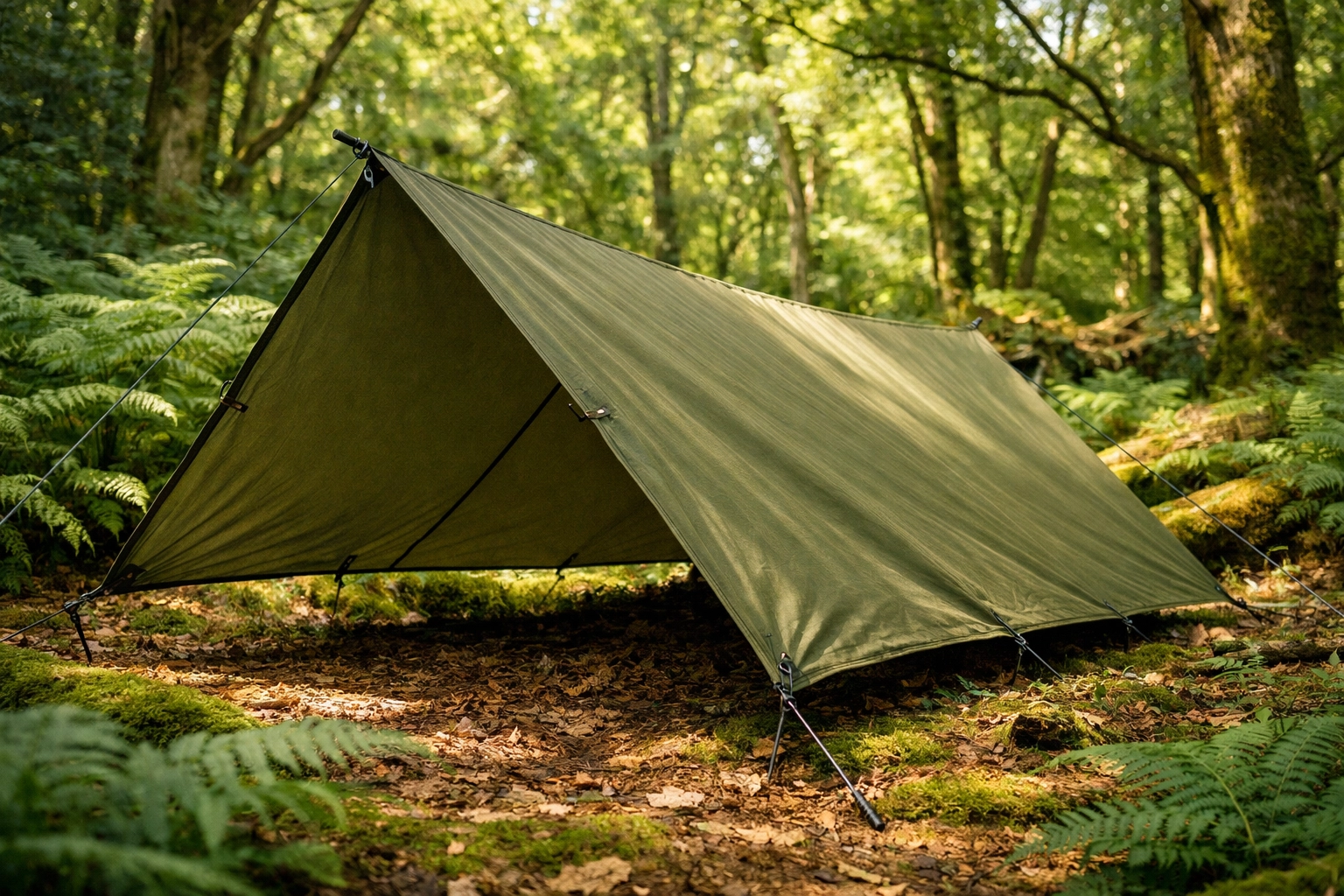
Tarp setup – faster, more reliable. Master the ridge line and A-frame configurations. Practice in your garden on a rainy Saturday.
Site selection matters more than construction skill. Never camp in valley bottoms, cold air sinks there. Avoid areas under dead trees or loose branches. Check the ground for rocks, roots, ant hills.
Your shelter needs two things: insulation from cold ground and protection from rain.
For ground insulation, gather dry leaves, pine needles, or bracken. Layer it thick, at least six inches. Your sleeping mat works better with natural insulation underneath.
For water protection, angle your shelter so rain runs off. Never create flat surfaces where water can pool.
Learn three essential knots. Practice until you can tie them in the dark.
Taut-line hitch – adjustable, holds tension on guy lines.
Bowline – creates secure loop that won't slip.
Trucker's hitch – gives mechanical advantage for tight lines.
These knots keep your shelter standing when wind picks up at 2 AM.
3. Water Purification – Never Risk Getting Sick
Dehydration ends adventures fast. Contaminated water ends them faster.
Find water sources first. Flowing streams beat stagnant ponds. Look for animal tracks leading downhill, they know where water is. Watch for vegetation clusters in dry areas, roots tap underground sources.
Never drink untreated water. Ever. Even clear mountain streams can carry giardia or cryptosporidium.
Master three purification methods.
Boiling – most reliable. Rolling boil for one minute kills everything. Two minutes above 2,000 meters elevation. Let it cool before drinking.
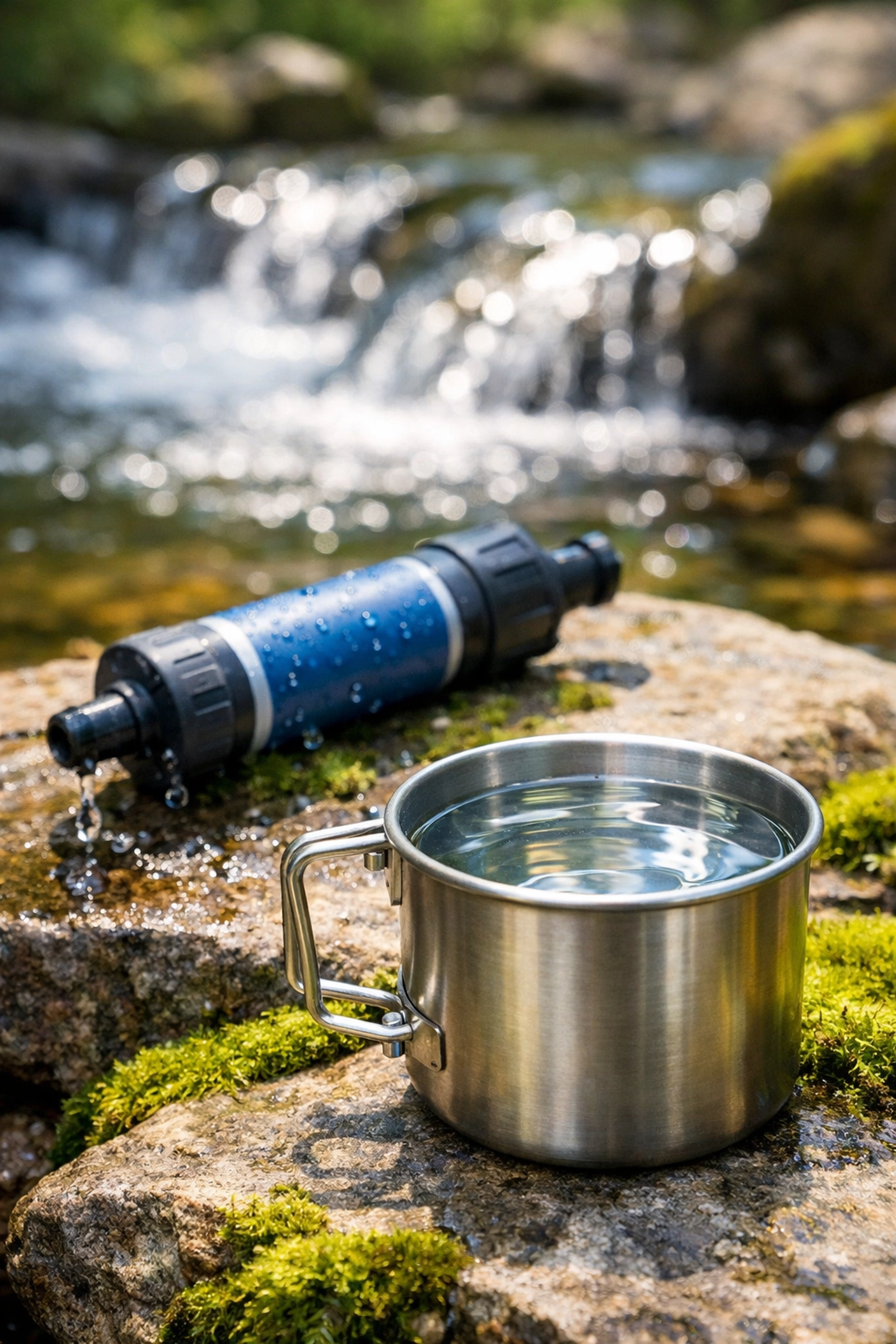
Filtering – carry a quality water filter. Sawyer, LifeStraw, or Katadyn. Follow manufacturer instructions exactly. Pre-filter cloudy water through fabric first.
Purification tablets – backup method. Chlorine dioxide tablets work better than iodine. Wait the full treatment time, usually 30 minutes.
Create a natural filter in emergencies. Layer sand, charcoal, and gravel in a container. This removes particles but doesn't kill pathogens. Still boil after filtering.
Develop water discipline. Ration your supply. Never contaminate your clean water source. Keep dirty gear away from your drinking water.
4. Foraging – Free Food from Your Surroundings
Foraging connects you to the landscape. It also extends your food supply when you're deep in the backcountry.
Start with three safe, common UK plants.
Nettles – everywhere, easy to identify. Wear gloves, pick young leaves. Boil for soup or tea. Cooking removes the sting.
Wild garlic – woodlands, distinctive smell. Leaves appear in spring. Use like regular garlic.
Blackberries – hedgerows, late summer. Everyone recognizes these. Pick high to avoid dog contamination.
The golden rule: never eat anything unless you're 100% certain. One mistake can kill you. Carry a UK wild plant identification guide. Cross-reference three different sources before eating anything new.
Practice sustainable harvesting. Take only what you need. Never uproot entire plants. Leave enough for wildlife and regrowth.
Learn what NOT to eat. Hemlock looks like wild carrot. Death cap mushrooms resemble edible varieties. Foxgloves are beautiful and deadly.
When in doubt, don't. Your packed food will keep you alive. Foraging should supplement, not replace, your supplies.
5. Navigation – Never Get Lost
GPS batteries die. Phone signals vanish. Maps and compasses never fail.
Learn to read Ordnance Survey maps. Understand contour lines: close together means steep terrain. Recognize symbols for cliffs, marshes, forests.
Master grid references. Practice plotting six-figure coordinates. This skill saves lives when you need rescue.
Use your compass properly. Hold it flat. Keep metal objects away: belt buckles, phones, keys all create interference. Take bearings, walk them accurately.
Learn natural navigation as backup.
Sun position – rises east, sets west. At noon, faces south in UK. Cast shadow shows north.
Stars – find Polaris using the Plough constellation. Polaris marks true north.
Moss – grows on north side of trees. Unreliable alone but useful with other signs.
Wind patterns – prevailing winds come from southwest in UK. Learn your local patterns.
Plan your route before leaving. Factor in terrain difficulty, weather forecast, water sources, potential hazards. Share your plan with someone. Give them your expected return time.
Train your observation skills. Notice broken branches, disturbed ground, animal tracks. The landscape tells stories if you learn to read them.
Start Practicing Today
These five skills take time to master. Don't wait until you're cold, hungry, and lost to learn them.
Start this weekend. Build a fire in your garden. Set up a tarp shelter. Practice your knots.
Book a wild camping guided UK experience with Open Sky Adventure to learn these skills from experts in real conditions. We'll teach you proper technique, share local knowledge, and keep you safe while you build confidence.
Or practice alone in safe locations. Visit local forests on sunny days. Test your skills when failure costs nothing.
Your next camping adventure UK trip will be completely different once you've mastered these fundamentals. You'll sleep better, eat better, and handle problems calmly.
The wilderness stops being intimidating. It becomes home.
Pack your gear. Find a safe practice spot. Start with fire. The rest will follow.