
Hey there, fellow adventurer. Ready to level up your camping adventure UK game?
Forget fancy gadgets. The wild doesn't care about your tech. It cares about what you know.
Fire starting. Navigation. Foraging. Shelter building. These four skills separate casual campers from confident wilderness explorers.
Master them. Your next wild camping guided UK trip will never be the same.
Let's get into it.
Why These Four Skills Matter
Picture this. You're deep in the Scottish Highlands. Your phone's dead. Rain's coming. Temperature's dropping.
What now?
These skills aren't just cool party tricks. They're your safety net. Your confidence builders. Your ticket to real freedom in the outdoors.
Learn them once. Use them forever.
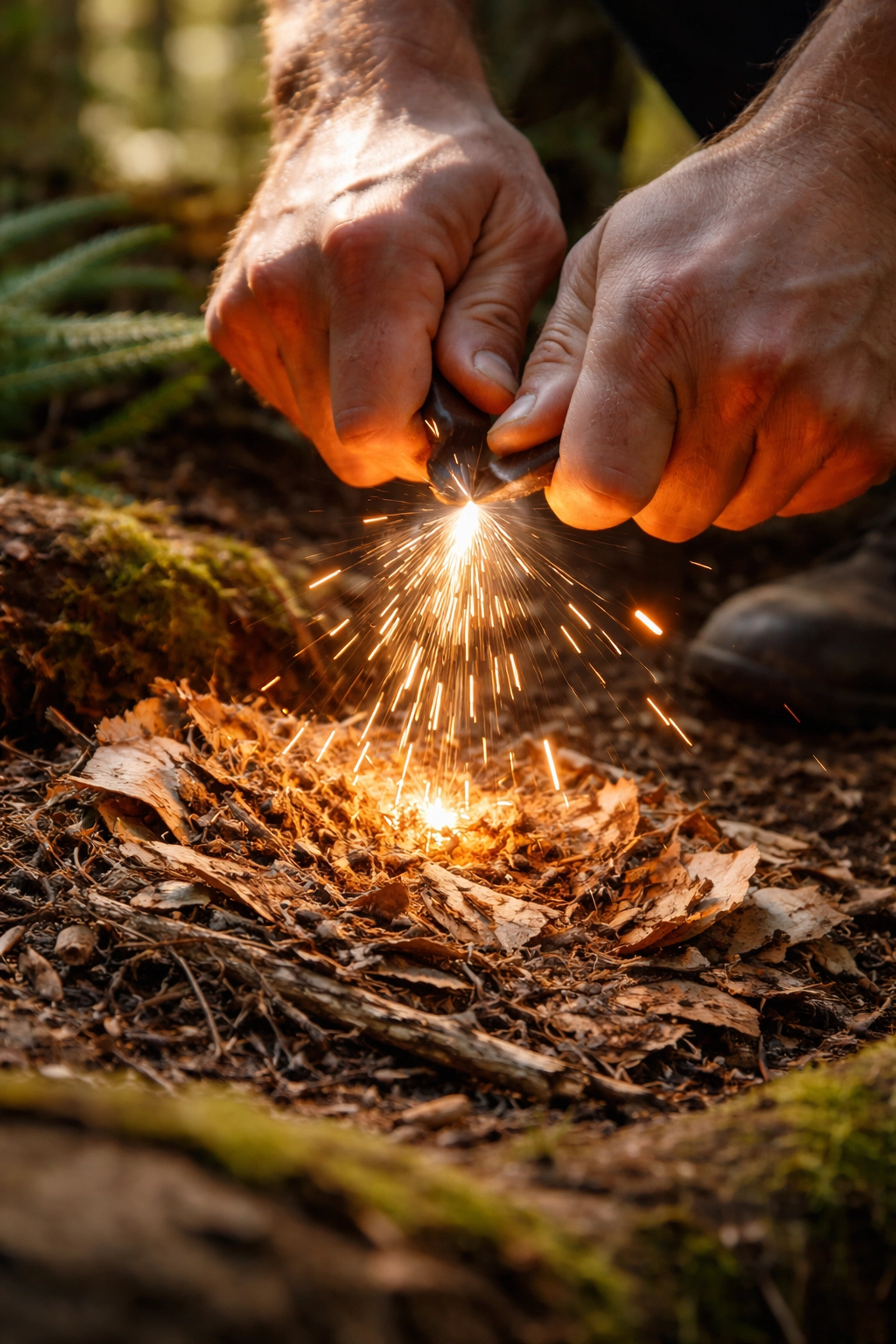
Fire Starting: Your Most Critical Skill
Fire changes everything. It warms you. It cooks your food. It boosts morale when everything else feels hard.
Every camping adventure UK enthusiast needs this skill locked in.
The Basics
Start simple. Carry a reliable fire steel. Learn to use it before you need it.
Gather three types of material:
- Tinder (dry grass, birch bark, cotton balls)
- Kindling (small twigs, pencil-thick sticks)
- Fuel (larger branches, split logs)
Build a small nest of tinder. Strike your steel. Blow gently. Add kindling slowly.
Patience wins here. Rush it, lose it.
Wet Weather Fire Making
UK weather laughs at your plans. Rain happens. Deal with it.
Look for standing dead wood. It's drier than anything on the ground. Split larger pieces open. The inside stays dry.
Birch bark ignites even when damp. Find some. Keep it in your pack.
Build a small platform of sticks. Keep your fire off wet ground.
Primitive Methods
Want to go deeper? Learn friction fire techniques.
Bow drill. Hand drill. These methods connect you to ancient knowledge.
They're hard. They take practice. But starting fire with nothing but wood and string? That's a different level of confidence.
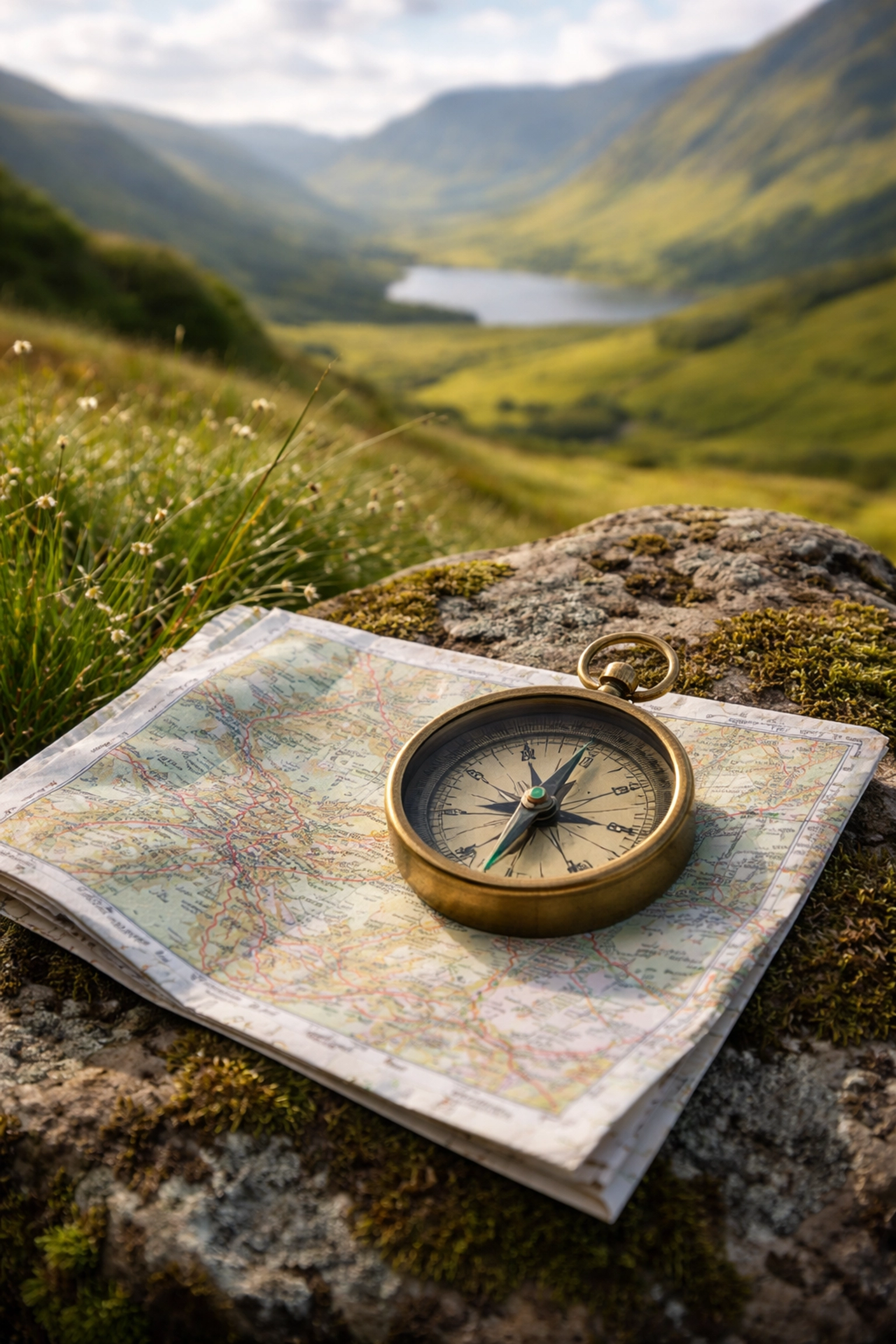
Navigation: Find Your Way Without GPS
Your phone battery won't last forever. Neither will your signal.
Real wilderness navigation means reading the land itself.
Map and Compass Fundamentals
Get a proper Ordnance Survey map. Learn to read contour lines. They tell you everything about the terrain ahead.
Your compass doesn't need batteries. It doesn't lose signal. It just works.
Practice these steps:
- Orient your map to north
- Identify features around you
- Plot your route using bearings
- Check your progress regularly
Start in familiar areas. Build confidence. Then take it wild.
Natural Navigation
The sun rises in the east. Sets in the west. Use it.
Moss grows thicker on the north side of trees. Usually.
Church doors face west. Satellite dishes point southeast.
These clues aren't perfect. But they're backup. They sharpen your awareness.
Route Planning for Wild Camping Guided UK Trips
Plan your route before you leave. Tell someone where you're going.
Identify escape routes. Know where the nearest roads are. Mark water sources.
Wild camping guided UK adventures become safer when you understand the land you're crossing.
Foraging: Find Food in the Wild
The UK offers more wild food than most people realise.
Learn what's safe. Learn what's not. The difference matters.
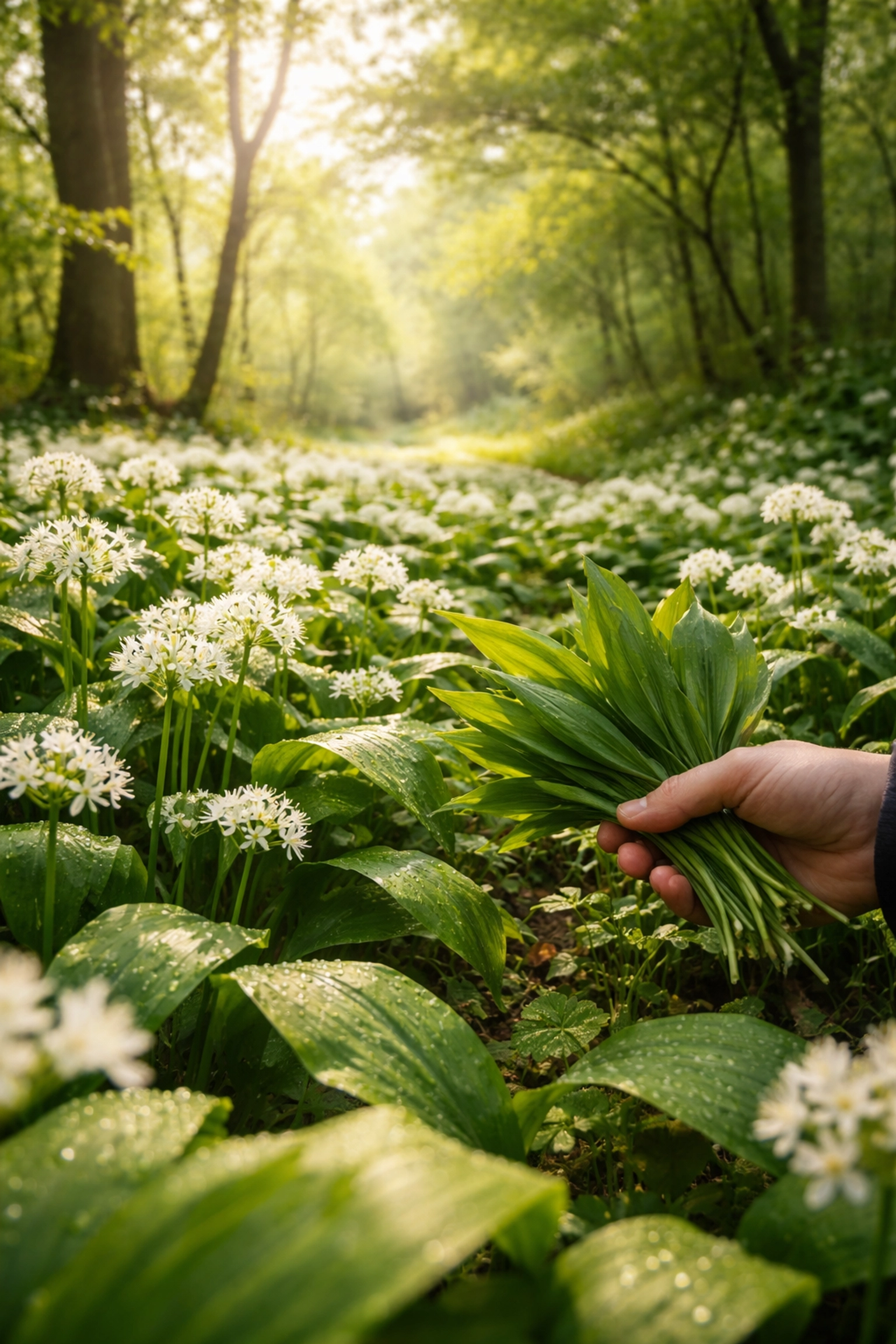
Safe Plants to Start With
Begin with easy wins:
- Nettles: Young leaves make excellent tea and soup
- Wild garlic: Unmistakable smell, grows in woodland
- Blackberries: You already know these
- Dandelions: Leaves for salad, roots for coffee substitute
These are common. They're hard to misidentify. Perfect starting points.
The Energy Equation
Here's the truth. Foraging burns calories. Sometimes more than the food provides.
Don't rely on wild food alone. Bring proper supplies. Treat foraging as a supplement. A skill builder. An adventure bonus.
What to Avoid
Never eat anything you can't identify with 100% certainty.
Mushrooms require serious expertise. Some deadly species look almost identical to edible ones. Skip them until you've trained properly.
Hemlock kills. It looks like wild carrot. Know the difference or don't pick either.
When in doubt, leave it out.
Game Preparation
If you're fishing or trapping legally, know how to process what you catch.
Clean fish quickly. Cook thoroughly. Store properly.
Learning to cook over open fire: spit roasting, bannock bread, improvised grills: turns survival into satisfaction.
Shelter Building: Sleep Safe Anywhere
A good shelter keeps you dry. Keeps you warm. Keeps you alive.
Site Selection
Find the right spot first. Building skills mean nothing in a bad location.
Look for:
- Natural windbreaks (rock formations, dense trees)
- Slightly elevated ground (avoids water pooling)
- Proximity to resources (water nearby, firewood available)
- No overhead hazards (dead branches, unstable slopes)
Avoid valleys. Cold air sinks. You'll freeze.
Lean-To Shelters
The classic bushcraft shelter. Simple. Effective.
Find a sturdy horizontal branch. Prop it between two trees or anchor points.
Lean branches against it at 45 degrees. Layer with smaller branches. Cover with leaves, ferns, or whatever's available.
Build the opening away from wind. Make it just big enough to fit inside. Smaller = warmer.
Debris Huts
Going deeper? Build a full debris hut.
Create an A-frame structure with a central ridge pole. Cover entirely with branches and forest debris.
Insulate the floor with dry leaves. Three feet deep if you can manage it.
This shelter can keep you warm without fire. In UK conditions, that's valuable knowledge.
Tarp Configurations
Bringing a lightweight tarp? Learn multiple setups.
A-frame. Lean-to. Diamond fly. Each suits different conditions.
Practice at home. Set up fast in daylight. You don't want to learn in the dark while rain hammers down.
Putting It All Together
These skills connect. They support each other.
Good navigation gets you to good shelter sites. Fire skills make any camp comfortable. Foraging knowledge adds variety to your meals.
Practice one at a time. Then combine them.
Your confidence grows with each trip. Your connection to the land deepens.
Where to Learn These Skills in the UK
The Lake District. The Scottish Highlands. The Peak District. Sussex woodlands. East Anglia.
Courses run year-round across all skill levels. Weekend intensives. Multi-day expeditions. Beginner workshops to advanced training.
Wild camping guided UK experiences teach these skills in real conditions. With real experts. In real wilderness.
You learn faster with guidance. You stay safer while pushing boundaries.
Your Next Step
Pick one skill. Practice it this weekend.
Light a fire in your garden. Study your local OS map. Identify three edible plants on your next walk. Build a simple shelter in nearby woodland.
Small steps lead to big confidence.
Ready to take your camping adventure UK skills further? Explore what's possible at Open Sky Adventure and join others who want more from their time outdoors.
The wild is waiting. Go meet it prepared.