
Welcome to the world of the wild. You are here because you love the outdoors. You want to explore the UK. You want to feel free. But freedom requires skill. You need to know where you are. You need to know where you are going.
Modern life relies on batteries. Phones die. GPS signals drop. Screens shatter in the rain. When technology fails, you need a backup. Natural navigation is that backup. It is the art of reading the world. It is a vital part of any camping adventure uk.
This guide teaches you the basics. It shows you how to use your eyes. It teaches you to trust your senses. You will learn to navigate like the explorers of old. This is essential for your first wild camping guided uk experience.
Trust Your Tools First
Start with the basics. Buy a high-quality topographic map. Get a baseplate compass. These are your best friends. They do not need charging. They work in the dark. They work in the rain.
Learn your map first. Look at the lines. These are contours. They show you the shape of the land. Close lines mean a steep hill. Wide lines mean flat ground. Find the symbols. Look for forests, streams, and paths.
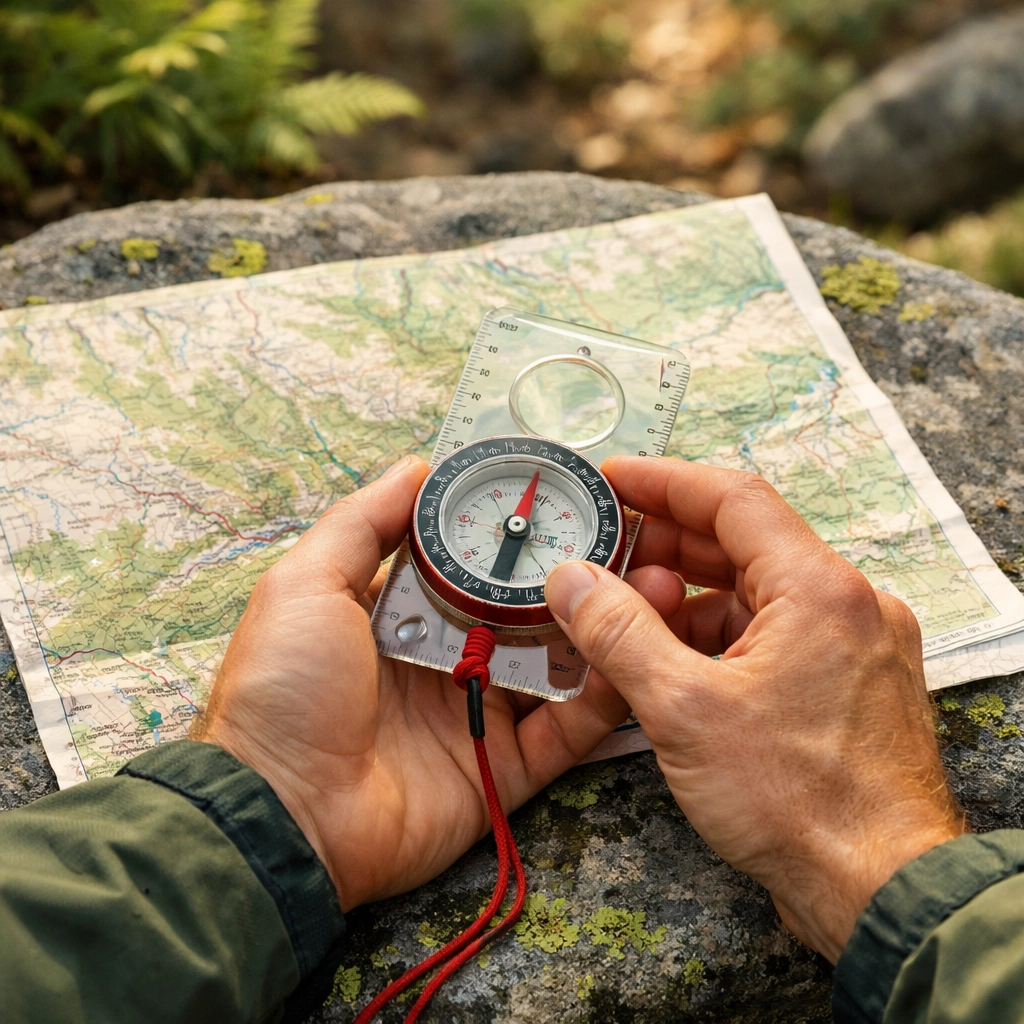
Place your map on a flat rock. Hold your compass. Line up the needle. The red end points north. Turn your map until it matches. The top of the map is now north. This is called orienting the map. Do this every time you stop. It keeps your brain aligned with the ground.
Mastering the Compass
The compass is simple but powerful. It has a rotating dial. It has a magnetic needle. It has a direction of travel arrow. Use these three things together.
To take a bearing, point the arrow at your destination. Turn the dial until the lines match the needle. Read the number. This is your bearing. Hold the compass flat in your palm. Keep it away from metal. Even a zipper can move the needle.
Walk in the direction of the arrow. Do not just look at the compass. Look at the horizon. Pick a tree or a rock in the distance. Walk to it. Check your compass again. Pick a new target. This keeps you in a straight line. It stops you from walking in circles.
Reading the Landscape
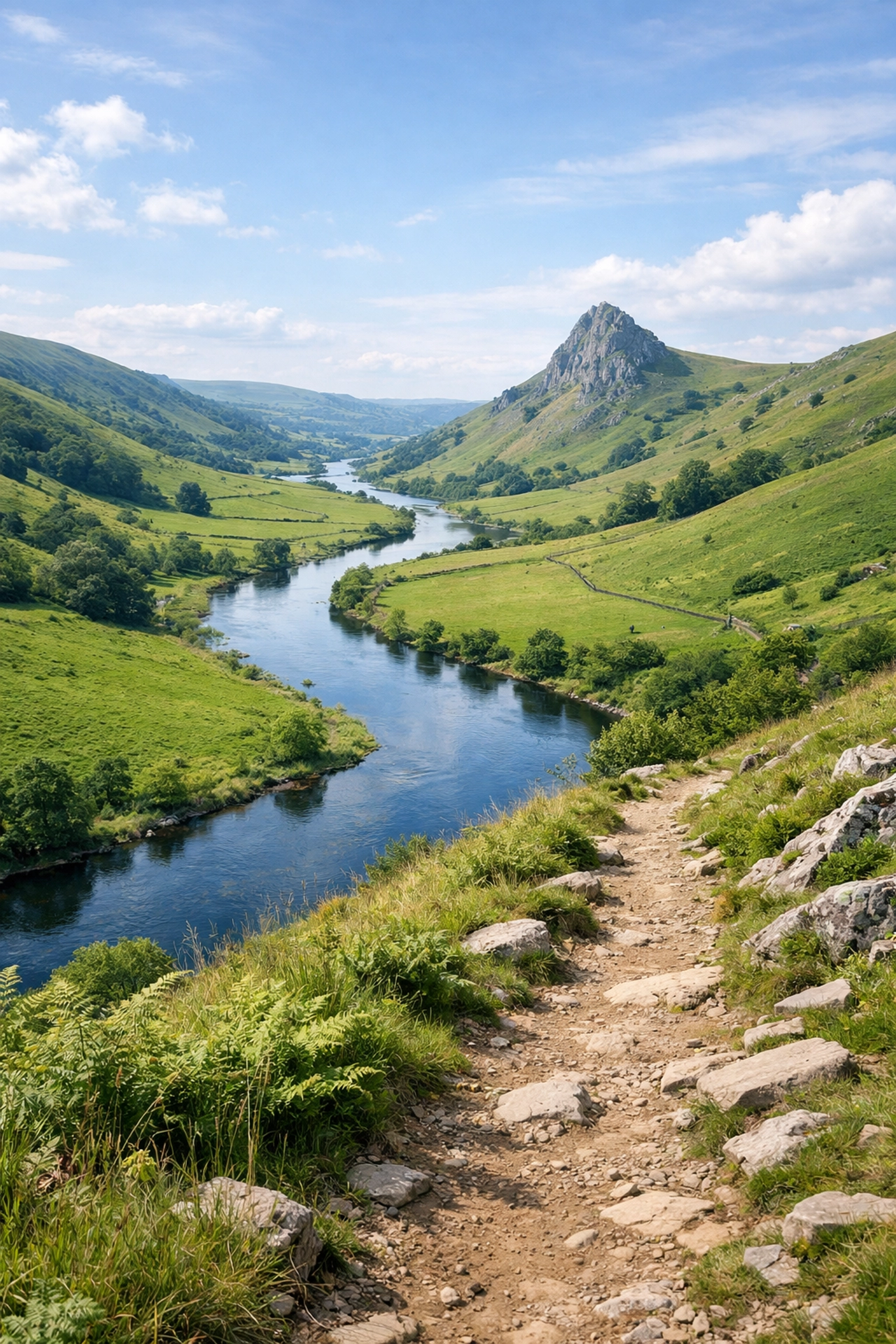
The land tells a story. You just have to listen. Use "handrails" to find your way. A handrail is a long feature. It can be a river, a fence, or a ridge. If you walk beside it, you cannot get lost. It guides you like a hallway.
Identify "catch features" before you start. These are safety nets. Imagine you are walking toward a forest. Behind the forest is a major road. The road is your catch feature. If you hit the road, you have gone too far. Stop and re-evaluate.
Look for "attack points" too. These are obvious landmarks near your goal. Perhaps you are looking for a small cave. Finding a cave is hard. Finding a giant, jagged cliff is easy. Find the cliff first. Then navigate the short distance to the cave.
Navigation Using the Sun
The sun is the ultimate guide. It is predictable. It rises in the east. It sets in the west. In the UK, the sun is always to the south at noon. Use this to find your bearings.
Try the watch method. Use an analog watch. Point the hour hand at the sun. Find the midway point between the hour hand and the twelve. That point is South. This works well on a sunny camping adventure uk.
If you have no watch, use a shadow stick. Push a stick into the ground. Mark the tip of the shadow with a stone. Wait fifteen minutes. Mark the new tip of the shadow. Draw a line between the two stones. This line runs East-West. The first stone is West. The second is East. Stand with the first stone on your left. You are now facing North.
Nature's Secret Clues
Plants and trees respond to the environment. They want sunlight. They want protection from the wind. Use this to your advantage.
Look at the trees. Most branches grow on the south side. They reach for the sun. The south side of a tree is often bushier. The north side may have shorter branches.
Check for moss. People say moss only grows on the north side. This is not always true. Moss likes shade and moisture. In a dark forest, it grows everywhere. Only trust moss if the tree is in an open field. Even then, combine it with other clues.
Observe the wind. In the UK, the prevailing wind comes from the Southwest. Trees on high ridges often lean away from this wind. They look "flagged." If the trees lean Northeast, you know which way you are facing.
Navigating at Night
Wild camping often means moving in the dark. The stars are your map in the sky. Find the Big Dipper. It looks like a giant ladle. Look at the two stars at the end of the ladle. Follow their line upward. You will hit a bright star. This is the North Star.
The North Star does not move. It stays fixed while others rotate. If you can see it, you know North. This is a vital skill for any outdoor survival situation.
Use the moon if the stars are hidden. If the moon rises before the sun sets, the bright side is West. If it rises after midnight, the bright side is East. It is a rough guide, but it helps.
Planning Before You Go
Good navigation starts at home. Study your route before you leave. Use digital tools to visualize the terrain. Then, print your map.
Check the weather. Fog changes everything. It hides your landmarks. It makes the world small. If fog rolls in, stay put or use your compass strictly. Do not guess.
Tell someone your plan. Share your route. Give them an estimated return time. This is basic safety for a wild camping guided uk trip. If you do not return, they know where to look.
What to Do If You Get Lost
Do not panic. Panic is your biggest enemy. Stop walking immediately. Sit down. Drink some water. Eat a snack.
Use triangulation to find your spot. Pick two big landmarks. A mountain peak and a bridge work well. Take a bearing for each. Draw the lines on your map. Where the lines cross is your location.
If you still feel lost, stay put. Especially if it is getting dark. It is easier to find a stationary person than a moving one. Use your whistle. Three short blasts is the international distress signal.
Practice Makes Perfect
Do not wait for a crisis to learn. Practice in your local park. Use your map on familiar trails. Try to find your way without looking at your phone.
Join a group. Learning with others is faster. Expert guides can show you the nuances of the UK terrain. They can teach you about essential survival skills while you hike.
Navigation is a muscle. You must exercise it. The more you use your eyes, the more you see. You will start to notice the slope of the land. You will recognize the types of rocks. The wilderness will stop being a maze. It will become a familiar home.
Start Your Adventure
Mastering natural navigation changes your relationship with nature. You stop being a visitor. You become a participant. You move with confidence. You explore further.
Are you ready to test your skills? Are you ready for a real camping adventure uk? We handle the logistics. You focus on the skills. Join us for a journey into the heart of the British wild.
Visit Open Sky Adventure today. Book your first guided trip. Learn to lead the way. Proceed to our booking page now.