
Your kids are glued to screens. You want them outdoors. You're planning your first camping adventure UK trip and wondering what they'll actually do out there.
Here's the thing: kids don't need entertainment, they need skills.
Real survival skills turn camping into an adventure. They transform whining into confidence. They make your family camping trip something your kids will talk about for years.
These ten skills work. They're age-appropriate, safe, and genuinely useful. Best part? Your kids will master them faster than you think.
1. Fire Lighting (The Gateway Skill)
Start with the basics. Show them tinder, kindling, and fuel. Make them understand the difference.
Tinder catches the spark. Kindling builds the flame. Fuel keeps it burning.
Let them gather materials. Dead leaves and dry grass for tinder. Twigs the thickness of a pencil for kindling. Branches as thick as your wrist for fuel.
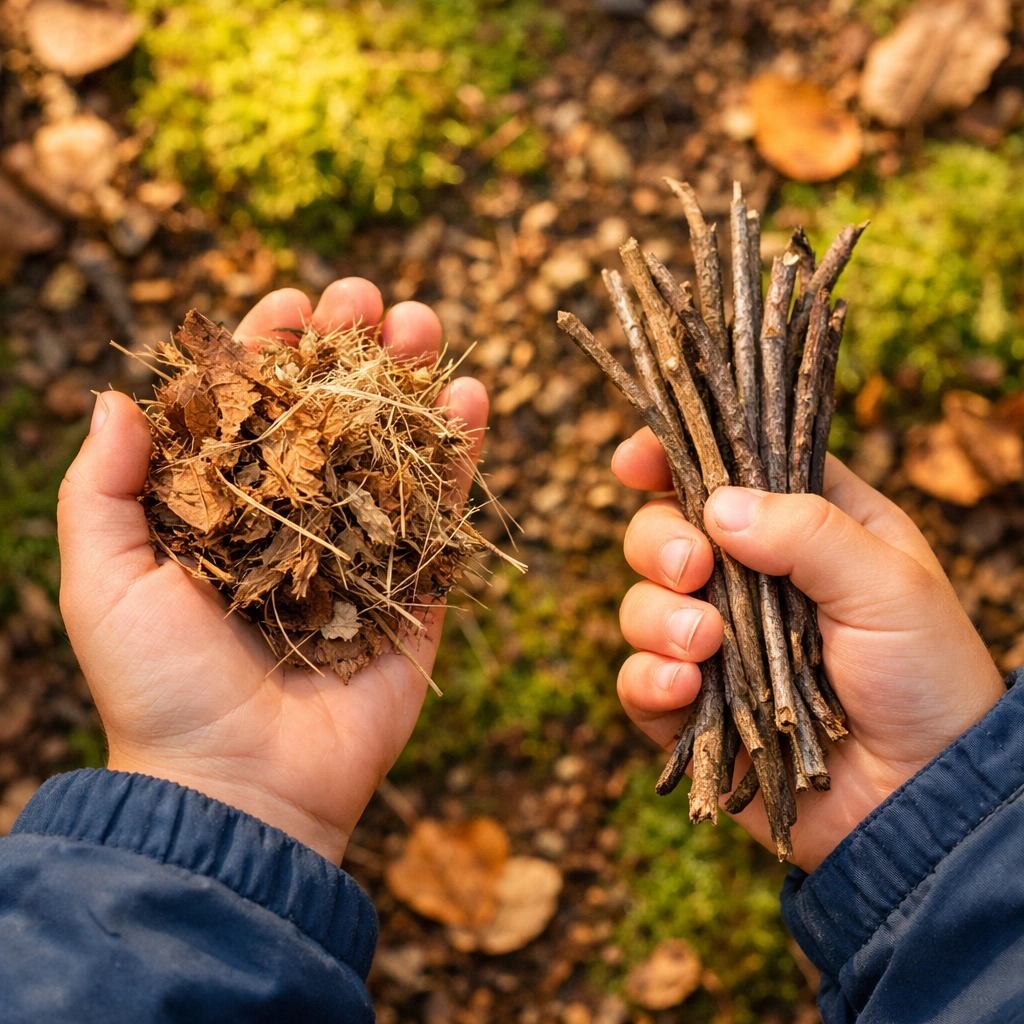
Progress to flint and steel once they grasp the concept. The first spark they create themselves? Magic. Pure magic.
Safety first. Set up your fire pit 4 meters from bushes. Bare ground only. Circle it with stones. Make this a non-negotiable rule.
Fire lighting builds confidence like nothing else. It's primal, essential, and deeply satisfying.
2. Shelter Building (Nature's Architecture)
Give kids sticks and they'll build something. Give them purpose and they'll build shelter.
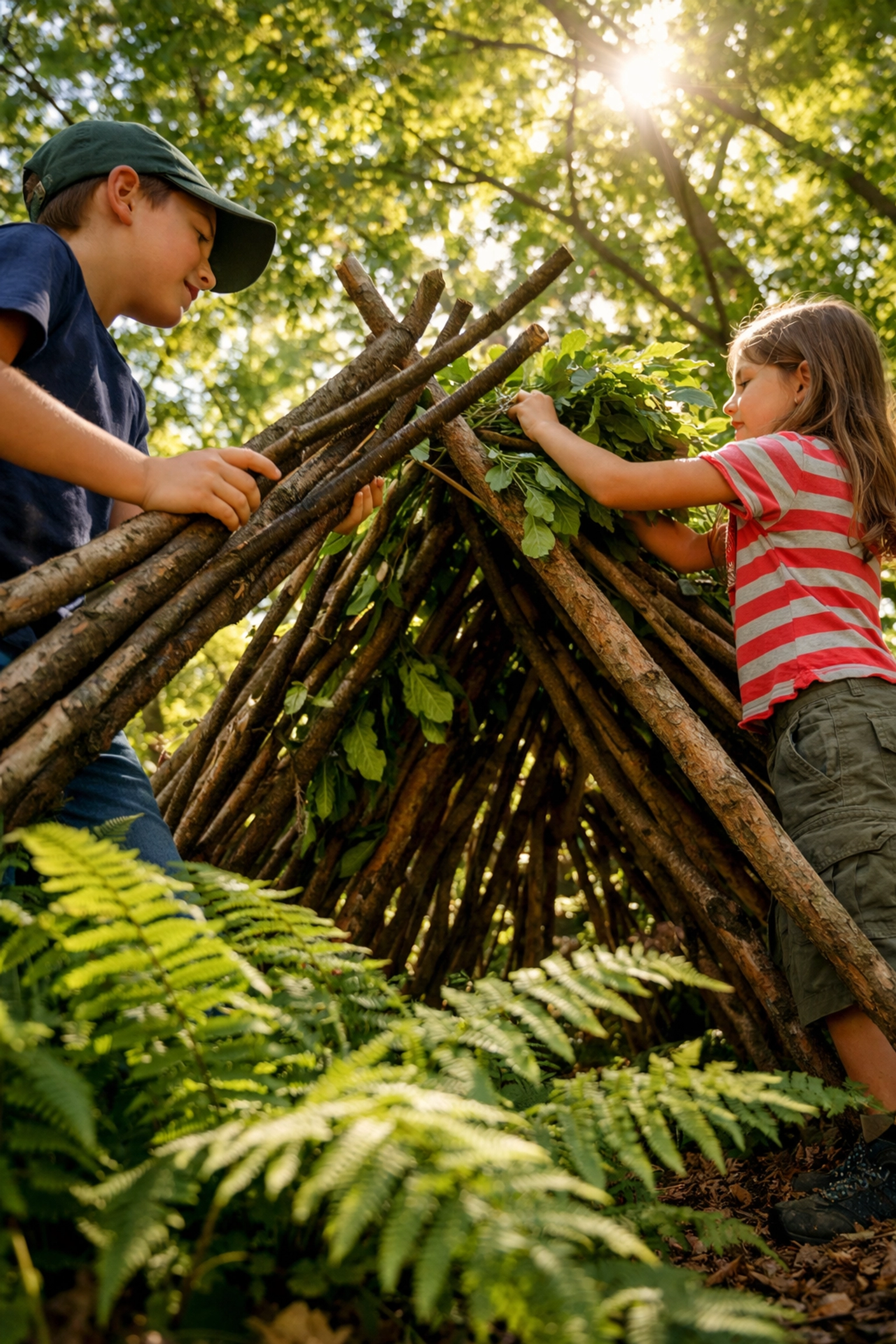
Start simple. A lean-to against a fallen log. Branches propped at an angle. Cover with leaves and bracken.
Progress to tipis. Find three sturdy branches. Lash them at the top. Add more branches around the frame. Cover the gaps.
This skill teaches teamwork naturally. One kid holds, another passes materials, a third fills gaps. No forced cooperation needed: the task demands it.
Look for natural features together. Y-shaped tree trunks make perfect support. Fallen logs provide ready-made walls. Dense bushes offer instant coverage.
Building shelters burns energy. It develops spatial reasoning. It's problem-solving disguised as play.
3. Map and Compass Navigation (Getting Unlost)
Your kids can navigate. You just need to show them how.
Start with your family walk. Give them the map. Let them match landmarks to symbols. Path to path, stream to stream, hill to hill.
Add a compass next. North is north: show them this simple truth. The needle always points the same direction.
Combine both tools gradually. Plot a course. Follow a bearing. Check your position.
This skill builds independence. Kids who can navigate feel capable. They stop asking "how much further" because they know.
Practice on every walk. Make it routine, not special. Navigation becomes second nature.
4. Whittling (Focus Through Wood)
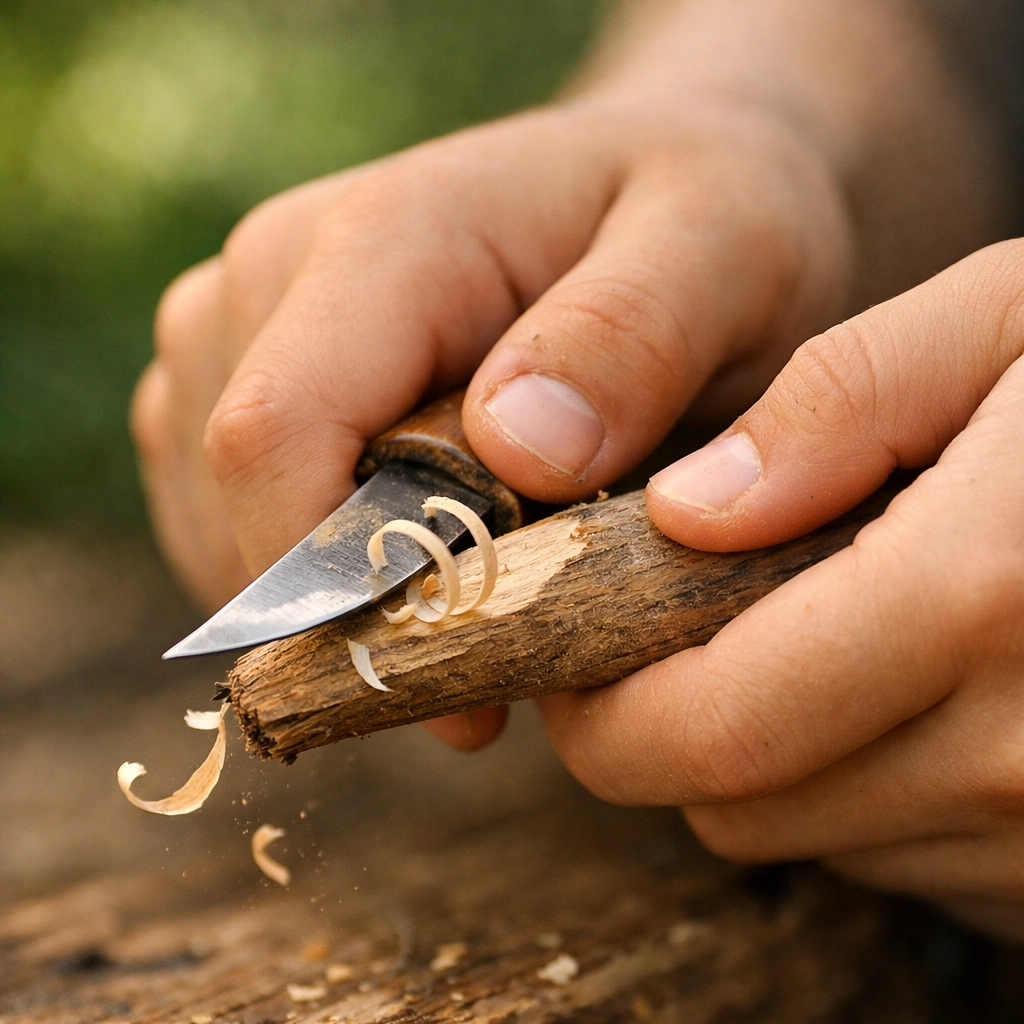
Hand your kid a penknife and watch them transform. Whittling demands attention. It channels energy into creation.
Start with bark removal. Show them to cut away from their body, never toward. One stroke at a time. Slow and steady.
Progress to simple shapes. Points. Curves. Notches. Let them discover what wood can become.
The repetitive motion calms anxious minds. The focus blocks out distractions. The end product proves their capability.
Supervise closely at first. Establish rules. Follow them consistently. Respect builds responsibility.
Whittling develops fine motor skills while teaching patience. Both are rare commodities in childhood today.
5. Animal Tracking (Reading Nature's Stories)
Most kids can identify corporate logos. Few can identify local wildlife. Fix this.
Animal tracking gets them looking down, noticing details, reading signs. Paw prints in mud. Scratches on bark. Droppings on trails.
Start with obvious tracks. Teach them to identify size, shape, number of toes. Match tracks to animals using a simple guide.
Progress to behavior reading. Where do animals drink? Where do they sleep? What do they eat? Tracks tell stories if you learn the language.
This skill sharpens observation. It connects kids to the environment. It makes the wild feel alive, not empty.
Every walk becomes a detective mission. Every muddy patch becomes a clue.
6. Campfire Cooking (Edible Achievement)
Marshmallows are fine for beginners. But real wilderness cookery? That's where skills develop.
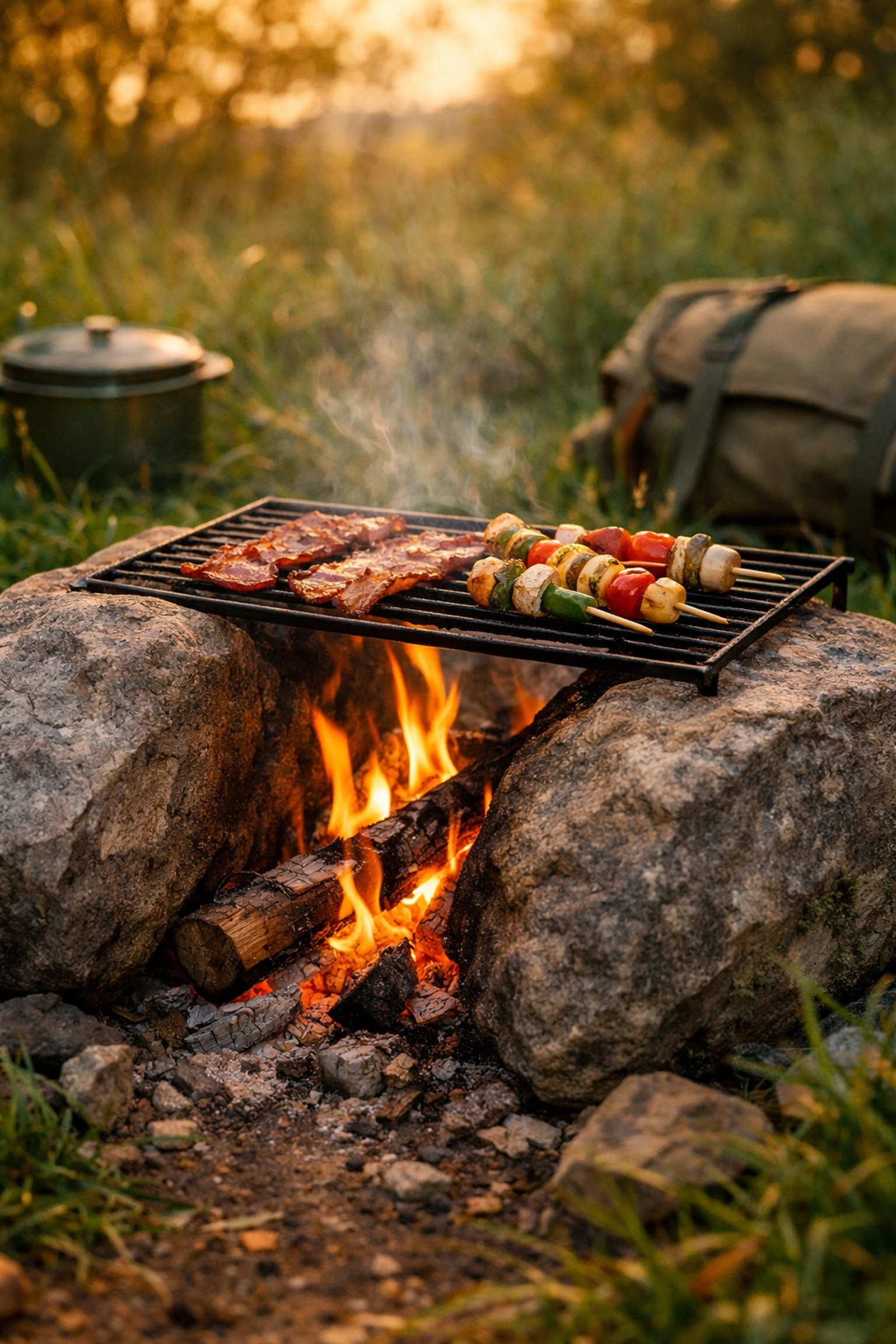
Show them the U-shaped rock method. Two rocks create a channel. Build your fire between them. Rest a grate on top.
Teach fire temperature control. Big flames for boiling. Hot coals for grilling. Smoldering embers for slow cooking.
Let them prepare simple meals. Eggs in the morning. Sausages for lunch. Jacket potatoes in the coals for dinner.
Cooking over fire teaches patience and timing. Food tastes better when you've made it yourself. Pride comes standard with every meal.
Progress to more complex recipes as confidence grows. The skills stay with them forever.
7. Fishing Basics (Patience Pays Off)
Fishing teaches stillness. It rewards patience. It connects effort to outcome.
Start with rod assembly. Show them each component. Explain its purpose. Let them put it together themselves.
Demonstrate bait selection and hook attachment. Safety with hooks comes first: respect the sharp end.
Teach basic casting technique. Back, pause, forward, release. Practice on grass before trying water.
Cover catch and release ethics. Handle fish gently. Remove hooks carefully. Return them quickly.
If you keep one, show proper preparation. Gut it together. Cook it at camp. Eat what you catch.
Fishing slows kids down. It makes them observe water, weather, and wildlife. These quiet moments matter.
8. Knot Tying (Connections That Hold)
Six knots cover most camping situations. Teach them one at a time.
Bowline creates a fixed loop. Clove hitch secures to poles. Taut-line hitch adjusts tension. Sheet bend joins two ropes. Square knot ties packages. Trucker's hitch provides mechanical advantage.
Start with applications, not just technique. We need to hang this tarp: here's the knot that works. We need to secure this guy line: this knot adjusts as it tightens.
Practice with thick rope first. Thin cord comes later. Repetition builds muscle memory.
Kids who can tie knots feel competent. They solve problems independently. They stop asking for help with every little thing.
9. Foraging Basics (Nature's Pantry)
Foraging requires caution and knowledge. Start conservatively.
Teach the golden rule first: never eat anything unless you're absolutely certain. When in doubt, leave it out.
Begin with three safe, easily identified plants. Blackberries in late summer. Wild garlic in spring. Hazelnuts in autumn.
Show them identification markers. Touch. Smell. Visual confirmation. Multiple checks before picking.
Explain sustainable harvesting. Take some, leave plenty. Never strip a plant completely. Respect future growth.
Foraging connects kids to seasonal cycles. It makes them see food sources everywhere. It builds wild confidence carefully.
10. First Aid Fundamentals (Caring Under Pressure)
Basic first aid transforms kids from helpless to helpful. Teach practical skills for camping situations.
Start with cuts and scrapes. Clean the wound. Apply pressure. Bandage properly. Keep it clean.
Cover blister treatment. Drain carefully. Protect with padding. Prevent with proper socks.
Teach insect bite response. Identify what bit them. Clean the area. Reduce swelling. Watch for reactions.
Show burn treatment for minor campfire accidents. Cool water immediately. Cover loosely. Monitor closely.
Practice scenario-based training. Make it real but calm. Build confidence through repetition.
First aid skills create empathy. Kids learn to help others. They understand consequences and prevention.
Start Small, Build Gradually
Don't attempt all ten skills on your first camping adventure UK trip. Pick three. Master those. Add more next time.
Consider joining wild camping guided UK experiences initially. Professional guides teach proper technique. They ensure safety while building confidence. They know the best spots for practicing each skill.
Your kids are more capable than you think. They want challenges, not protection. They crave real experiences, not manufactured entertainment.
These survival skills create memories that last. They build confidence that carries into adulthood. They transform your family camping trips from endurance tests into genuine adventures.
Pack your gear. Choose your skills. Head outside. Your family's camping adventure UK journey starts now.