
Hello friend. Welcome to the world of lighter packs. You want to see the UK wilderness. You want to climb hills. You want to trek through valleys. You do not want a sore back. Heavy gear ruins the mood. It slows your pace. It drains your energy.
Many hikers carry too much. They pack for every "what if" scenario. They buy heavy bags. They carry giant bottles. This stops today. You are here to learn how to pack smart. These hacks work for a weekend trip. They work for a wild camping guided uk experience.
Let’s get your pack weight down.
1. Swap the Rain Cover for a Trash Liner
Most backpacks come with a rain cover. These covers are heavy. They catch the wind like a sail. They often let water seep into the back panel. Stop using them.
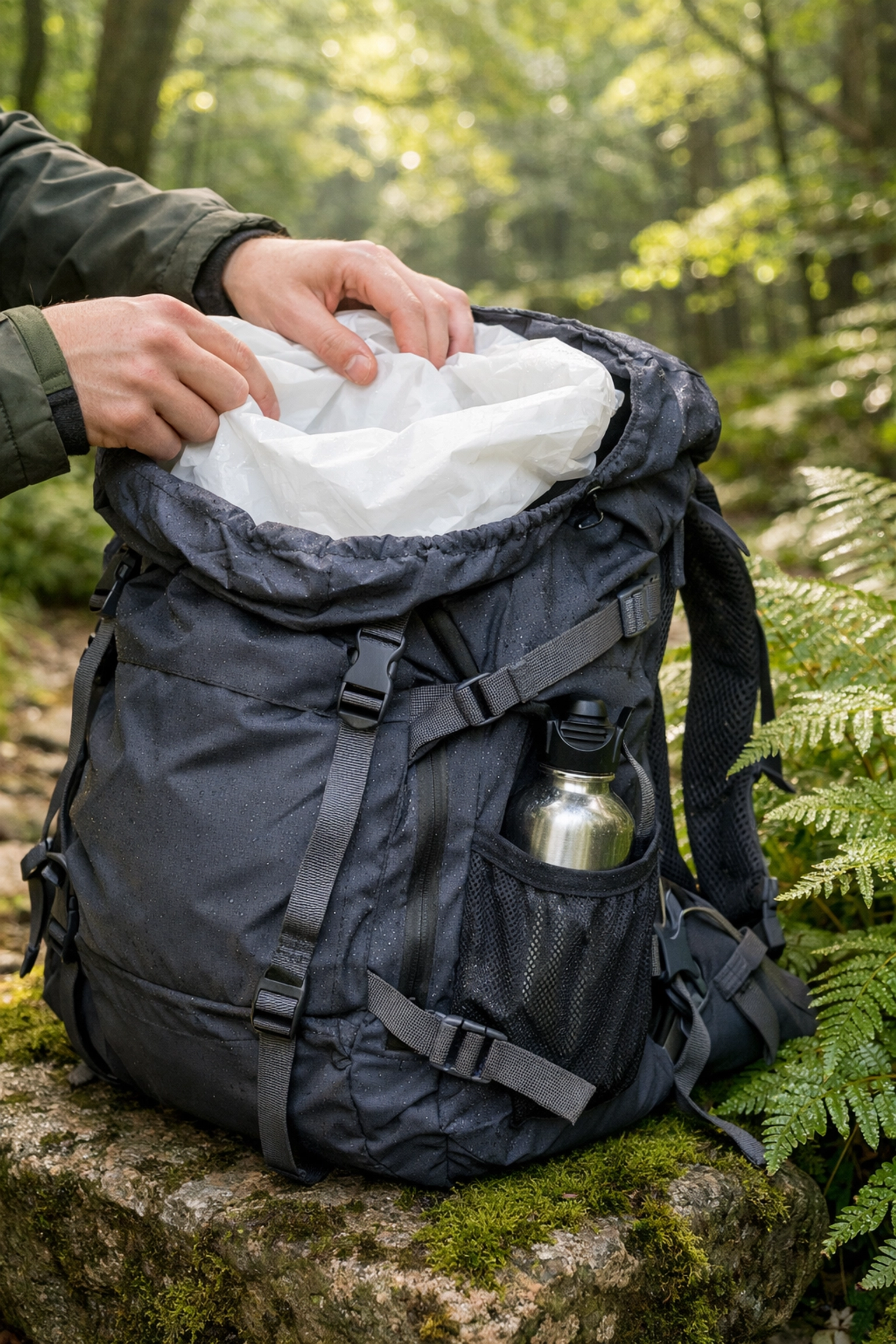
Buy a heavy-duty trash compactor bag. These are thicker than standard kitchen bags. They are 100% waterproof. Open your empty backpack. Place the trash bag inside. Line the entire main compartment.
Put your dry gear inside the bag. Squeeze the air out. Twist the top. Tuck it down. Your gear stays dry even if you fall in a stream. This saves you the weight of a dedicated cover. It keeps your pack simpler.
2. Roll Your Clothes for Maximum Space
Folding creates air pockets. Air pockets take up space. Space requires a bigger, heavier backpack. You want to compress everything.
Take your shirt. Lay it flat. Fold the sleeves in. Roll it tight from the bottom up. Do the same for your socks and trousers. Use rubber bands to hold the rolls if needed.
Stacked rolls are easier to organize. You can see every item at once. You don’t have to dig. Digging wastes time. Rolling also prevents deep creases. It keeps your gear compact. A compact pack stays closer to your center of gravity. This makes your camping adventure uk much more comfortable.
3. Use Compression Packing Cubes
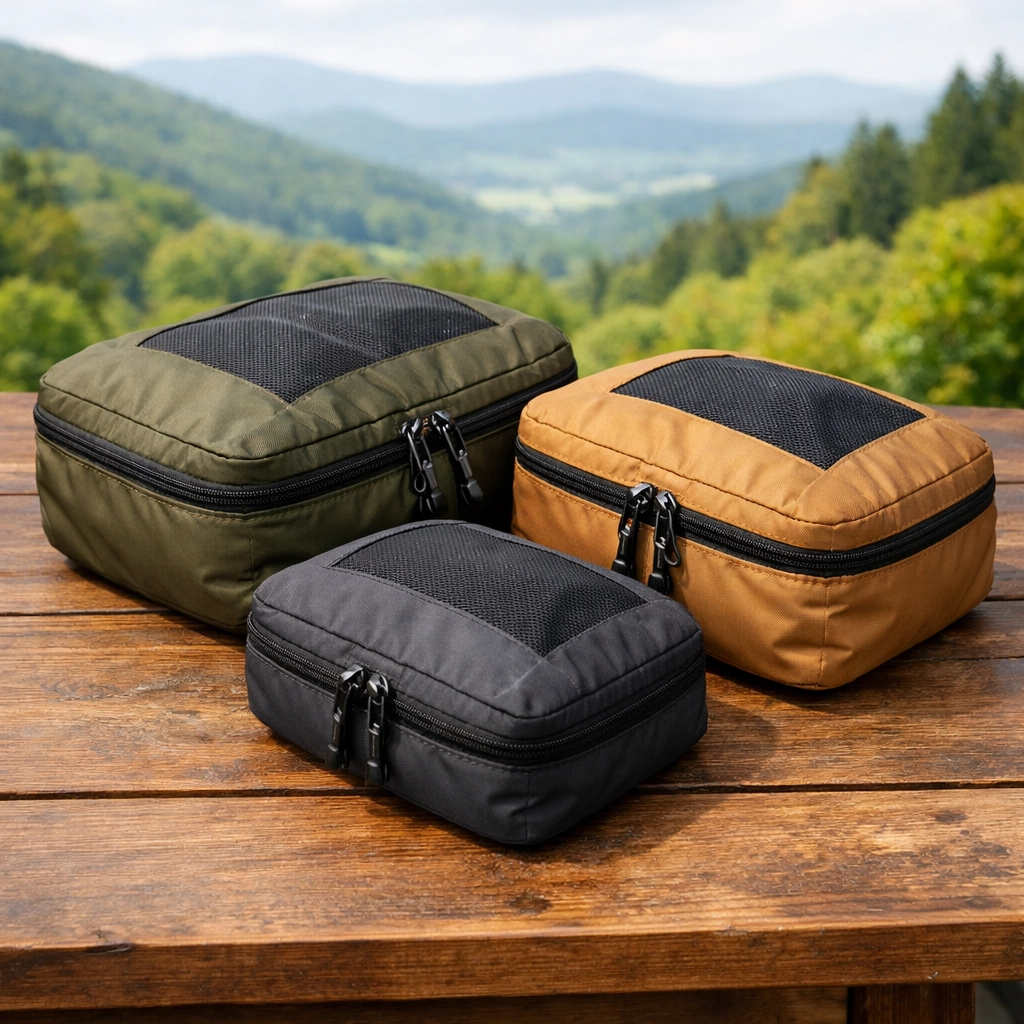
Rolling is good. Compression is better. Buy a set of lightweight compression cubes. These are different from regular packing cubes. They have an extra zipper.
Put your rolled clothes inside the cube. Zip the main opening. Now, zip the second "compression" zipper. This forces the air out. Your pile of clothes will shrink by half.
Organize by category. Put all your base layers in one. Put your evening wear in another. This keeps your pack tidy. Tidy packs are lighter mentally. You spend less time searching. You spend more time hiking. Check out our guide on outdoor survival skills to see why organization matters in the wild.
4. Ban All Cotton from Your Pack
Cotton is heavy. Cotton absorbs water. Cotton stays wet forever. In the UK, it rains. If your cotton shirt gets wet, it stays wet. This adds weight to your pack. It also makes you cold. Cold leads to danger.
Choose synthetic materials. Look for polyester or nylon. These fabrics are light. They wick sweat away. They dry in the wind. If you prefer natural fibers, choose Merino wool. It is light and warm. It does not smell after three days of hiking.
Go through your closet. Check the tags. If it says 100% cotton, leave it at home. This simple rule can shave kilograms off your load. It is an essential part of mastering outdoor survival skills.
5. Cut the Excess Fat from Your Gear
Look at your backpack. It has long straps. It has dangling adjusters. It has thick manufacturer tags. These all weigh something. Over an entire pack, this "dead weight" adds up.
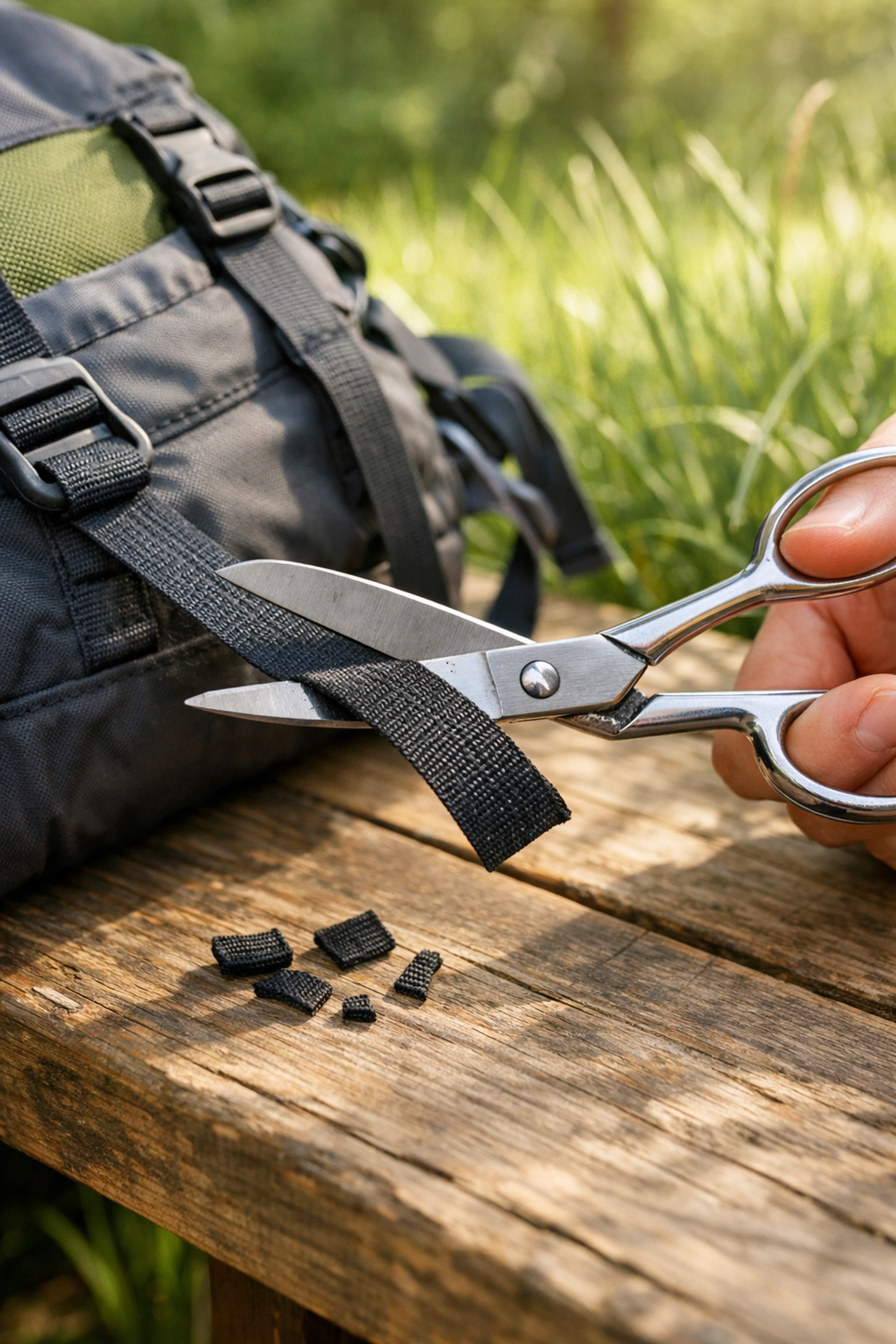
Put your pack on. Adjust it to fit perfectly. Note how much extra strap is hanging off. Take the pack off. Grab a pair of scissors. Cut the excess strap. Leave about two inches for adjustments.
Singe the edges with a lighter. This prevents fraying. Do this for your hip belt. Do it for your shoulder straps. Cut out the heavy internal care labels from your clothes too. It sounds extreme. It works. Every gram you remove is a gram you don't have to carry up a mountain.
6. Wrap Duct Tape Around Your Water Bottle
Duct tape is essential. It fixes ripped tents. It repairs broken poles. It stops blisters. But a full roll is heavy and bulky. Do not carry the whole roll.
Take your reusable water bottle. Clean the outside. Take your roll of duct tape. Start wrapping the tape around the center of the bottle. Wrap it ten or fifteen times.
Now you have a supply of tape. It takes up zero extra space. It adds almost no weight. You can peel off exactly what you need when you need it. This keeps your repair kit minimalist and efficient. It's one of those essential survival skills that experts use to stay light.
7. Carry a Multi-Purpose Lightweight Poncho
Heavy waterproof jackets are great for winter. For most UK adventures, they are overkill. They are stiff and heavy.
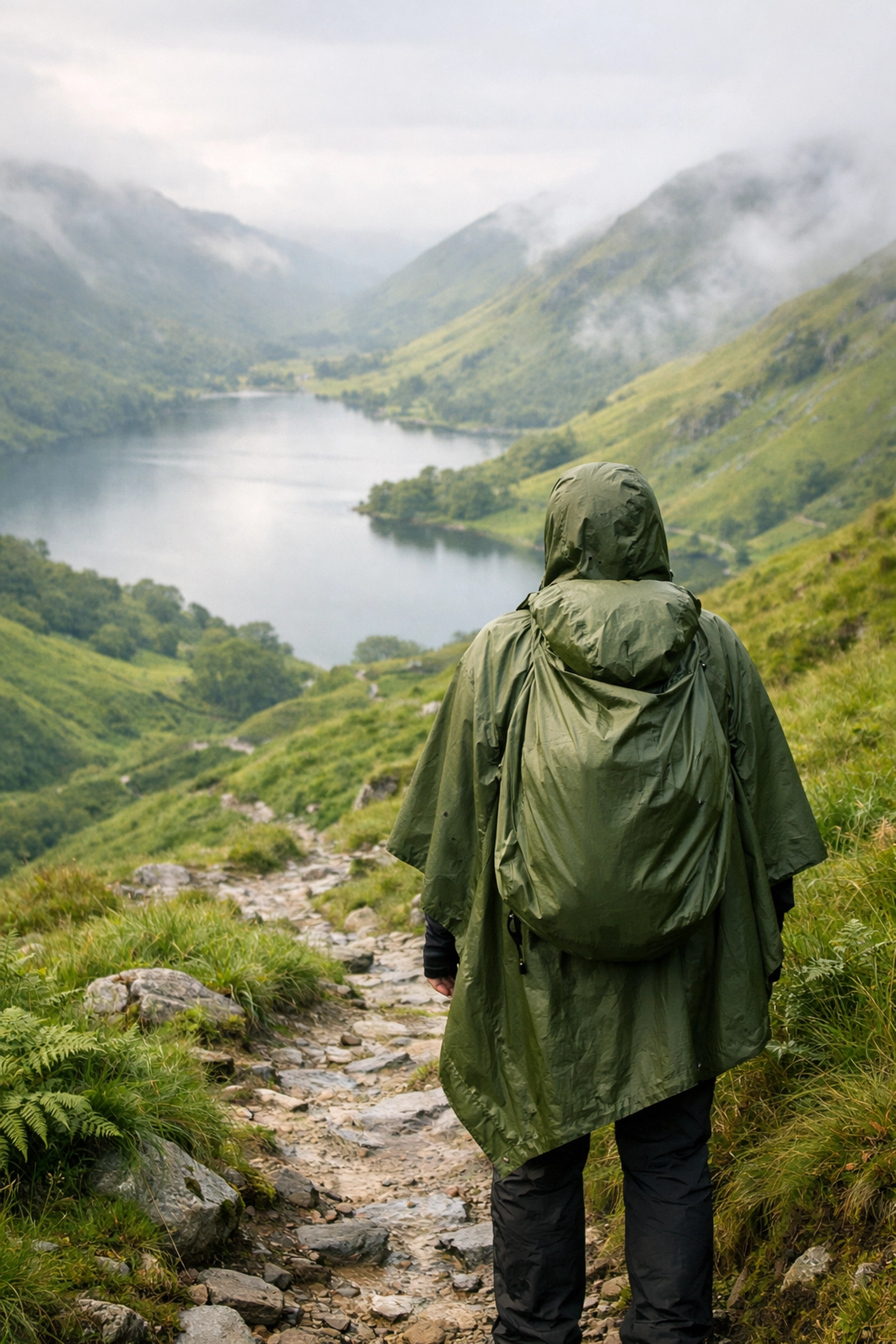
Try a lightweight hiking poncho instead. These are made of thin sil-nylon. They roll up into the size of an orange. They offer better ventilation than jackets. They cover you and your backpack at the same time.
You can also use a poncho as a groundsheet. You can prop it up with sticks to make a small sun shade. Multi-functional gear is the key to a light pack. If one item does three jobs, you can leave two other items at home. This is the secret to successful guided hiking tours uk.
Simplify Your Kitchen
Food and water are the heaviest things you carry. You cannot skip them. You can optimize them.
Ditch the heavy camping stove sets. Use a small titanium burner. Use a single pot. Eat meals that only require boiling water. This eliminates the need for frying pans or extra plates. Eat out of the bag.
For water, don't carry four liters at once. The UK has plenty of water sources. Carry a lightweight filter. Filter as you go. One liter of water weighs one kilogram. Only carry what you need until the next stream.
Footwear Matters Too
The weight on your feet is more exhausting than weight on your back. Traditional leather boots are heavy. They tire your legs quickly.
Consider trail runners. They are breathable. They are light. They dry fast. Many experienced hikers in the UK are switching to trail runners for everything but the deepest snow. Try them on your next guided walks in the Lake District. You will feel the difference immediately.
Review Your Gear After Every Trip
When you get home, empty your bag. Make three piles.
- Gear you used every day.
- Gear you used once.
- Gear you never touched.
The "never touched" pile should stay home next time. The only exception is your first aid kit and emergency whistle. Everything else is negotiable. Be honest with yourself. If you didn't use that extra book or the heavy camera tripod, don't bring it again.
Consistency is the key. You will get lighter with every trip. You will get faster. You will enjoy the views more because your eyes won't be glued to the ground in pain.
Prepare for Your Next Adventure
You have the hacks. You know the tricks. Now it is time to use them. A light pack changes everything. It makes the trail feel like a playground instead of a chore.
Pick one hack from this list. Try it this weekend. Then try another. Before you know it, you will be the hiker with the small, light bag and the big smile.
Ready to test your new setup on the trail? Check out our list of stunning routes to get you started and start planning your next journey into the wild.
Go pack your bag now.