
Hey adventurer!
You've packed your tent. You've loaded the car. You're ready for your camping adventure UK style.
But wait.
Are you actually prepared? Or are you about to make mistakes that could turn your wild camping trip into a survival situation?
Let's get straight to it. These five mistakes happen all the time. They're preventable. And they could save your trip, or even your life.
Mistake #1: Choosing the Wrong Campsite (And Waking Up on an Island)
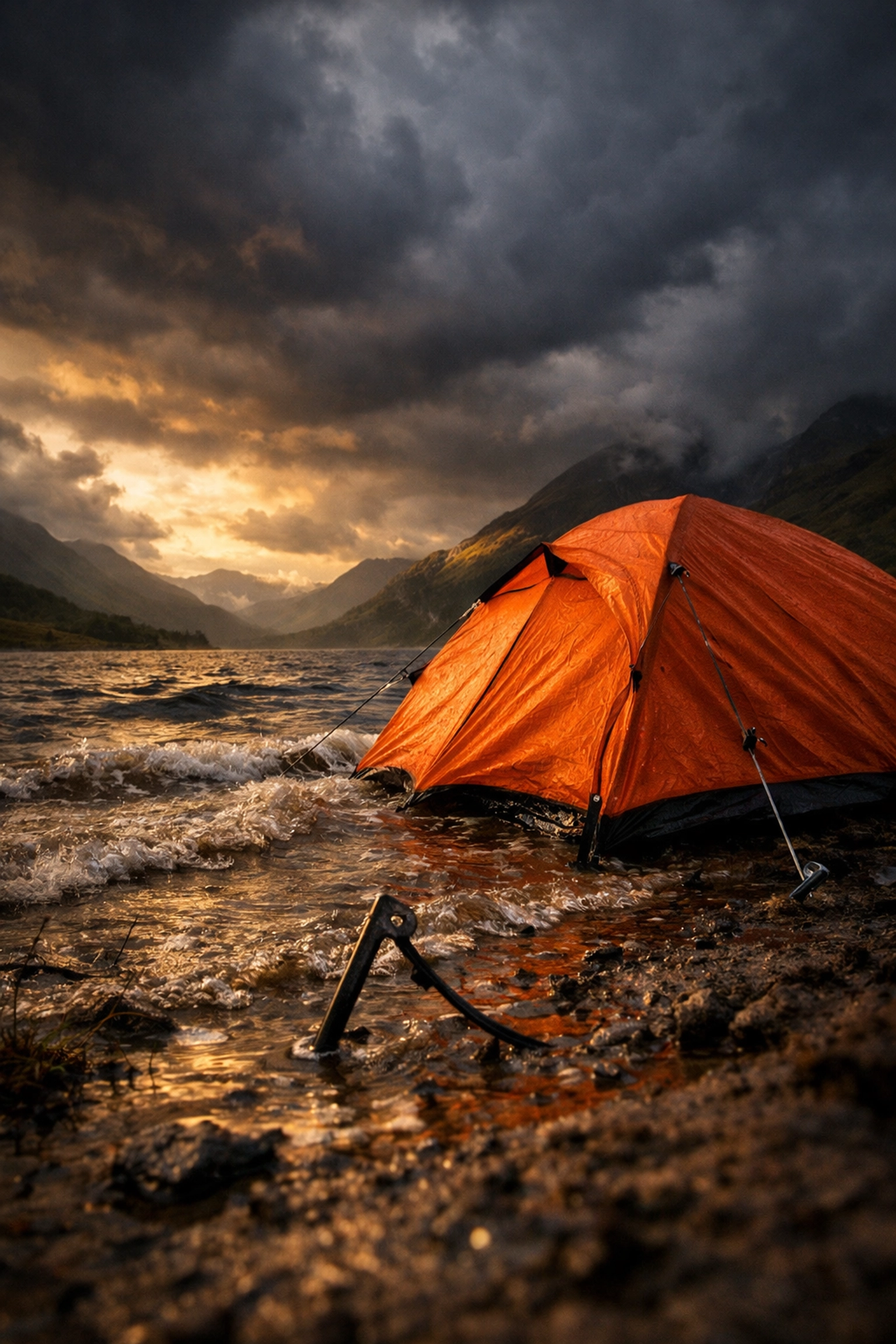
Picture this: You find the perfect spot by a reservoir. The view is stunning. The ground looks flat.
You pitch your tent. You fall asleep.
Then the water rises three metres overnight. You wake up surrounded by water, trapped on a tiny island.
This actually happened to a camper at Cruachan Reservoir. Don't let it happen to you.
What you need to do:
Check the terrain before you commit. Look for high ground markers. Avoid dried riverbeds, flood plains, and areas near reservoirs. Water levels change fast, especially after rain upstream.
Scout your site in daylight. Walk around it. Look for signs of previous flooding, debris in trees, water lines on rocks, muddy depressions.
Set up at least 200 metres from any water source. Yes, it means carrying water further. But you'll sleep on dry ground.
Your action plan:
- Research the area before you go
- Check recent weather reports
- Look for elevated, well-drained ground
- Avoid natural drainage channels
- Never camp in dried-up stream beds
Mistake #2: Forgetting Critical Gear (Like Water. Seriously.)
You're miles from the car. The sun is setting. You reach for your water bottle.
It's not there.
You left it in the boot. Now you're sharing one bottle between two people for an entire camping adventure UK expedition.
This isn't just uncomfortable. In summer, it's dangerous.
What you need to do:
Create a checklist. Use it every single time. Don't rely on memory. Even experienced campers forget things.
Pack the night before. Do a final check in the morning. Count your essentials out loud before you leave.
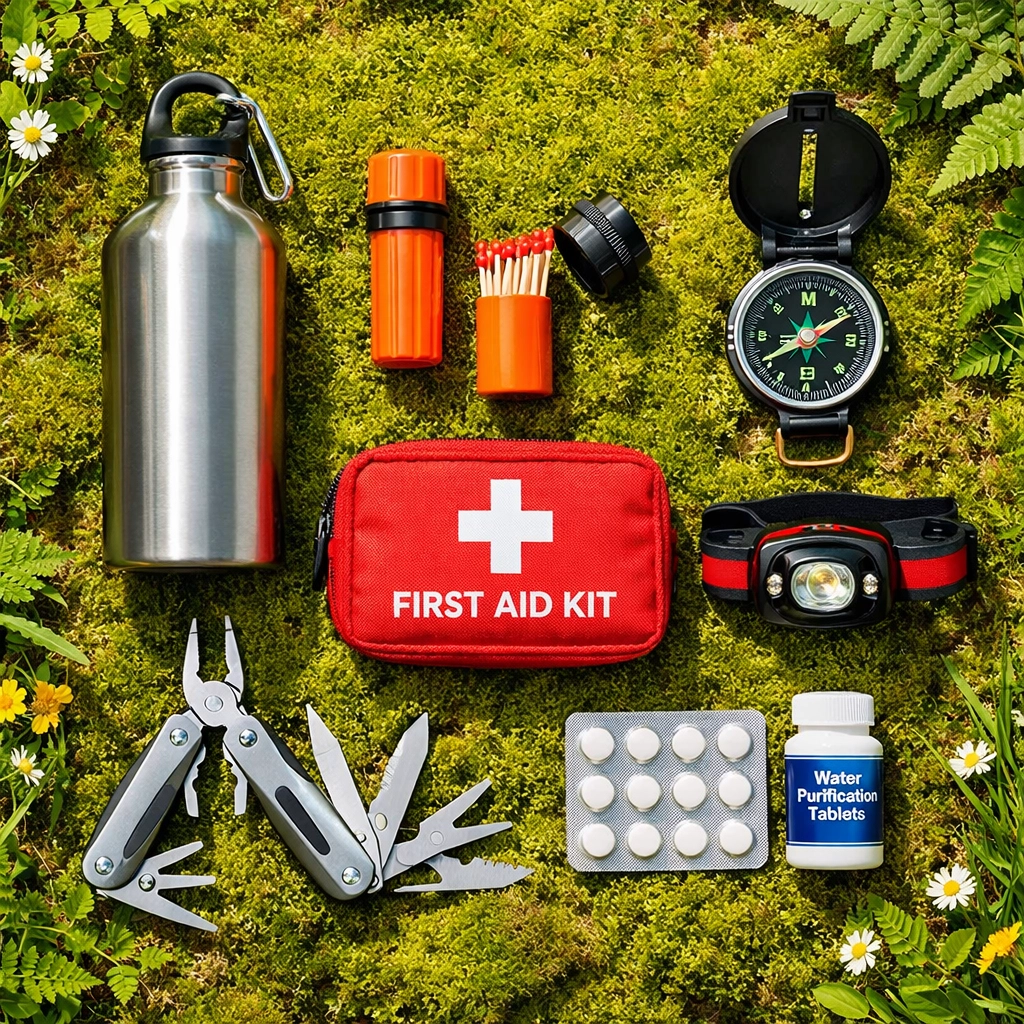
Your essential wild camping guided UK kit:
- Water (2-3 litres per person per day)
- Water purification tablets or filter
- Fire-starting kit (waterproof matches, lighter, tinder)
- First aid supplies
- Navigation tools (map, compass, GPS)
- Emergency shelter (bivvy bag or emergency blanket)
- Headtorch with spare batteries
- Emergency food rations
- Multi-tool or knife
- Whistle for emergencies
Download our complete survival checklist before your next trip. You can find more essential gear tips in our outdoor survival skills guide.
Mistake #3: Ignoring Weather Forecasts (Then Fighting a Storm)
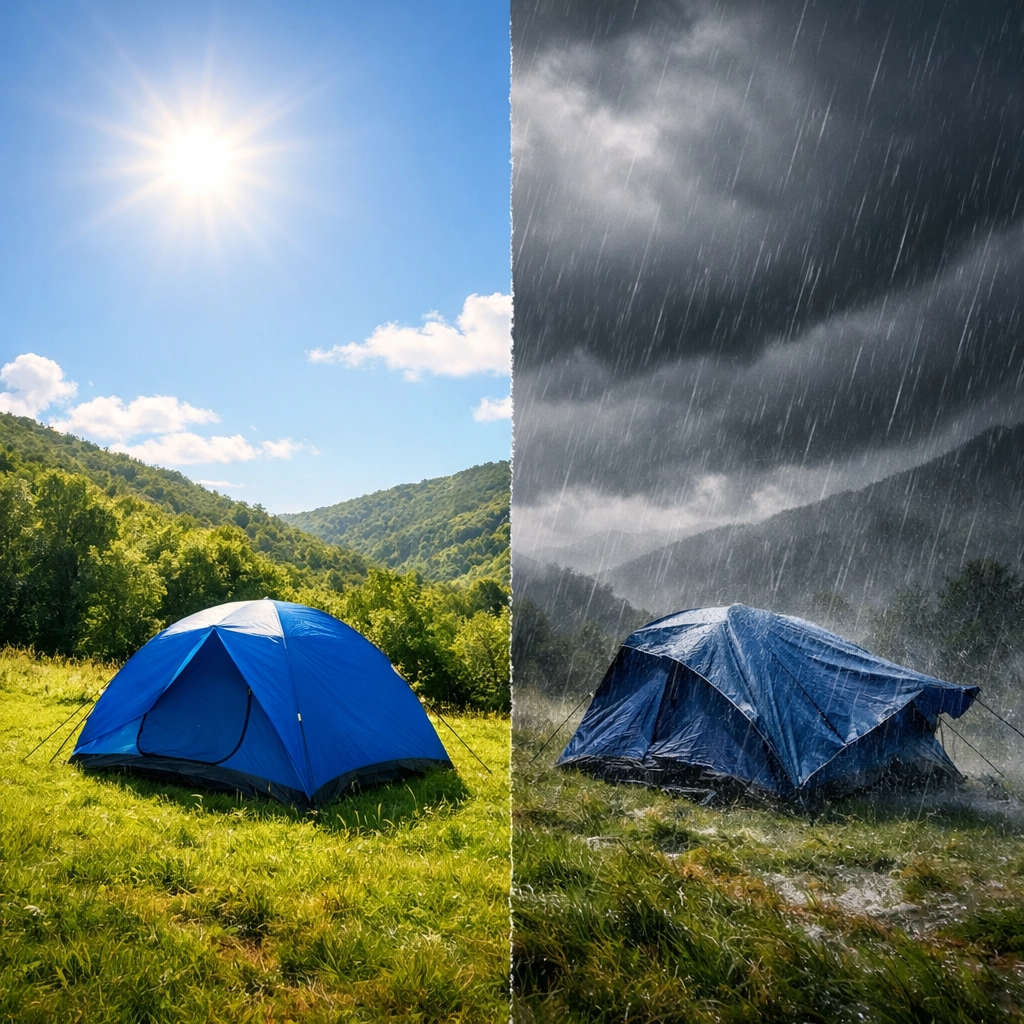
Blue skies when you arrive. Perfect camping weather.
Two hours later? Full storm. Wind tearing at your tent. Rain flooding your groundsheet.
British weather changes fast. Really fast.
What you need to do:
Check multiple weather sources before you leave. Look at hourly forecasts, not just daily summaries. Check wind speed, rainfall, and temperature drops.
Pack for the worst-case scenario. Always bring waterproofs. Always bring warm layers. Always assume it will rain.
Weather preparation checklist:
- Check forecast 24 hours before departure
- Monitor weather updates if you have signal
- Pack waterproof bags for all electronics and clothes
- Bring extra tent pegs for high winds
- Carry a tarp for additional shelter
- Know your evacuation route if conditions worsen
Winter camping? Spring conditions? Autumn storms? Each season brings different challenges. Learn the specific risks for your chosen time of year.
Mistake #4: Camping in Dangerous or Illegal Locations
You find an amazing spot. You set up camp. You start cooking dinner.
Then you hear gunshots. Close gunshots.
You're in an active shooting area. Hunting season. No warning signs visible in the dark.
This happened to campers in the North York Moors. They survived. Others might not be so lucky.
What you need to do:
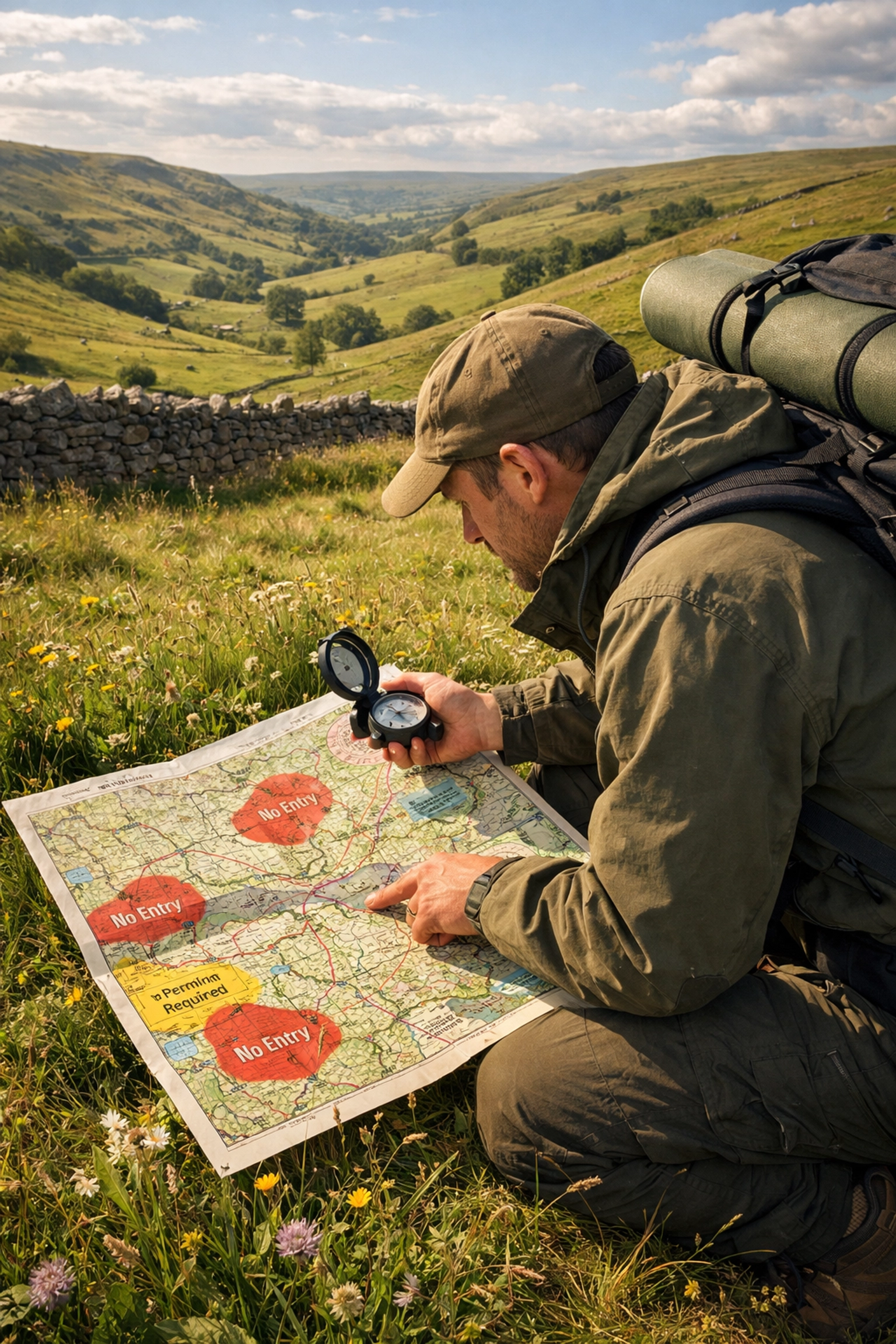
Know the law. Wild camping is only legal in Scotland and Dartmoor (England) without permission. Everywhere else requires landowner consent.
Research your location thoroughly. Check for:
- Military training areas
- Private estates with active hunting
- Protected wildlife breeding grounds
- Restricted access zones
- Quarries and mine workings
Location safety rules:
- Never assume anywhere is safe to camp
- Contact local authorities or visitor centres
- Ask landowners for permission outside legal areas
- Avoid camping near livestock during lambing season
- Stay clear of active farmland and crops
- Respect "No Camping" signs
- Leave no trace: pack out everything you brought in
Want to skip the legal headaches? Consider guided wild camping experiences where experts handle permissions and safety.
Mistake #5: Camping After Heavy Rain (On Unstable Ground)
The rain stopped yesterday. The ground looks dry enough.
You pitch your tent. The soil feels solid.
Then overnight, the ground shifts. Or worse: a landslide upstream. Or flash flooding from saturated earth.
Extended rain creates dangerous conditions that last days after the weather clears.
What you need to do:
Wait it out. If there's been heavy rain in the last 48 hours, delay your trip. Seriously.
Check river levels before you go. Look for flood warnings in your area. Monitor ground saturation reports if available.
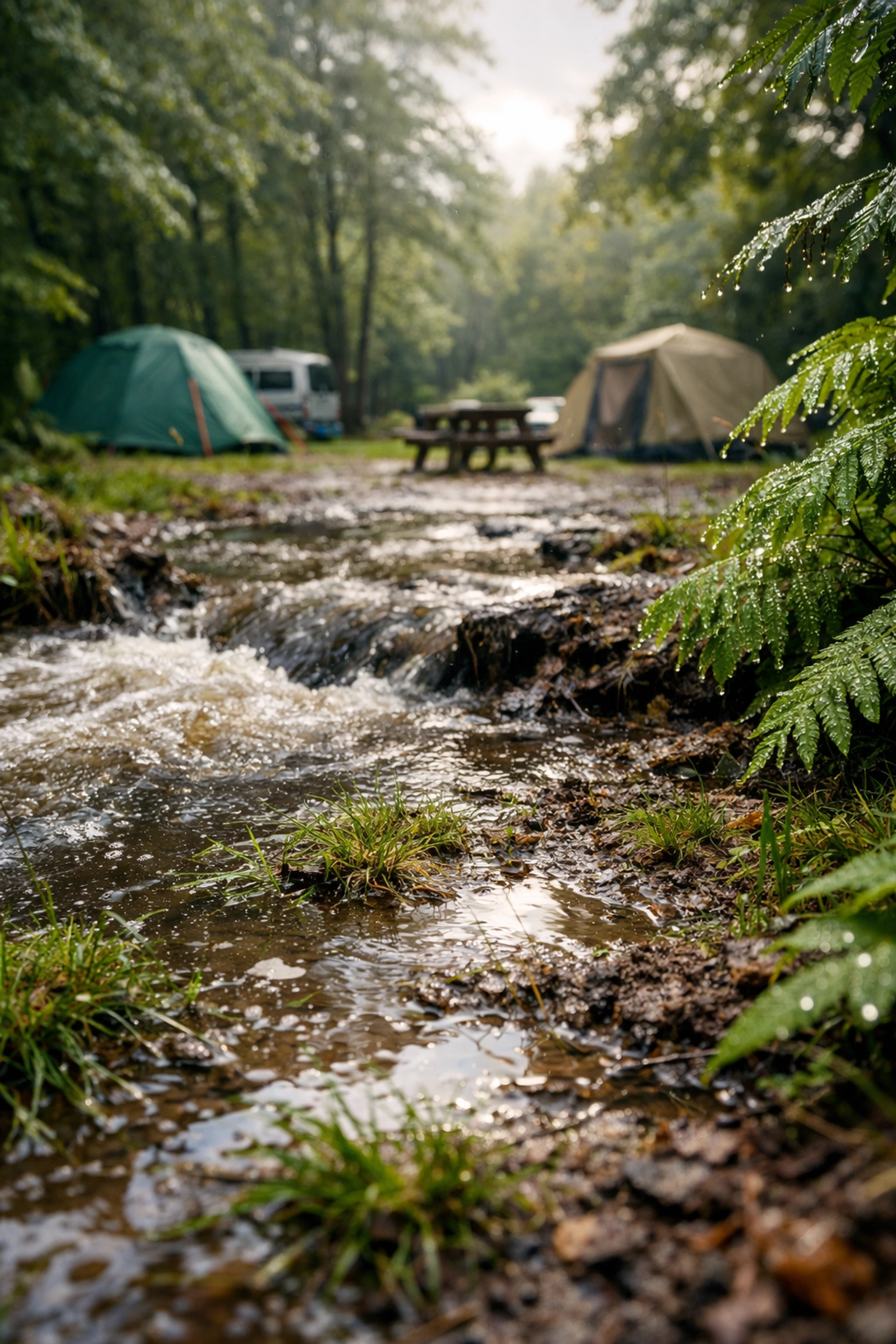
Post-rain safety protocol:
- Wait 2-3 days after heavy rainfall before camping
- Test ground stability by pressing hard with your boot
- Avoid areas with visible water pooling
- Check hillsides above your camp for loose soil
- Never camp below steep slopes after rain
- Monitor weather upstream if near rivers
- Have a backup location ready
Your Complete Camping Adventure UK Survival Checklist
Print this. Keep it in your pack. Use it every time.
Before you leave:
- Check weather forecast (24-hour and 5-day)
- Verify camping permissions and legality
- Research your specific location
- Pack and count all essential gear
- Test your equipment (tent, stove, torch)
- Tell someone where you're going
- Plan your evacuation route
On arrival:
- Scout your site in daylight
- Check for flood risks and water sources
- Look for wildlife or livestock
- Identify safe water collection points
- Note emergency exit routes
- Check mobile signal (if any)
Before sleep:
- Secure all food away from tent
- Check tent guy lines and pegs
- Prepare emergency kit within reach
- Store water inside your tent
- Know where your torch is
- Review tomorrow's weather
Ready to Camp Safely?
Wild camping in the UK is incredible. The freedom. The views. The connection with nature.
But only if you do it right.
Use this checklist. Avoid these mistakes. Respect the land and the weather.
Your camping adventure UK starts with preparation. Make it count.
Want expert guidance on your first wild camping trip? Explore our guided adventure experiences where safety meets adventure. We'll show you the ropes, teach you the skills, and get you ready for solo expeditions.
Now pack that checklist. Double-check your gear. And get out there.
The wild is waiting.