
Hi, you. If your tarp shelter has ever turned into a cold, wet mess, this is for you. Fix these seven mistakes now, so your next wild camping guided UK trip feels simple and solid.
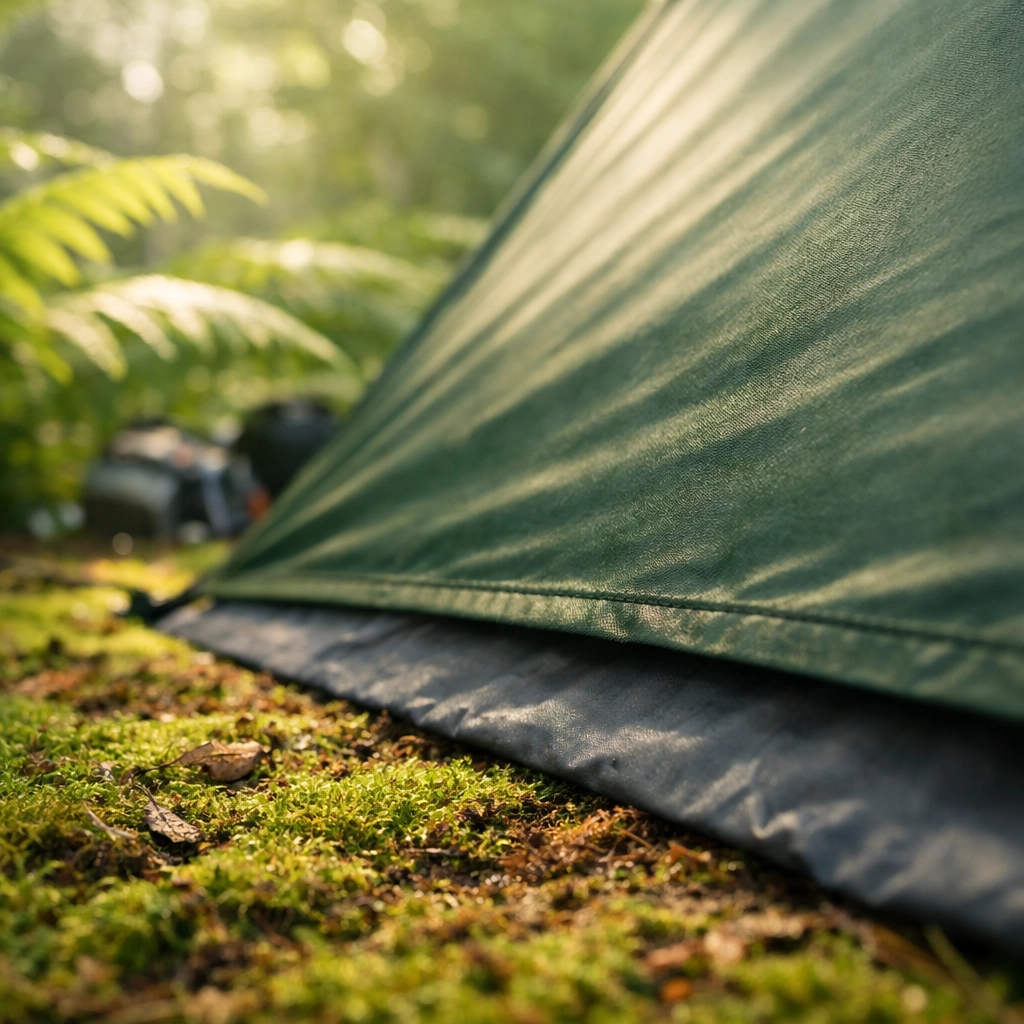
1) You leave your groundsheet sticking out
Your mistake: your groundsheet or footprint peeks out past the tarp edge.
That lip catches rain. It funnels water under you.
Fix it fast
- Lay your groundsheet down.
- Place your sleeping kit on it.
- Fold the groundsheet until nothing sticks out beyond the tarp drip line.
- If you need more coverage, use a bigger tarp, not a bigger footprint.
Quick check
- Walk around your setup.
- If you can see groundsheet edges, fold again.
2) You pitch in a water track
Your mistake: you pick the flattest spot, or the “nice grass” spot, or the bottom of a dip.
That’s where water goes at 2am.
Fix it fast
- Choose slight slope, not flat.
- Avoid hollows, gullies, and dried stream lines.
- Avoid obvious runnels in the soil.
- Check uphill, ask “where will water come from?”
- Look for hard ground that drains, not spongy ground that holds.
Do this in one minute
- Stand still.
- Face into the wind.
- Look at the ground shape.
- Move 10–20 metres if needed.
If you want more site basics before a camping adventure UK trip, skim this: https://openskyadventure.co.uk/uncategorized/10-outdoor-survival-skills-every-wild-camping-guided-uk-beginner-should-know
3) You stake like it’s summer in a park
Your mistake: you push pegs in a couple of inches, then call it done.
UK ground is often thin soil, rock, roots, or peat. Wind finds weak anchors.
Fix it fast
- Drive stakes in all the way.
- Angle stakes away from the tarp, about 45 degrees.
- Tension guy lines after the stake is set, not before.
If the ground is too rocky
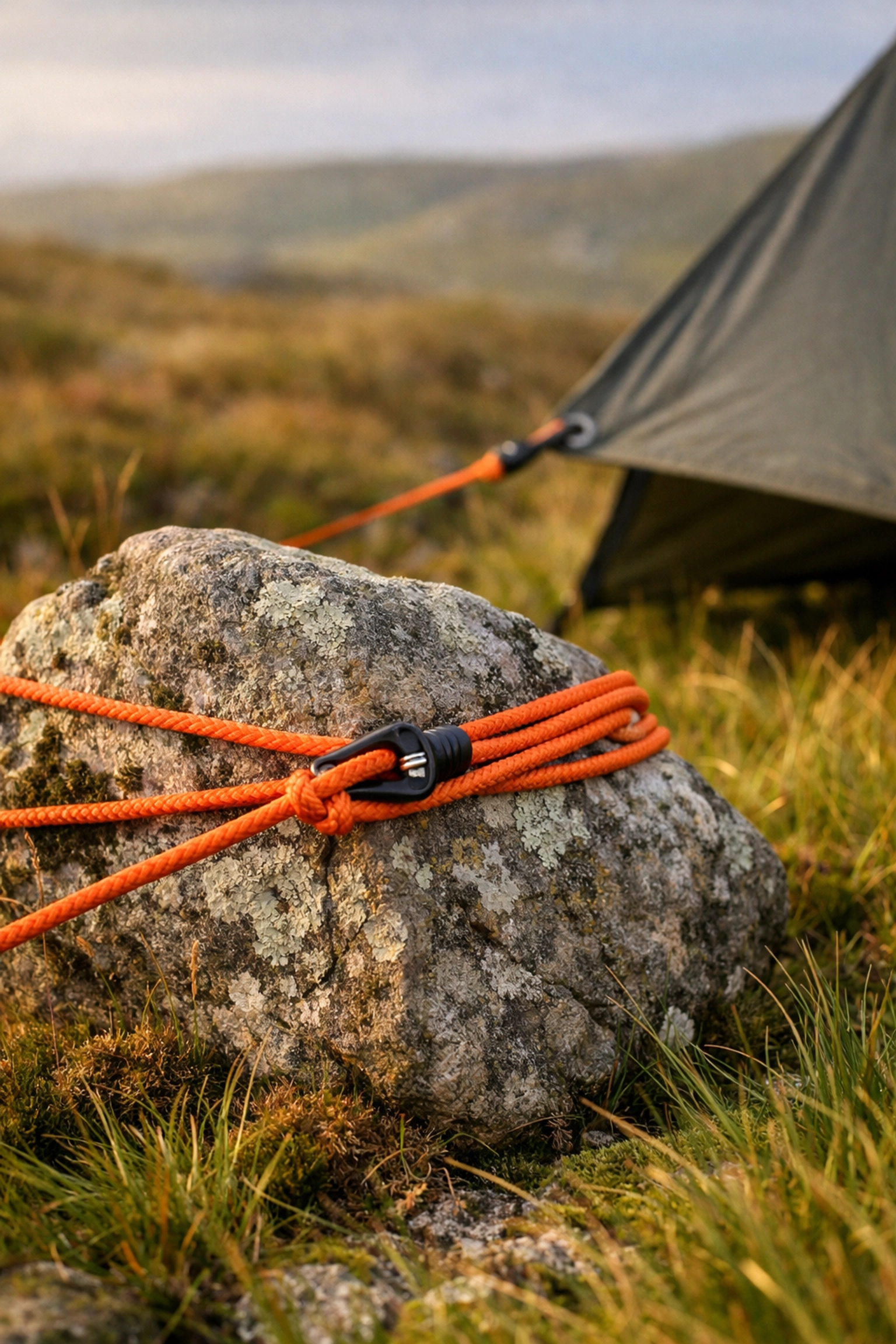
- Use big rocks as deadman anchors.
- Wrap your guy line around the rock, cinch tight.
- Or tie off to a tree root, log, or solid shrub base.
- Carry a couple of longer pegs if you can.
One rule
- If you can pull a peg out by hand, it is not in enough.
4) You ignore wind direction
Your mistake: you pitch for the view, not the wind.
A tarp becomes a sail. Your lines snap, your poles slip, your night turns loud.
Fix it fast
- Find wind direction before you start.
- Point the lowest, tightest end into the wind.
- Keep your profile low when it’s gusty.
- Use bushes, rocks, and small rises as a wind break.
Simple wind test
- Wet a finger, hold it up.
- Or toss a bit of dry grass.
- Watch where it goes, then pitch.
Pitch choice that works
- In wind and rain, use an A-frame low to the ground.
- In calmer weather, raise one side for airflow.
For more planning mistakes that ruin days outside, this pairs well: https://openskyadventure.co.uk/uncategorized/7-mistakes-youre-making-when-planning-uk-hiking-adventures-and-how-to-fix-them
5) You set it too high, then wonder why you’re cold and wet
Your mistake: you pitch high “for space” even when weather is coming in.
Wind blows under, rain blows sideways, spray bounces up.
Fix it fast
- Pitch low when it’s wet or windy.
- Drop your ridgeline.
- Bring tarp edges closer to the ground on the wind side.
- Leave one small gap on the lee side for airflow.
Target heights
- Ridgeline at about waist height in bad weather.
- Tarp edges close enough that rain can’t blast under.
Comfort tip
- Space matters, but staying dry matters more.
- You can always raise it in the morning.
6) You forget drainage and wake up in a puddle
Your mistake: you rely on the tarp alone and do nothing about water moving on the ground.
Rain hits soil, soil sheds water, water flows under you.
Fix it fast
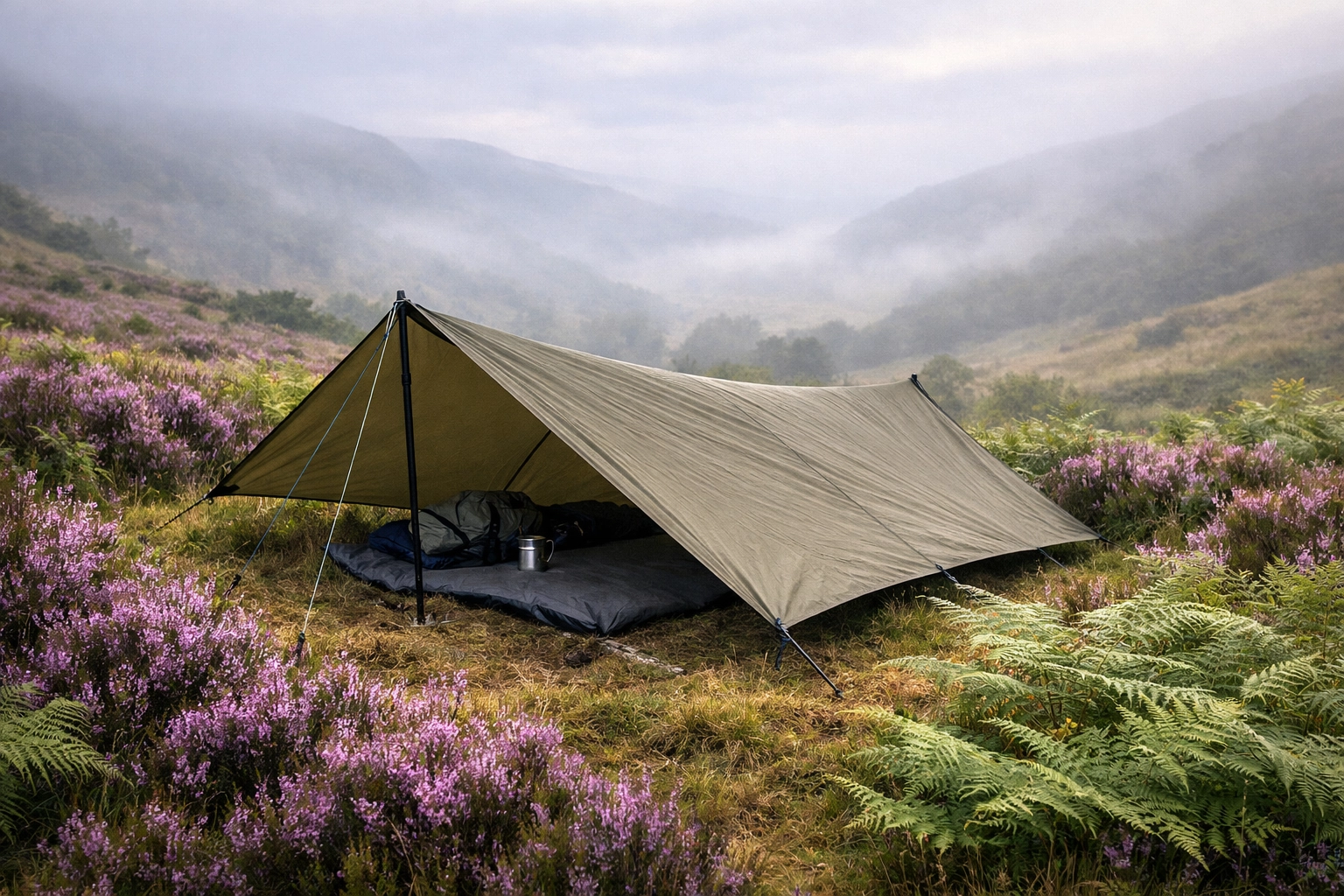
- Use a groundsheet, but keep it tucked (see mistake #1).
- Put your sleep kit on the highest part of your pitch area.
- Build a tiny “bathtub” edge if needed.
Easy “bathtub” move
- Lift groundsheet edges with small sticks or rocks.
- Keep the lifted edge inside the tarp coverage.
- Aim runoff away from where your hips and shoulders will be.
Do not do this
- Don’t dig trenches. Leave no trace.
- Don’t scrape plants and soil unless you must for safety.
If you want the broader shelter skills list for your next wild camping guided UK weekend, use this: https://openskyadventure.co.uk/uncategorized/fire-starting-navigation-foraging-and-shelter-essential-outdoor-survival-skills-for-your-next-uk-camping-trip
7) You skip drip lines on the ridgeline
Your mistake: you run a ridgeline, the rain hits it, then water tracks along it and drops right into your shelter.
This happens even with a perfect tarp.
Fix it fast
- Add two drip lines, one on each side of the tarp where the ridgeline exits.
- Use a short string, a boot lace, a strip of cord, or even a twig.
- Tie it so water hits the drip line and falls off before it reaches you.
Two clean setups
- Tie a small cord loop to the ridgeline, let it hang down.
- Or clip a twig under tension so water breaks there.
Quick check
- In rain, watch your ridgeline for 10 seconds.
- If water is running toward the tarp, add drip lines now.

Mini checklist: do this before you commit to the pitch
Use this every time. It saves you minutes and saves your night.
- Site: slight slope, no hollows, no runnels
- Wind: low end into wind, use natural cover
- Ridgeline: tight, not guitar-string tight
- Corners: even tension, no flapping
- Pegs: fully in, or use rock anchors
- Groundsheet: fully tucked, no edges showing
- Drip lines: both sides of ridgeline
- Sleep spot: highest point under the tarp
Want to learn this hands-on with a group and stop guessing in the dark? Book your next camping adventure UK day with Open Sky Adventure, start here: https://openskyadventure.co.uk
Next step: on your next walk, stop for five minutes, pitch your tarp twice in two different spots, then pick the better one and note why.