
Hey there. Planning a wild camping adventure in the UK is exciting. The hills look different under the stars. The air feels sharper. The silence is deeper. But the dark changes everything. Navigation becomes a different game. Simple paths vanish. Landmarks disappear. Small streams sound like roaring rivers. Many walkers feel confident in daylight but struggle when the sun goes down. Mistakes happen fast. These mistakes can turn a fun night into a dangerous situation. You need to be ready before you book your next wild camping guided UK trip. We want you safe, confident, and capable.
Here are the seven most common mistakes people make with night-time navigation and exactly how to fix them.
1. Trusting Your Phone Too Much
This is the biggest mistake. We see it every day. You have a great app, the maps are downloaded, and the GPS is accurate. Then the temperature drops. Cold weather kills lithium batteries. Or you drop your phone in a bog. Or the screen gets wet and stops responding to your touch. Your digital lifeline is gone.
How to fix it:
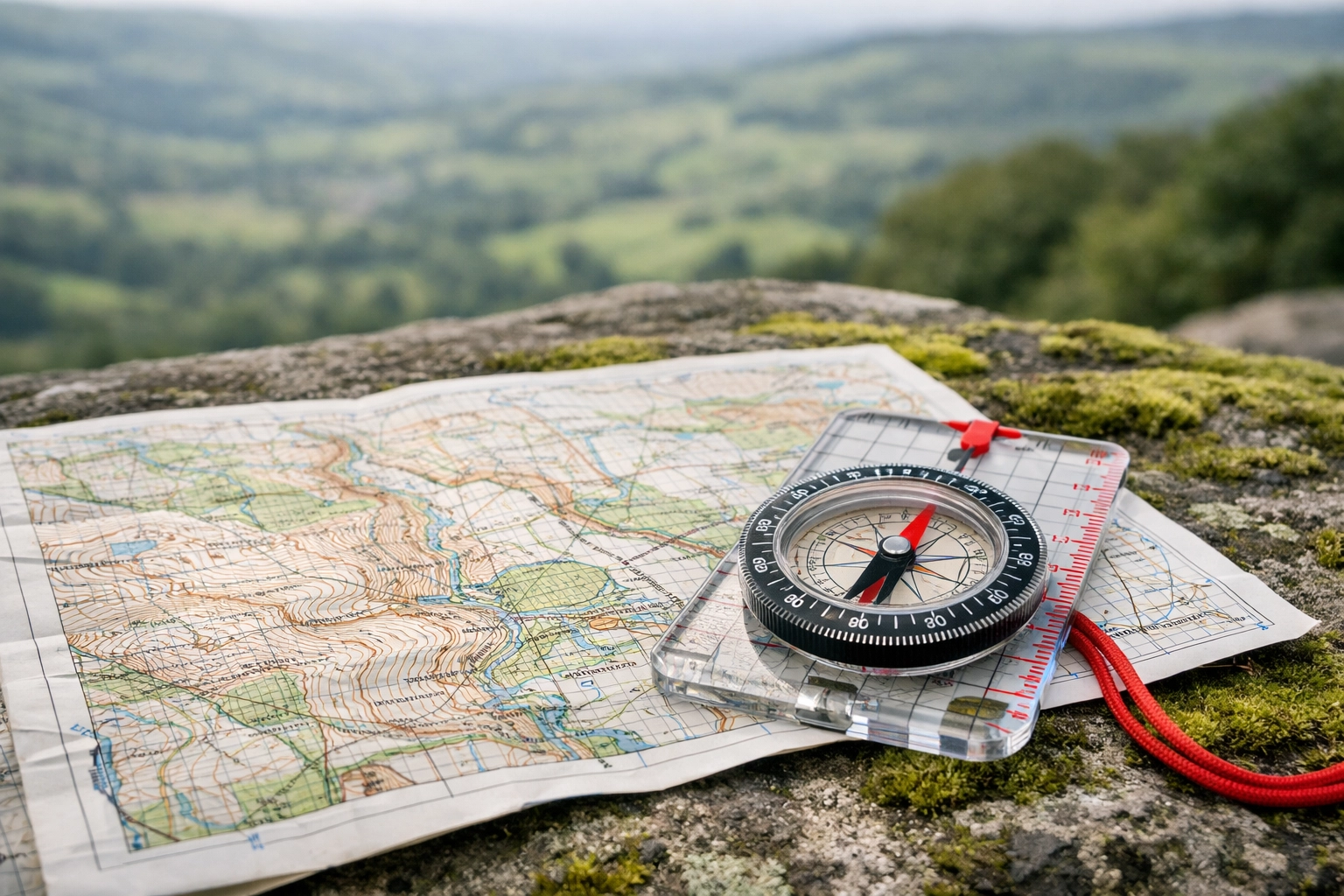
Always carry a physical topographic map. Use a waterproof case or buy laminated maps. Carry a high-quality baseplate compass. Learn how to use them together. Your phone is a secondary tool, not your primary one. Practice taking a bearing, holding the compass flat, and following the needle. Keep your phone in an inside pocket to stay warm. Use airplane mode to save power. Check your position often. Don't wait until you are lost to pull out the paper map.
2. Ruining Your Night Vision with White Light
You reach for your headtorch. You turn it on to the brightest setting. Now you can see five meters in front of you. But everything beyond that is pitch black. Your eyes take twenty minutes to adjust to the dark. One second of bright white light resets that clock. You lose your peripheral vision. You miss the silhouette of the mountain or the shape of the treeline.
How to fix it:
Use the red light setting on your headtorch. Red light preserves your natural night vision. It allows you to see your map and your feet without blinding yourself. Keep the brightness low. Only use high-power white light for spotting distant landmarks or in emergencies. If you are walking in a group, don't shine your light in your friends' faces. Look down when you talk. Keep your eyes adjusted to the natural light of the moon and stars whenever possible.
3. Walking Faster Than You Think
In the dark, everything feels faster. You feel like you have covered a kilometer when you have only moved five hundred meters. The lack of visual cues tricks your brain. People tend to over-calculate their progress. They think they have reached their turning point, but they are actually short of the mark. This leads to turning too early into the wrong valley or onto the wrong ridge.
How to fix it:
Master pacing and timing. Know your pace count. This is the number of double-steps you take to cover 100 meters. On flat ground, it might be 65. On steep hills at night, it might be 80. Count your steps religiously. Use a watch to track your time. If you know you walk at 3km/h at night, a 1km stretch takes 20 minutes. Don't turn until the time and the paces match your map.
Check out our guide on outdoor survival skills for more on distance estimation.
4. Ignoring "Handrails" and "Catch Features"
In daylight, you navigate by looking at distant peaks. At night, those peaks are gone. Many hikers try to walk in a straight line across open moorland. This is nearly impossible in the dark. You will drift. You will get frustrated. You will lose your way.
How to fix it:
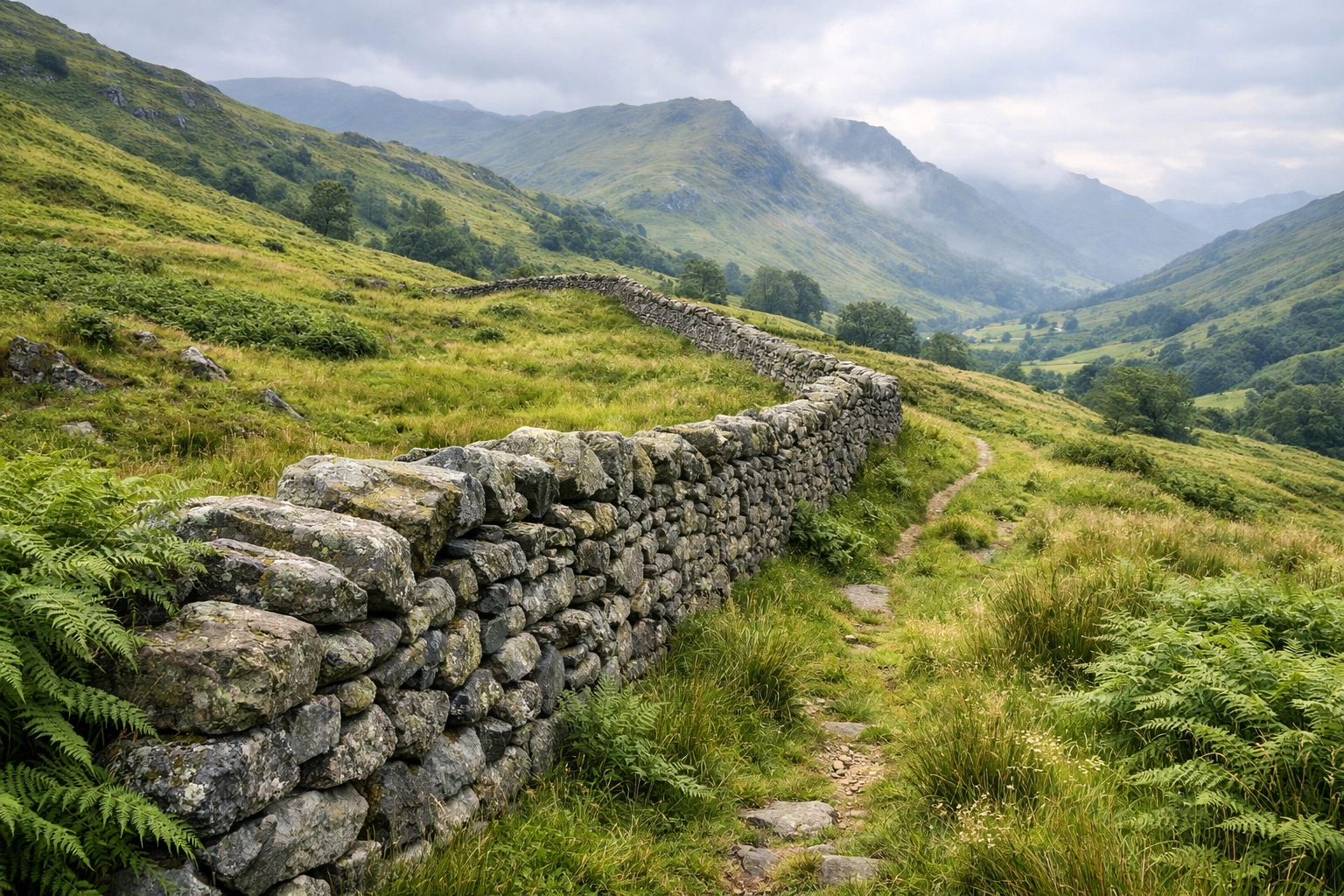
Use "handrails." These are linear features on the map that you can follow physically or visually. A stone wall, a stream, a treeline, or a distinct ridge edge. If there is a wall heading your way, walk beside it. It is your safety line. Also, identify "catch features." These are big landmarks that tell you if you have gone too far. If you hit a main road, you’ve gone too far. If you reach a specific lake, you’ve missed your turn. Always know what is behind your destination.
5. Failing to "Aim Off"
If you try to walk straight to a small bridge or a narrow gate in the dark, you will probably miss it. If you arrive at the stream and don't see the bridge, you won't know if it is to your left or your right. You end up guessing. Guessing is how you get lost.
How to fix it:
Use the "aiming off" technique. Deliberately aim for a point on the linear feature (like a stream or road) that is to one side of your actual target. If you want the bridge, aim 100 meters to the left of it. When you hit the stream, you know for certain the bridge is to your right. Walk along the stream until you find it. It removes the guesswork and saves time. This is a core skill for any camping adventure UK.
6. Not Trusting the Compass
This is a mental mistake. You are tired. It is dark. Your brain tells you that "forward" is one way. The compass needle points somewhere else. You start to think the compass is broken. You think the metal in your bag is interfering with it. You follow your gut instead of the needle. Your gut is usually wrong.
How to fix it:
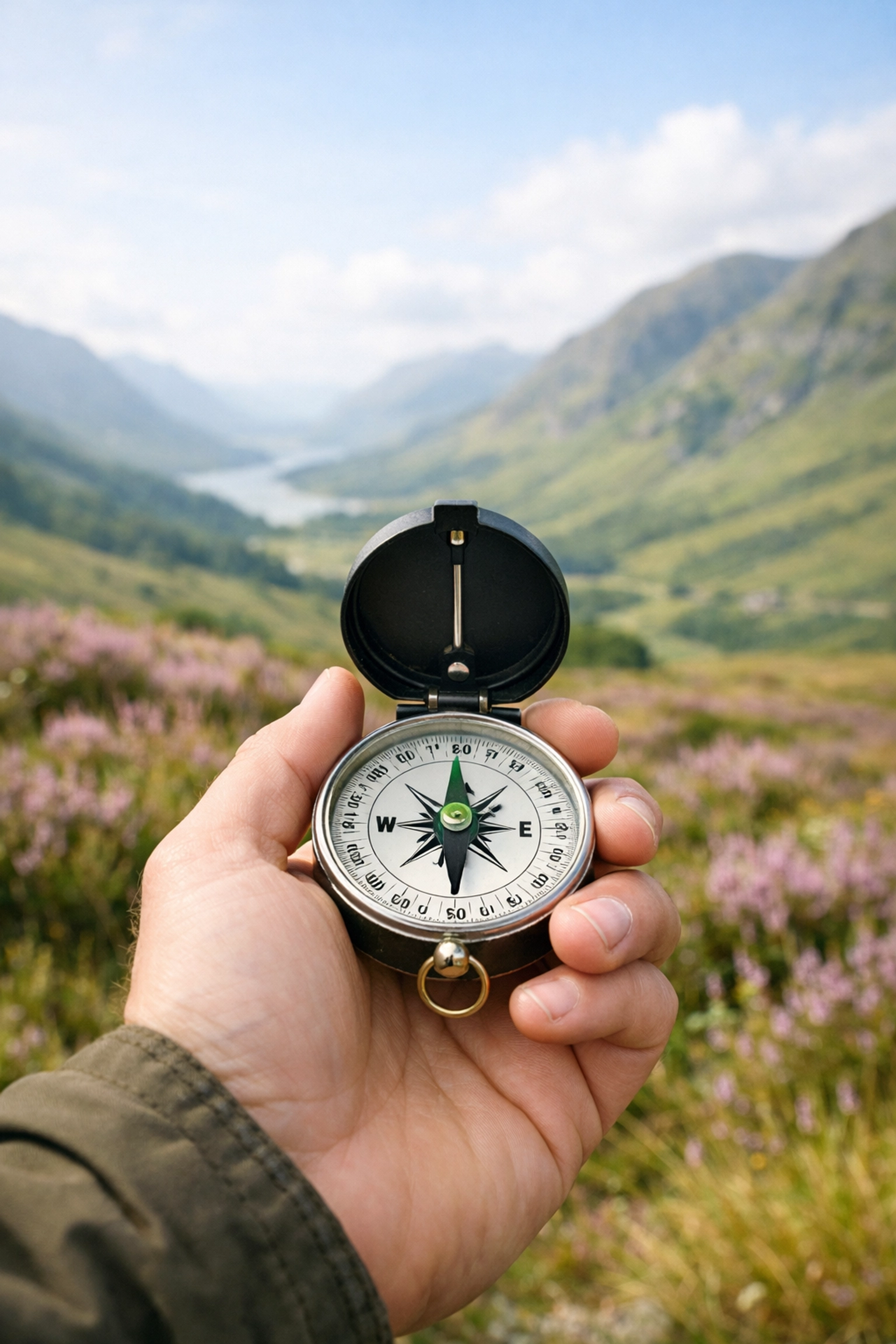
Trust the equipment. Unless you are standing directly next to a massive iron deposit or a power line, the compass is right. Hold it away from your body, keep it level, and follow the bearing. If you feel disoriented, stop. Take a deep breath. Check your map again. Trust the math and the magnets. Practice this in a familiar area first so you build that trust before you are on a remote hillside.
7. Waiting for an Emergency to Check the Map
Many people only check the map when they are confused. By then, it might be too late. They don't know exactly where they stopped being "un-lost." In the dark, small errors compound quickly. Five minutes of walking the wrong way can put you in difficult terrain.
How to fix it:
Practice "thumbing" the map. Keep your thumb on your current location. Move it as you walk. Check the map every time you hit a minor feature. A small dip in the ground, a change in slope, or a bend in the path. Keep a mental picture of the terrain ahead. Expect to see a slope rising on your left. Expect the path to curve right. If what you see doesn't match the map, stop immediately. Correct the error while it is small.
Preparing for Your Trip
Night-time navigation is a skill. It is not a gift. You learn it by doing it. Before you head out on a wild camping guided UK experience, spend some time in your local woods or park after dark. Leave the phone in your pocket. Use your map. Practice your pacing.
Your Action Plan:
- Buy a high-quality compass and a waterproof map of your next route.
- Go for a 30-minute walk at night in a safe, familiar area using only red light.
- Count your paces for 100 meters on different types of ground.
- Learn the difference between magnetic north and grid north for your specific area.
- Book a guided session to have an expert check your techniques.
Night navigation doesn't have to be scary. It can be the most rewarding part of your adventure. Watching the moon rise over the peaks while you know exactly where you are is an incredible feeling.
Stop guessing, start navigating, and get ready for the wild.
Pack your bag, grab your compass, head out tonight.