
Hi there. Ready for your next big trip? Whether you are heading into the Lake District or planning a wild camping guided UK experience, safety comes first. Most people pack a first aid kit and forget about it. That is a dangerous move. Your kit is your lifeline. It needs to work perfectly when things go wrong.
Many hikers carry kits that are outdated, incomplete, or useless. Do not let that be you. We want you to stay safe on every camping adventure UK. Here are the seven biggest mistakes people make with their survival first aid kits. Fix them now.
1. Letting Items Expire
Check your kit right now. Look at the dates on the ointments. Look at the saline wipes. Most people ignore these numbers. Expired items fail.
Antibiotic creams lose their power. Alcohol wipes dry out. Sterile dressings can develop micro-tears in the packaging. If the seal breaks, the item is no longer sterile. Using dirty dressings leads to infection. Infection in the wild is a serious problem.
Stop guessing if your gear is good. Set a recurring reminder on your phone. Check every single item every three months. If the date is close, swap it out. Use the old items for practice at home. Buy fresh supplies for the trail. Your health depends on items that work exactly as promised.
2. Trusting a Basic Store-Bought Kit
You bought a small green pouch at the supermarket. You think you are ready. You are not. These mini-kits are designed for kitchen burns and scraped knees. They are not built for a camping adventure UK.
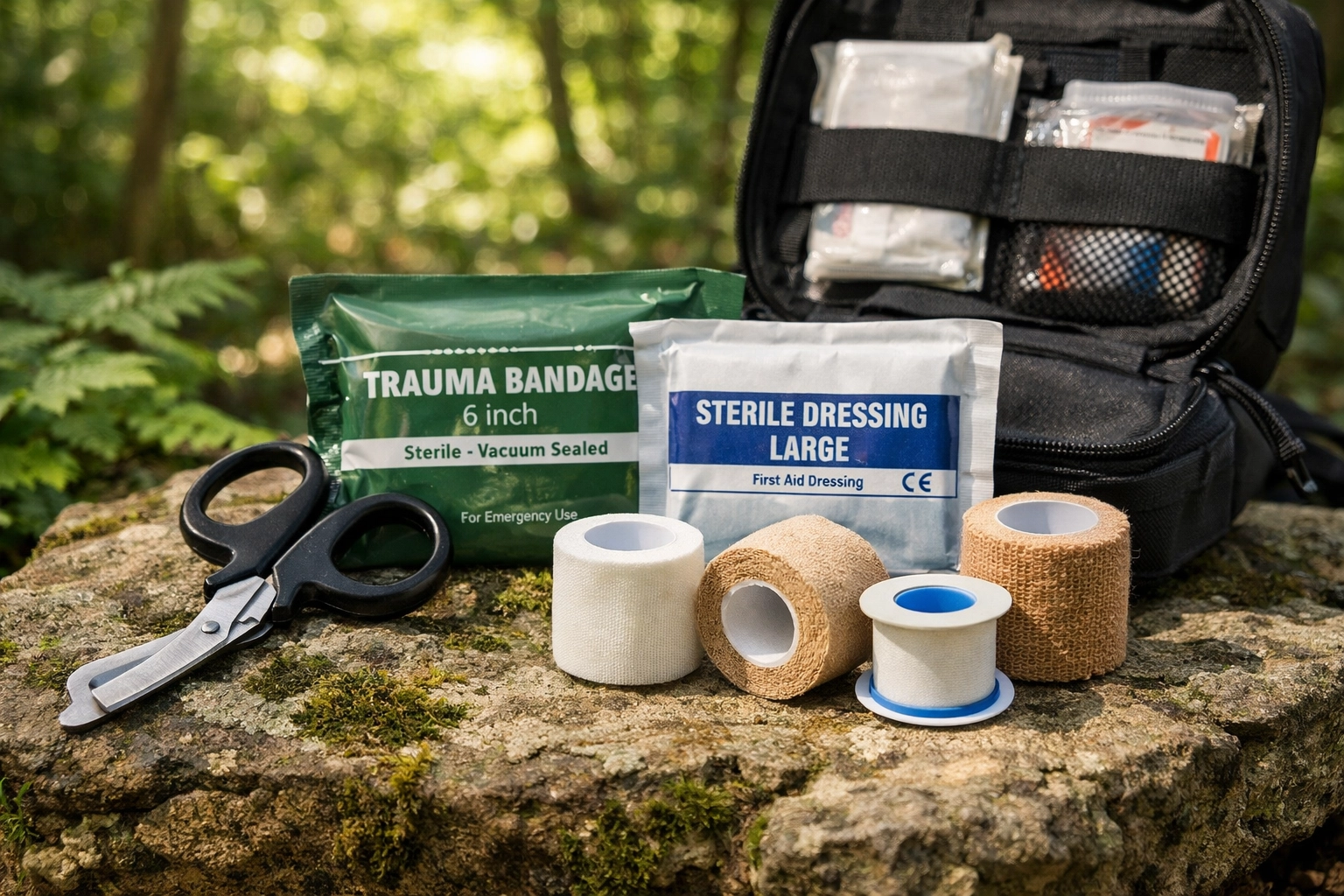
Generic kits usually lack high-quality tools. They often have tiny bandages that won't stay on. They rarely include enough shears, heavy-duty tape, or large trauma dressings. If you trip on a rocky trail, a tiny plaster won't help a deep cut.
Customise your gear. Start with a basic kit, then add the heavy hitters. Buy high-quality adhesive tape. Add a few large "combine" pads for heavy bleeding. Get a pair of sturdy trauma shears that can cut through denim or thick hiking trousers. Tailor your kit to the terrain you plan to hike.
3. Forgetting Your Personal Medications
Generic kits help anyone. Your kit must help you. A standard pack does not include your specific needs. This is a common oversight that leads to emergencies.
Think about your daily health. Do you have asthma? Pack an extra inhaler. Do you have severe allergies? Pack two Epi-Pens. Do you take daily blood pressure or heart medication? Pack a five-day surplus.
Label everything clearly. Use a permanent marker on the bottle. Write the dosage instructions on a piece of waterproof paper. Place these in a clear, zip-lock bag. If you are unconscious, your hiking partner needs to know what you take. Personal meds are the most important part of your outdoor survival skills kit.
4. Storing the Kit in the Wrong Place
You have a great kit. It is buried at the very bottom of your 65-litre rucksack. This is a mistake. When an accident happens, seconds count. You cannot spend five minutes digging through sleeping bags and spare socks.
Accessibility is key. Put your first aid kit in a side pocket. Put it in the top "brain" of your pack. It must be reachable in seconds. Tell everyone in your group exactly where it is.
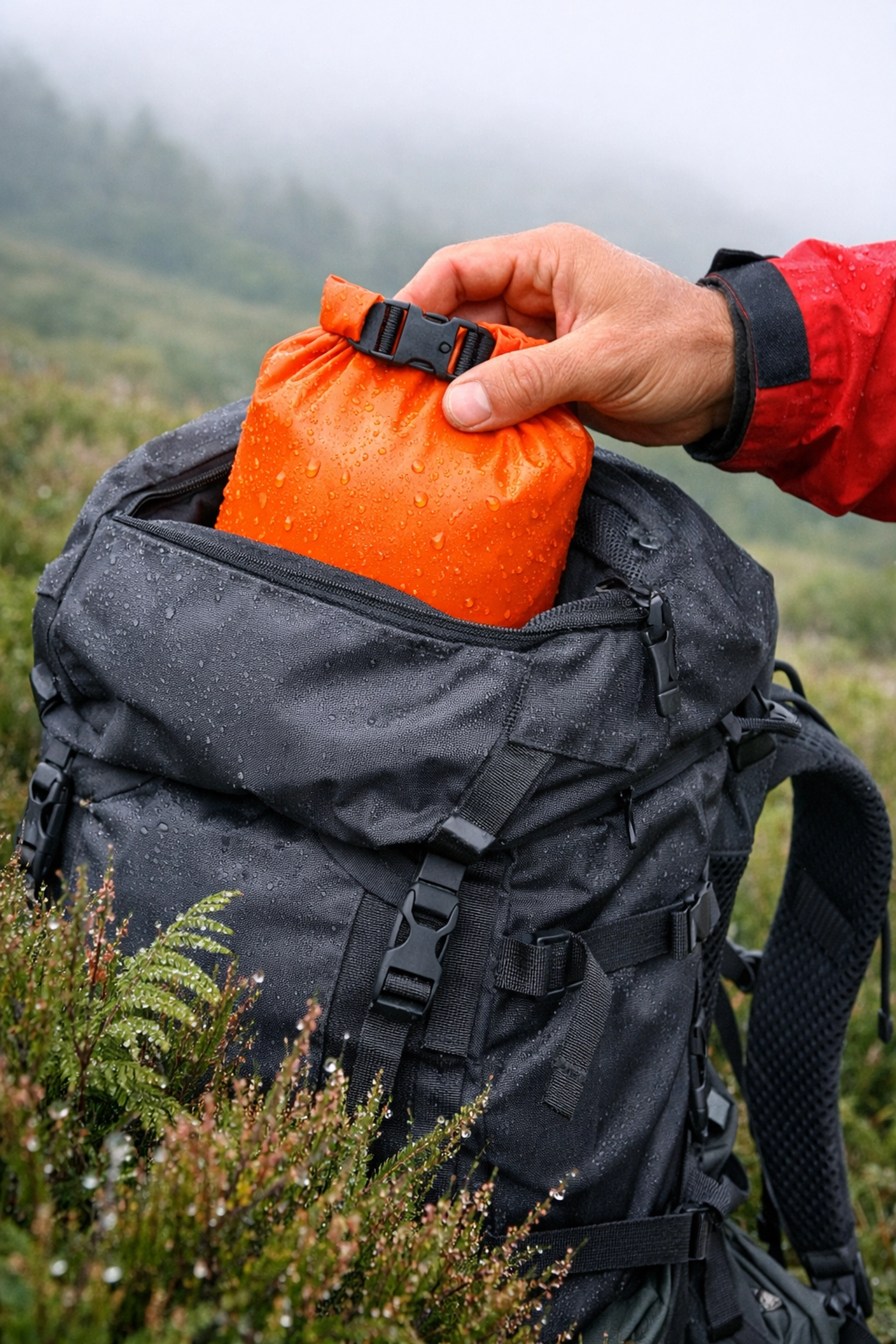
Think about the environment too. The UK is wet. Moisture ruins medical supplies. It makes tape lose its stick. It makes paper packaging turn to mush. Store your entire kit inside a dedicated dry bag. Choose a bright colour like red or orange. Make it easy to see in low light or rain.
5. Failing to Restock After Use
You used a few plasters last summer. You used the antiseptic cream on your last wild camping guided UK trip. Did you put them back? Most people forget.
An empty box of ibuprofen is useless when you have a fever. A missing bandage is a disaster when you are bleeding. You must have a strict restocking rule. As soon as you return from a trip, open your kit. Inventory every item.
Use a printed checklist. Keep it inside the kit itself. Tick off what you have. Mark what you used. Do not put the kit away until it is 100% full again. This habit ensures you are always ready for a spontaneous weekend in the hills. If you want to master your prep, check out 10 essential outdoor survival skills for your next camping adventure UK.
6. Lacking the Knowledge to Use the Gear
Gear is just plastic and cloth without knowledge. Carrying a tourniquet is useless if you don't know how to tighten it. Carrying a chest seal is pointless if you don't know where it goes.
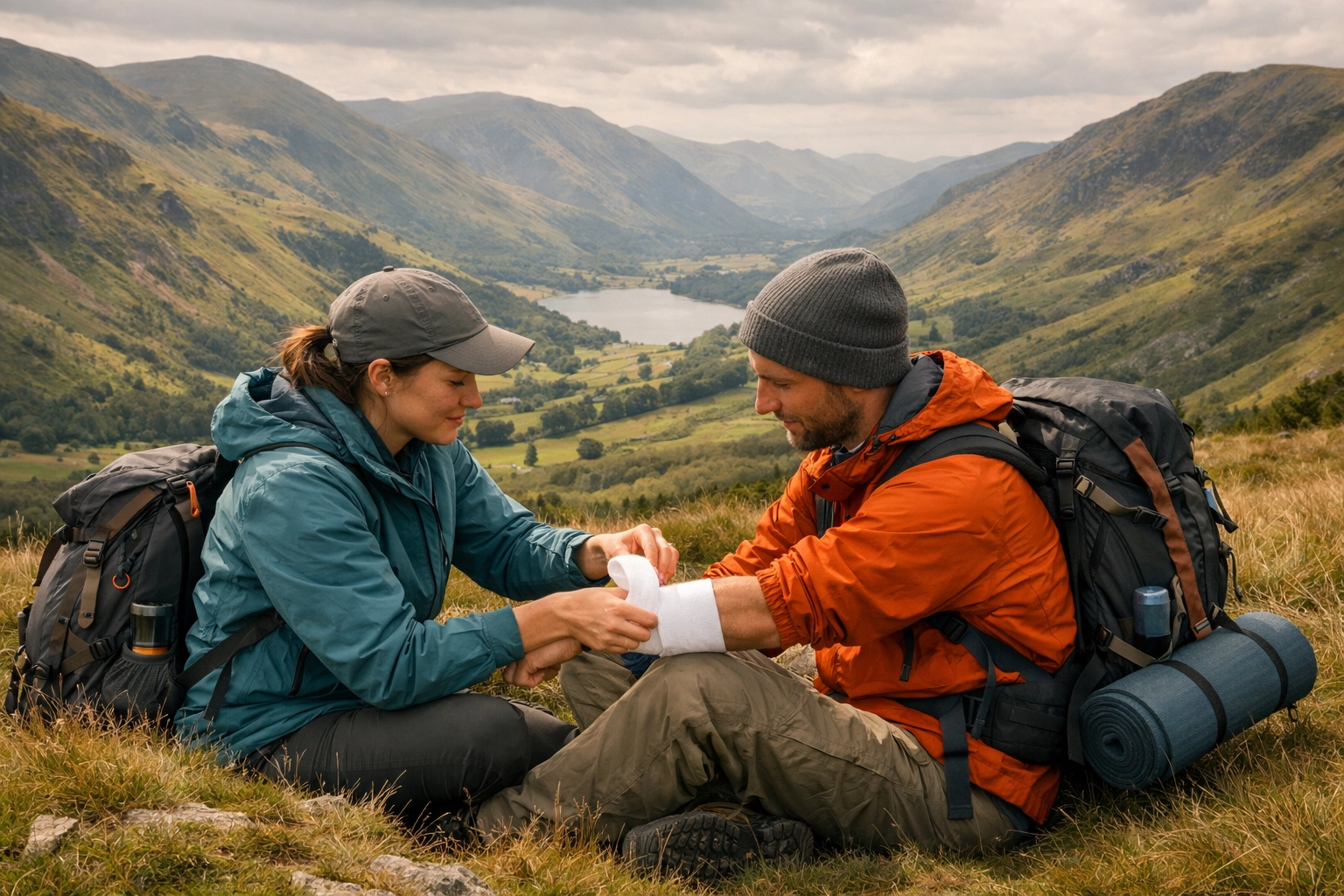
Do not wait for an emergency to read the instructions. Open your kit today. Read every manual. Watch videos on how to apply different bandages. Better yet, sign up for an outdoor first aid course. Learning how to manage a scene and treat an injury is more important than the kit itself.
Practice with your group. Discuss what to do if someone falls. Roleplay an emergency. This builds muscle memory. It keeps you calm when things get real. Knowledge is the ultimate survival tool. For more on this, read about 10 outdoor survival skills every wild camping guided uk beginner should know.
7. Including Clutter and Dangerous Items
Some people overpack their kits. They include items that cause more harm than good. Cotton wool is a prime example. It leaves tiny fibres in open wounds. These fibres cause infection. Stop using it. Use non-adherent sterile pads instead.
Avoid including complex medical tools you aren't trained for. Scalpels and surgical kits have no place in a hiker's bag unless you are a surgeon. They are heavy, dangerous, and likely to cause accidental injury.
Avoid strong, unlabelled painkillers. Only carry what you know how to use. Focus on the basics: stopping bleeding, cleaning wounds, and stabilising joints. Keep it simple. Keep it light. A cluttered kit is hard to navigate during a panic. Strip away the junk and keep the essentials.
Upgrade Your Adventure Safety
Your first aid kit is a bridge. It keeps you stable until professional help arrives. In the UK, help might be hours away if you are deep in the mountains. Your kit must be perfect.
Do not treat your safety as an afterthought. A well-maintained kit gives you the confidence to push further. It allows you to enjoy your camping adventure UK without unnecessary fear. You have the tools. Now you have the checklist to fix them.
Go to your gear cupboard now. Pull out your kit. Open it up and start checking those dates. Replace what is old, add what is missing, and store it somewhere accessible. Be the hiker who is always prepared.
Want to learn more about mastering the outdoors? Check out our guide on fire starting, navigation, and shelter.
Your next adventure is waiting. Make sure you are ready for it.
Take action now: Inspect your first aid kit tonight and replace at least one expired item.