
Hello there. Ready to go off the grid? You want a real wild camping adventure UK style. You have your pack. You have your tent. You have your boots. Maybe you forgot your compass. Or maybe it broke. It does not matter. You do not need it. The land tells you where to go. The sky shows you the way. The stars guide your feet.
Experts keep these secrets close. They want you to feel dependent. We want you to feel free. Navigation is a skill. It is not just a tool. It is about reading the world. It is about paying attention. Stop looking at a screen. Stop looking at a needle. Look at the trees. Look at the sun. Look at the shadows.
This is how you master the wild. This is how you survive. This is how you turn a walk into a wild camping guided uk experience. Let’s get started.
The Power of the Shadow Stick
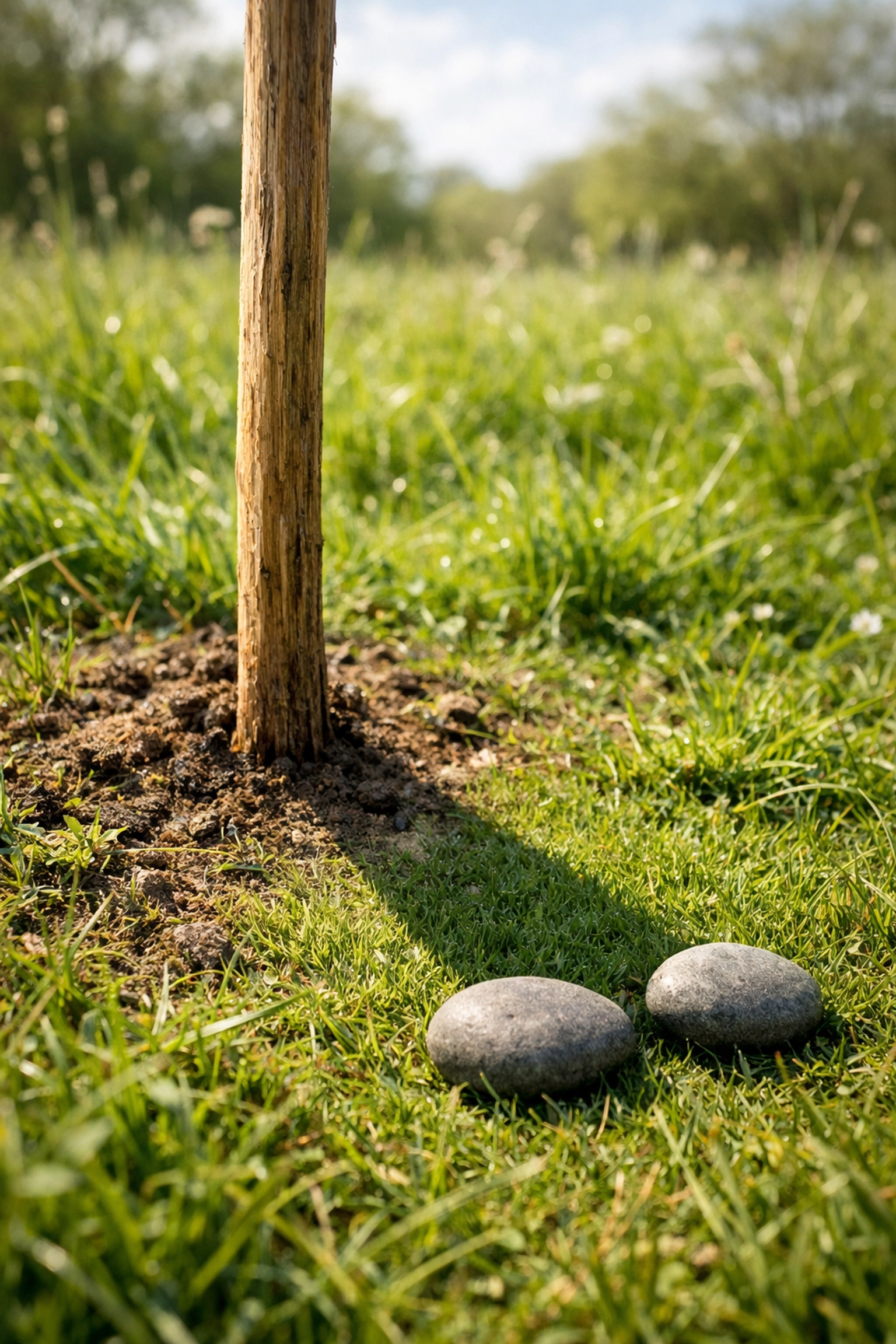
The sun moves. The earth rotates. Shadows follow a pattern. You can use this. It is the most reliable method. It works every day. You only need a stick and two stones.
Find a flat spot. Clear the leaves. Clear the grass. Find a straight stick. It should be about one meter long. Push it into the ground. Make sure it stands tall. Look at the shadow. Mark the very tip of the shadow with a stone. This is your first point.
Now, wait. Sit down. Drink some water. Check your gear. Wait twenty minutes. The shadow has moved. Mark the new tip of the shadow with a second stone.
Draw a straight line between the two stones. This line runs West to East. The first stone is West. The second stone is East. Stand with the first stone on your left. Stand with the second stone on your right. You are now facing North.
This works anywhere in the UK. It is simple. It is accurate. It never runs out of batteries. Use it at noon for the best results. The shadow will be shortest then. This indicates North-South directly in the Northern Hemisphere. Practice this in your garden. Master it before you head out.
Using Your Watch as a Compass
You might have an analog watch. If not, imagine one. This is a quick trick. It helps when you are moving fast.
Hold your watch flat. Point the hour hand at the sun. Look at the space between the hour hand and the twelve o'clock mark. Find the center of that space. That point is South.
The opposite direction is North. This works in the UK. It is not perfect, but it is close. It gets you moving in the right direction. If you are on a camping adventure uk, use this to check your bearings every hour.
Remember British Summer Time. If the clocks have changed, use the one o'clock mark instead of twelve. Small details matter. Accuracy keeps you on the trail.
Reading the Night Sky
The sun goes down. The stars come out. You are not lost yet. You have the North Star. Its name is Polaris. It does not move. It sits right above the North Pole.
Find the Big Dipper. It looks like a giant ladle. Look at the two stars at the end of the "cup." These are the pointers. Follow the line they make. Go up about five times the distance between them. You will hit a bright star. That is Polaris.

Face that star. You are facing North. Your back is to the South. Your left is West. Your right is East. Keep that star in sight. You can walk straight through the night.
Clouds might hide the stars. Do not panic. Look for the moon. If the moon rises before the sun sets, the bright side faces West. If it rises after midnight, the bright side faces East. Nature gives you clues. You just have to look for them.
The Math of the Trail: Pacing and Timing
Navigation is not just about direction. It is about distance. How far have you gone? How much further to the camp? You need to know your pace.
Standard walking speed is five kilometers per hour. This is for flat, easy ground. The UK is rarely flat. The hills are steep. The bogs are wet.
Use Naismith's Rule. It is an old expert secret. Allow one hour for every five kilometers of forward movement. Add one minute for every ten meters of ascent.
If you carry a heavy pack, you are slower. Cut your speed in half. Expect to cover two or three kilometers per hour. Stop and check your time. If you have walked for two hours, you have likely covered five kilometers.
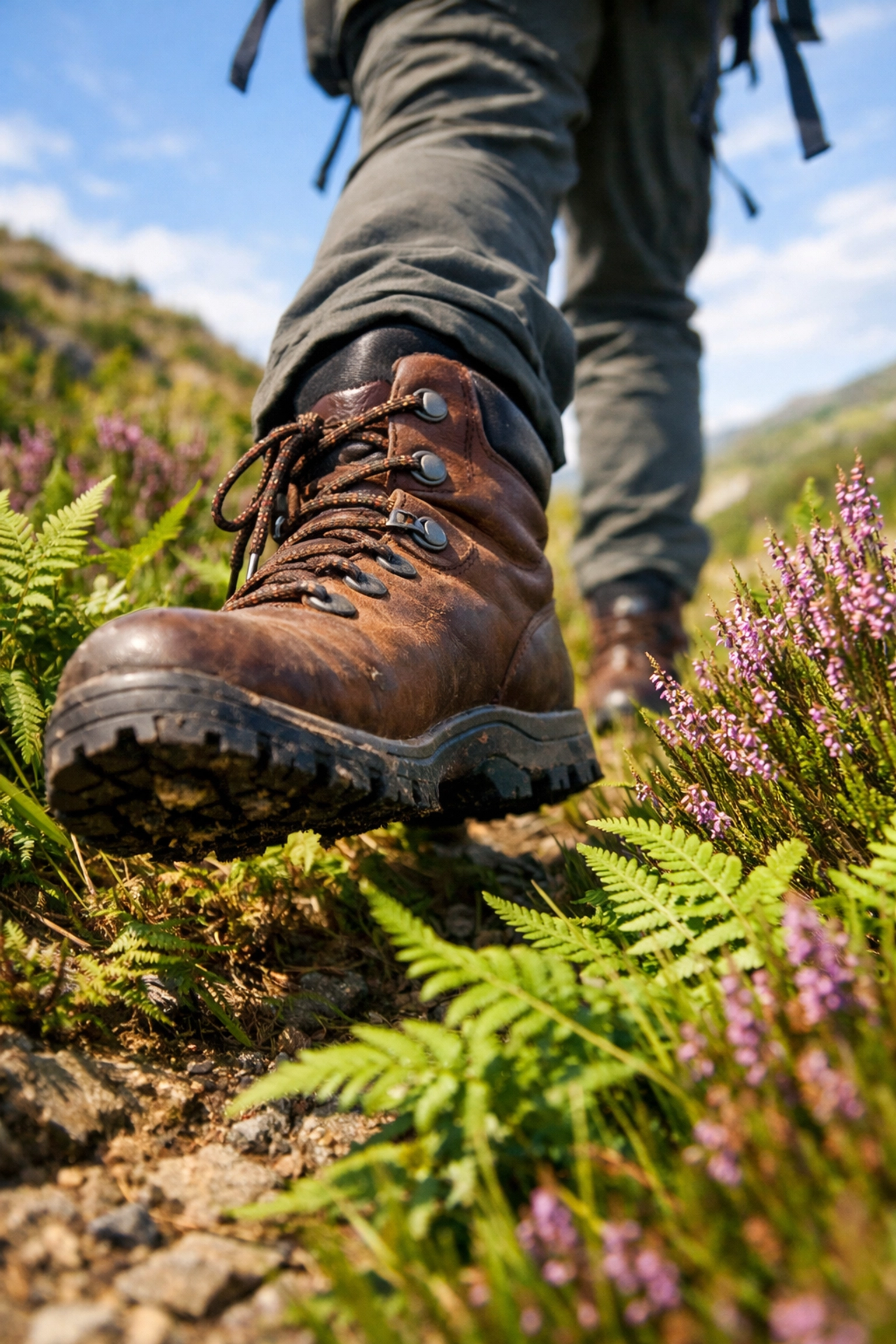
Count your steps. Learn your "pace." A pace is two steps. One for the left foot. One for the right foot. For most people, sixty paces equals one hundred meters.
Practice this. Walk one hundred meters. Count your paces. Do it again. Get an average. On your next wild camping guided uk trip, use this to track distance. It prevents overshooting your turn-off. It keeps you focused.
Reading the Land Like a Map
The ground has a shape. Rivers flow down. Ridges go up. These are your permanent landmarks.
Look at the trees. In the UK, prevailing winds come from the Southwest. Trees often lean away from the wind. Their branches might be shorter on the windward side. This is "flagging." It tells you which way is Northeast.
Look at the moss. People say moss only grows on the North side. This is a myth. Moss grows where it is damp. In a thick forest, moss is everywhere. Do not trust the moss.
Trust the water instead. Streams always flow downhill. They eventually lead to larger rivers. Larger rivers lead to towns. If you are truly lost, follow the water.
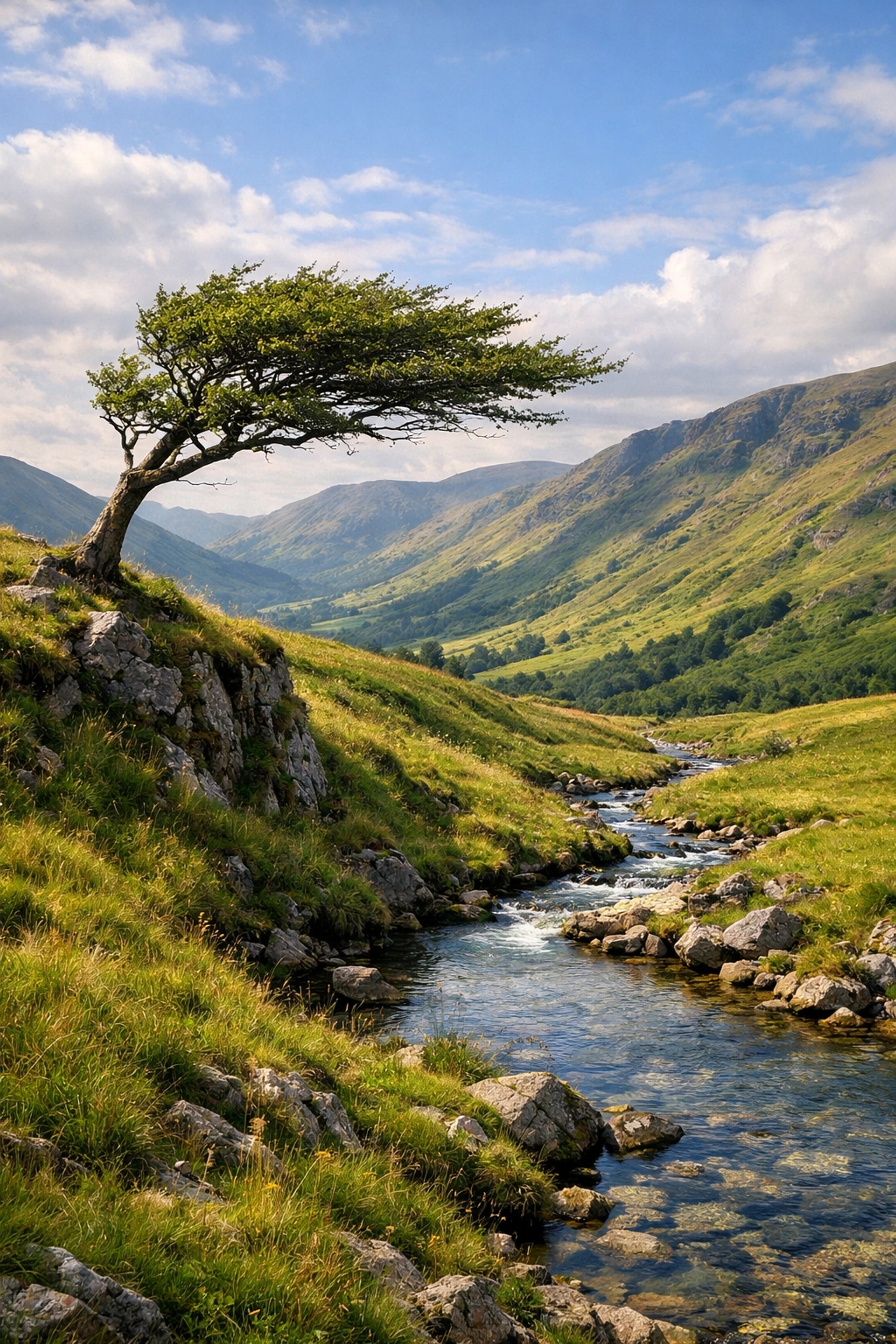
Avoid forest plantations for navigation. They look the same on maps. But trees get cut down. Maps get old. A forest on your map might be a field today. Use hills. Use valleys. Use rocky outcrops. These do not change.
The Mental Game of Navigation
Navigation is in your head. Fear makes you blind. If you feel lost, stop. Sit down. Eat a snack. This is the "S.T.O.P." rule.
S – Sit down.
T – Think.
O – Observe.
P – Plan.
Do not run. Do not wander. Look at your surroundings. Match the land to your mental map. Remember where you saw the last landmark. Go back there if you have to.
Confidence comes from practice. Start small. Go to a local park. Leave the compass in your pocket. Navigate by the sun. Navigate by the hills.
Why a Guide Changes Everything
You can learn these skills alone. It takes time. It takes many mistakes. Some mistakes are dangerous.
A guided hiking tours uk expert shows you the nuances. They show you the specific plants. They show you how the light hits the Peak District versus the Highlands. They teach you to feel the wind.
Joining a group builds your confidence fast. You see experts in action. You learn how to choose the best guided hiking tours uk based on the skills they teach. It is not just a walk. It is a classroom without walls.
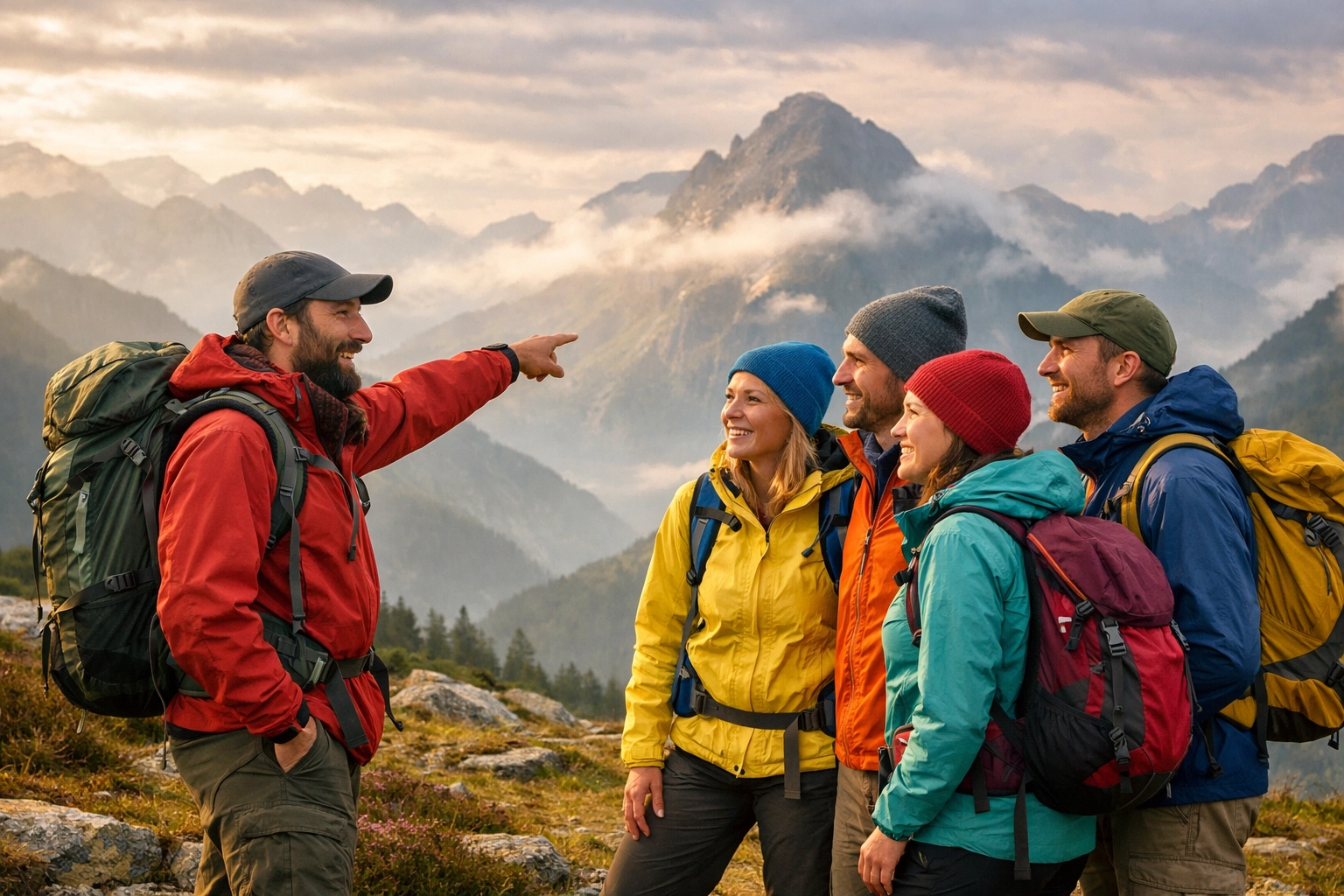
When you walk with us, you learn to see the invisible. You learn why the clouds are shaped that way. You learn why the sheep huddle in certain spots. These are the secrets the "experts" don't talk about in manuals. They are learned through boots on the ground.
Your Gear Check
You don't need a compass to navigate. But you need gear to survive while you do it.
Keep your kit light. Carry a whistle. Six blasts mean help. Carry a mirror. You can signal with the sun. Carry a bright orange survival bag. It makes you easy to find.
Check our list of 10 essential outdoor survival skills. Navigation is just one piece of the puzzle. You need to know how to stay warm. You need to know how to find water.
Mastering these skills makes the wild feel like home. You stop being a visitor. You become part of the landscape.
Take the Next Step
Stop reading about adventure. Go find it. Take your stick. Mark your shadows. Look for the North Star tonight.
Start practicing these techniques in a safe area today.