
Hey there, future wild camper. Ready to learn what the pros actually know?
You've read the gear lists. You've watched the YouTube videos. You've scrolled through endless Reddit threads. But something's missing. The real stuff. The bits that separate a magical night under the stars from a soggy disaster.
This is what outdoor experts don't always tell beginners about wild camping guided UK adventures. Take notes.
Your First Wild Camp Should Be in Your Garden
Sounds boring. It's not. It's smart.
Set up your tent at home first. Test your stove. Try your sleeping system. Figure out how that fancy tarp actually works.
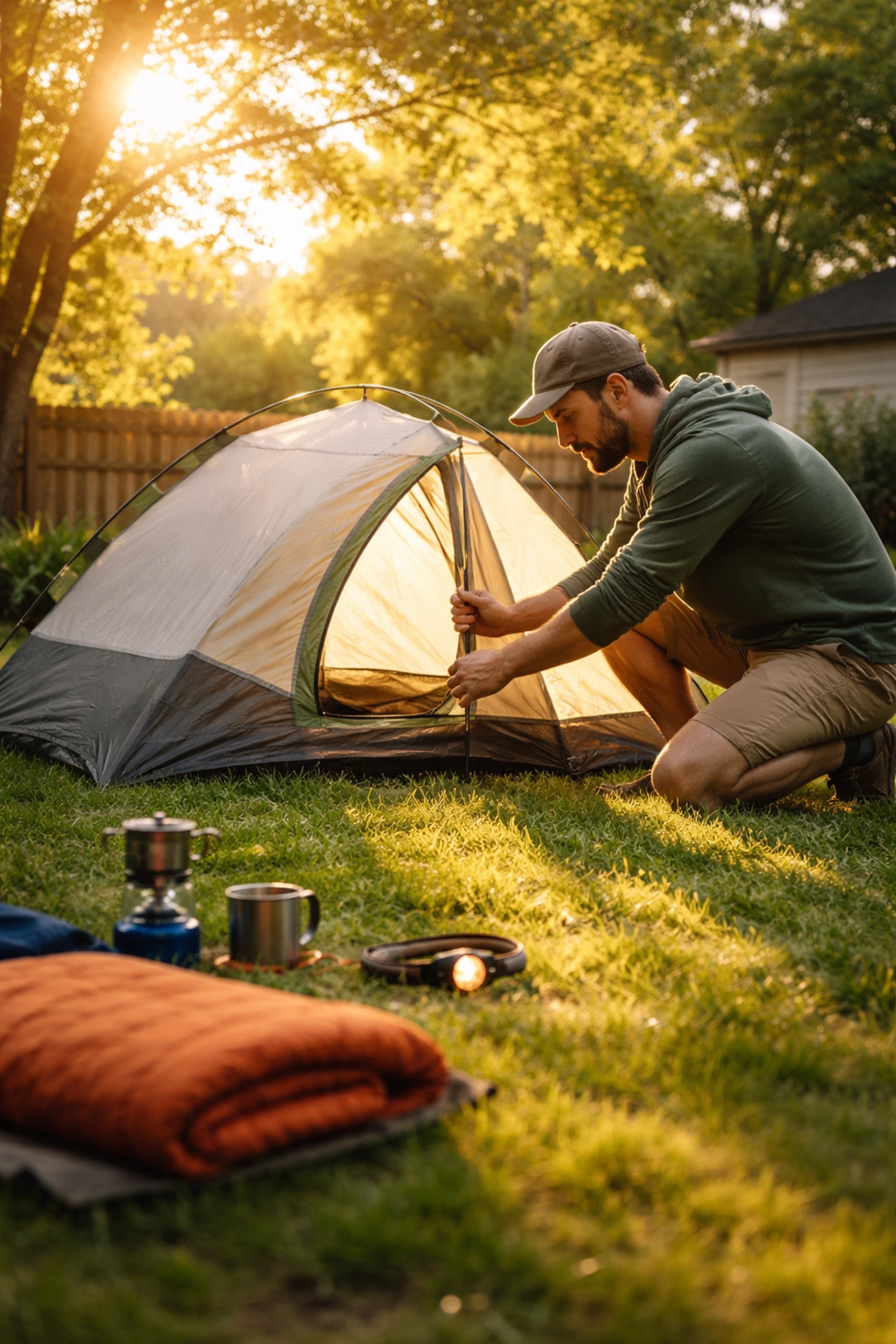
Here's the truth. Equipment fails. Zips stick. Poles confuse even the cleverest of us. Better to discover this five metres from your back door than five miles from civilisation.
This is the number one secret that transforms nervous beginners into confident campers. Your garden is your training ground. Use it.
Once you've nailed the basics at home, you're ready for the real thing. If you want to build more outdoor survival skills, start with this foundation.
Scout Your Location in Daylight First
Never pitch your tent somewhere you haven't seen in full light.
This sounds obvious. Most beginners skip it anyway. They arrive at dusk, scramble to set up, and wake up wondering why there's a stream running through their sleeping bag.
Visit your chosen spot during the day. Check for:
- Water collection points
- Wind exposure
- Ground conditions
- Escape routes
- Nearby hazards
That perfect clearing might be a bog. That flat area might flood. That sheltered spot might be directly under a dead branch.
See it first. Camp there second.
The Golden Rule: Pitch Late, Leave Early
This is the wild camping guided UK mantra. Learn it. Live it.
Arrive with enough daylight to set up safely. Familiarise yourself with your surroundings. Then settle in quietly.
Leave early the next morning. Pack up. Leave no trace. Disappear like you were never there.
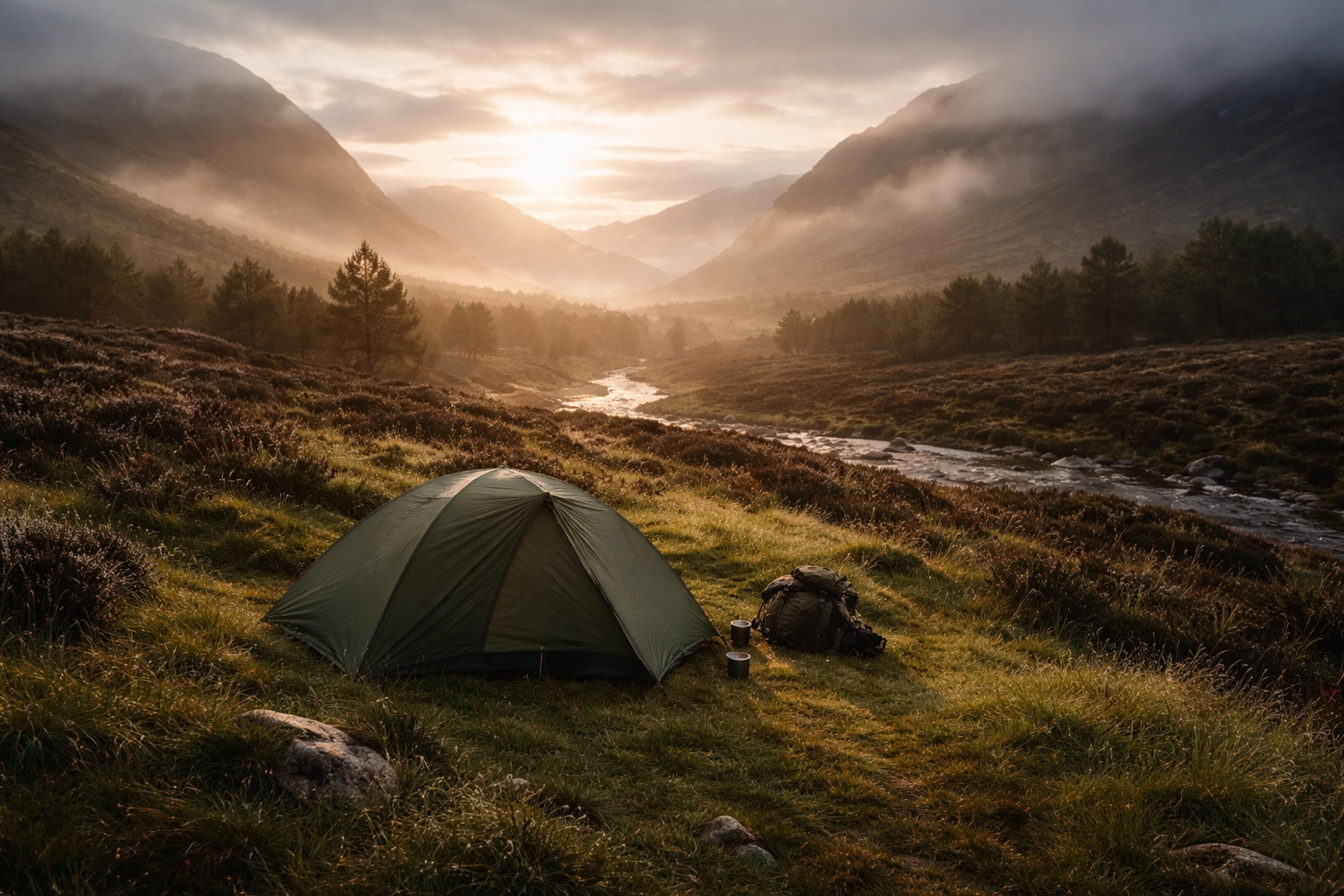
Why does this matter? Wild camping in the UK exists in a grey area. Being discreet keeps it legal. Being visible creates problems. For you. For everyone who comes after you.
Plus, there's something magical about breaking camp at dawn. The mist. The quiet. The feeling of having the world to yourself.
Keep Your Group Deliberately Small
Big groups are fun at festivals. They're terrible for wild camping.
More people means more noise. More light pollution. More wildlife disturbance. More footprint. More chance of being noticed and asked to move.
Two to four people is ideal. You get companionship without chaos. Safety without spectacle.
This isn't about being antisocial. It's about environmental responsibility. You're a guest in these wild spaces. Act like one.
If you're new to the UK outdoors and want to explore with others, consider joining a guided hiking tour first to learn the ropes.
Water Sourcing: The Bit Nobody Explains Properly
You need water. Obviously. But getting it safely is trickier than filling a bottle from a stream.
Running water beats still water. Always. Stagnant pools are bacteria parties.
Before you fill up, walk upstream. Look for animal carcasses. Check for livestock waste. One dead sheep can ruin your whole camping adventure UK experience.
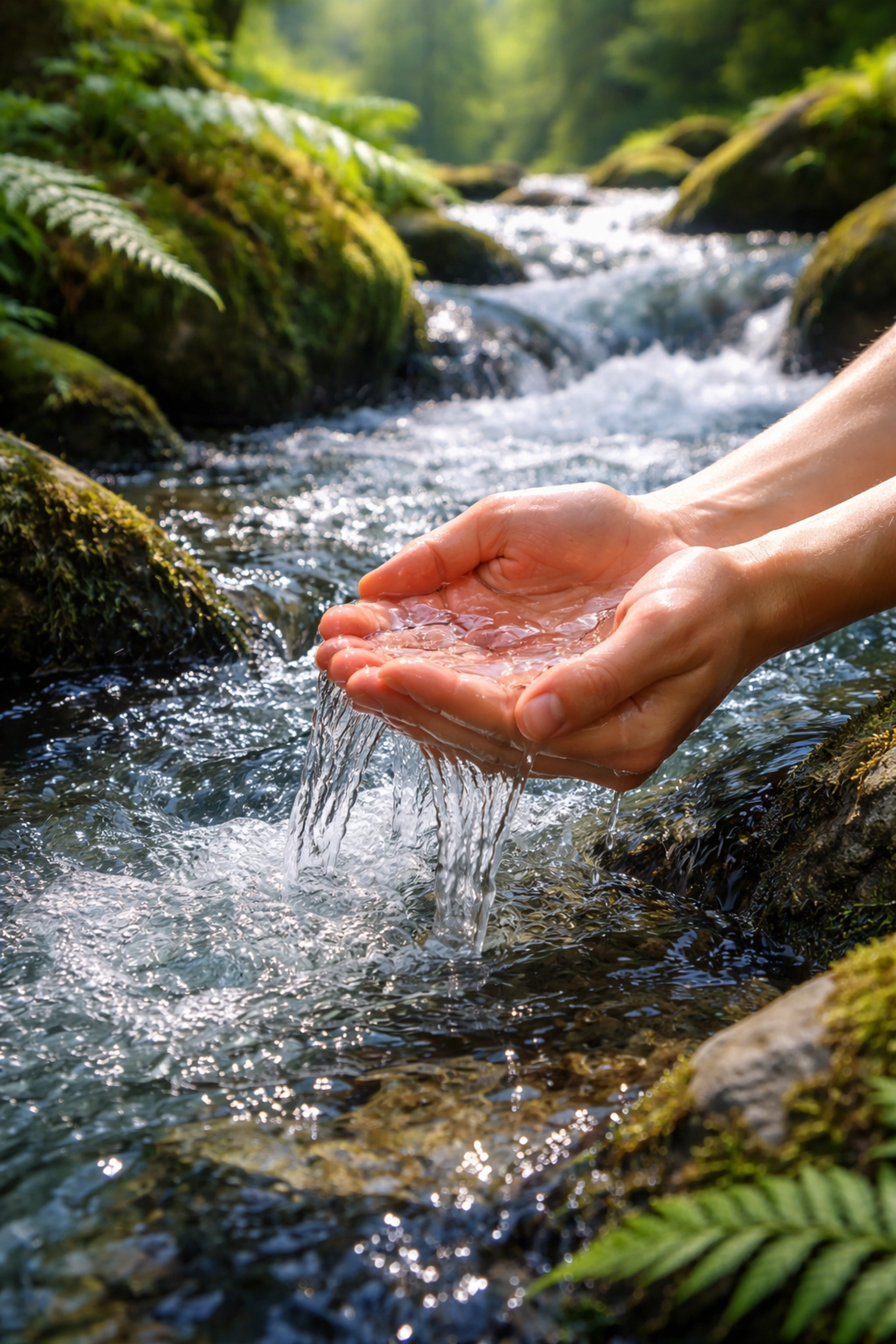
Carry purification tablets or a filter. Boiling works too if you have fuel to spare.
Plan your camp near reliable water sources. Carrying enough water for a full trip is heavy and impractical. Knowing where to find safe water is a skill worth developing.
Red Flags Mean Real Danger
Literal red flags. On army firing ranges.
This catches out more beginners than you'd think. Parts of Dartmoor, the Brecon Beacons, and Salisbury Plain are active military training areas. When those red flags are flying, live ammunition is in use.
Check firing schedules online before you head out. It takes two minutes. It could save your life.
This isn't exaggeration. This isn't scaremongering. This is basic safety that many wild camping guides skip over entirely.
Wildlife Awareness Goes Beyond "Don't Feed the Animals"
Ground-nesting birds don't care about your Instagram plans. Breeding deer don't appreciate midnight toilet trips. Ponies will investigate your food supplies with enthusiasm.
Timing matters. Spring and early summer are breeding seasons. Be extra cautious. Avoid areas where ground-nesting birds are likely. Give wildlife wide berths.
This sensitivity doesn't appear on most gear lists. But it's what separates respectful outdoor enthusiasts from people who damage the ecosystems they claim to love.
Learn to read the landscape. Notice the signs. Adapt your behaviour accordingly.
The Gear Nobody Mentions
Everyone talks about tents and sleeping bags. Here's the stuff they forget:
A sit pad. Sounds ridiculous. Changes everything. Cold, wet ground saps energy and morale. A small foam pad lets you sit anywhere comfortably.
Gaiters. Morning dew soaks boots in minutes. Gaiters keep you dry.
A headtorch with red light mode. White light destroys night vision and disturbs wildlife. Red light doesn't.
Dry bags for everything. Not just your sleeping bag. Your clothes. Your food. Your electronics. The UK is wet. Plan for it.
A proper poo trowel. Yes. This matters. Bury waste properly. Leave no trace means no trace.
For a complete breakdown of what you actually need, check out our guide to essential survival skills for your first camping trip.
Weather Isn't Optional Information
Check the forecast. Then check it again. Then assume it's wrong anyway.
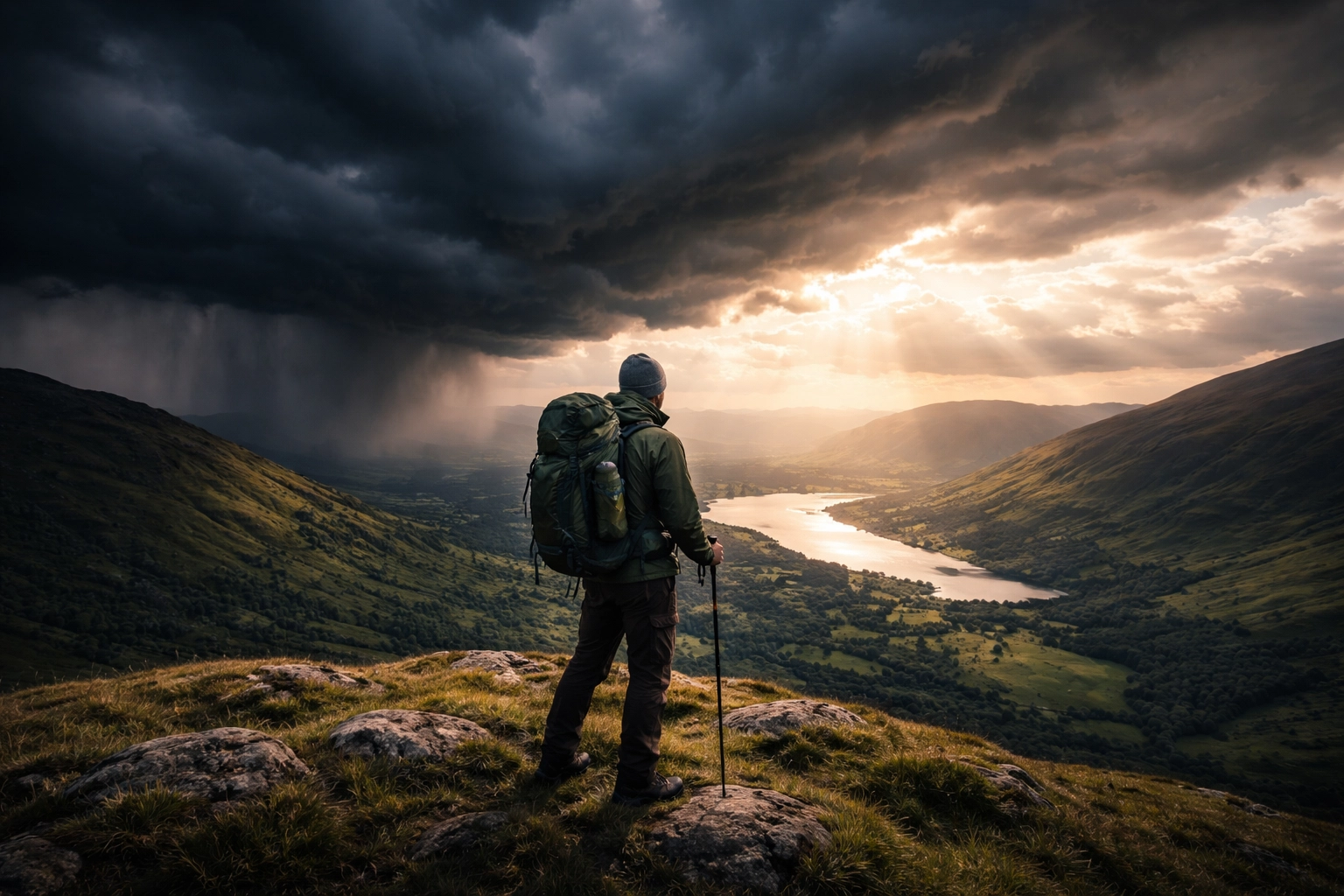
UK weather changes fast. Clear skies become storms. Storms become sunshine. Sometimes within an hour.
Layer your clothing. Waterproofs are non-negotiable. Accept that you will probably get wet at some point.
Wind matters more than rain for most campers. A gusty night can collapse tents, scatter gear, and make sleep impossible. Choose sheltered spots. Position your tent correctly.
Why Guided Wild Camping Changes Everything
Here's the real secret. The one experts don't advertise because it's their bread and butter.
Going with someone experienced transforms your first wild camping UK adventure from stressful to spectacular.
A good guide knows the spots. The water sources. The wildlife patterns. The weather quirks. The shortcuts. The secrets that take years to learn solo.
They carry the knowledge. You carry your sleeping bag and an open mind.
At Open Sky Adventure, we've built our guided experiences around exactly this principle. We share everything. No gatekeeping. No mysteries kept for repeat customers.
Your first wild camp should be magical. Not a survival test.
Start Planning Your First Wild Camp Now
You've got the secrets. You know what the experts know. Time to use it.
Pick a weekend. Scout a location. Test your gear in the garden. Book a guided experience if you want backup.
The UK wilderness is waiting. It doesn't care about your experience level. It cares about your respect, your preparation, and your willingness to learn.
Go find your first wild camping spot. Make it count.