
Hi there! Welcome to the Open Sky Adventure blog. You are here because you love the outdoors. You want to explore the British wilderness. But you also want to stay safe. UK weather changes fast. One minute it is sunny. The next minute a storm hits. You need to be ready.
Choosing the right emergency shelter is a vital skill. It can save your life. It keeps you dry. It keeps you warm. It protects you from the wind. This guide helps you choose the best option for your next camping adventure uk. Let’s look at the best shelters for a wild camping guided uk experience.
Why You Need an Emergency Shelter
The UK climate is tough. Rain is common. Wind is even worse. Wind steals your body heat. It makes you cold fast. It also makes you thirsty. You need to block the wind. You need to stay dry. An emergency shelter does both.
If you are on a wild camping guided uk trip, your guide will help. But you should know the basics too. You might get separated. You might need to help someone else. Knowing how to build or use a shelter is part of essential survival skills.
The 20-Minute Rule vs. The 40-Minute Build
Time is your biggest enemy in an emergency. If the sun is going down, hurry. If the temperature is dropping, move fast.
You have two main paths. You can build something fast. Or you can build something better.
Option 1: The Bivouac Bed (The 20-Minute Fix)
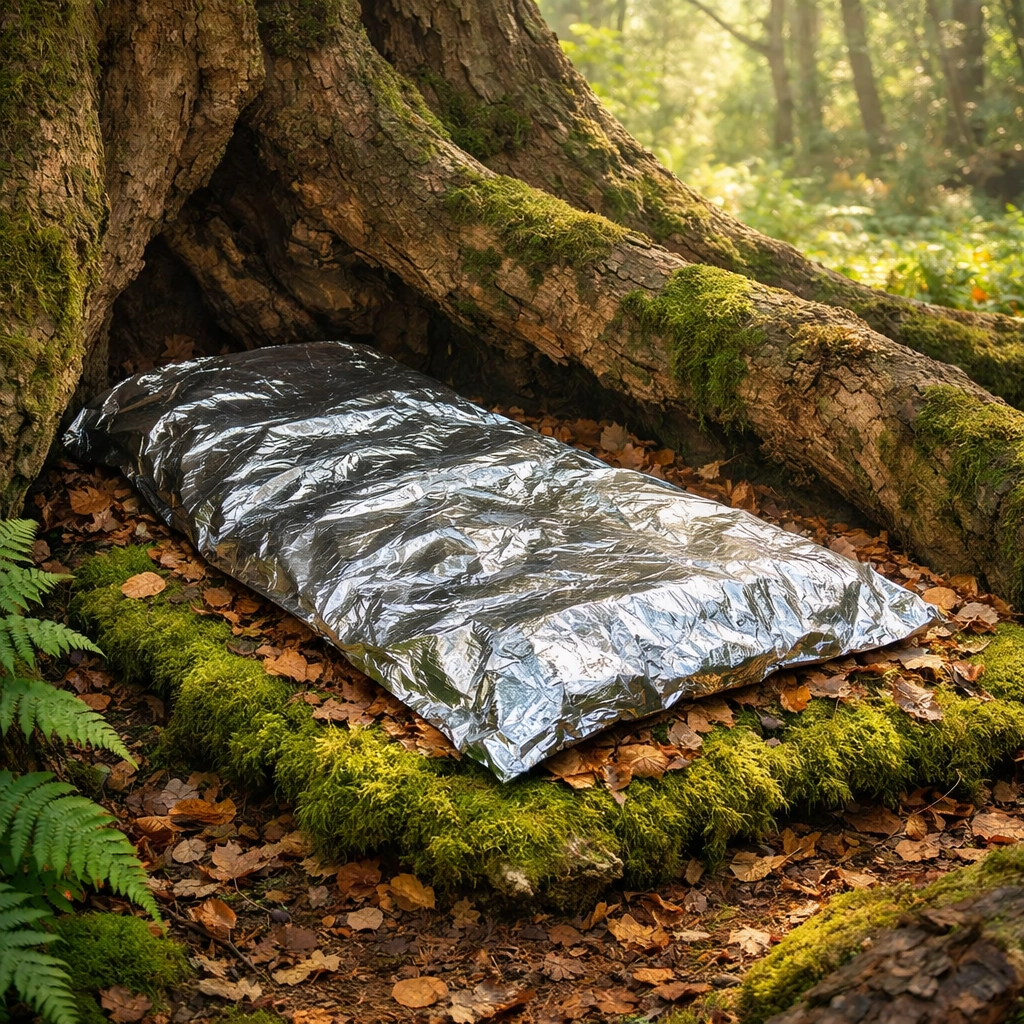
The Bivouac Bed is the fastest option. Use this when you have very little time. You only need about 20 minutes.
What you need:
- A bivy bag or a large heavy-duty garbage bag.
- Dry leaves, moss, or grass.
- A space blanket.
What to do:
- Find a flat spot.
- Clear away sharp rocks.
- Fill your bag with dry natural materials. This creates insulation.
- Crawl inside.
- Wrap your space blanket around you inside the bag.
This keeps you off the cold ground. The ground sucks heat from your body. This is called conduction. The bed stops this. It is a simple way to survive a night in the wild.
Option 2: The Eagle's Nest (The 40-Minute Build)
The Eagle's Nest is more robust. Use this if you have about 40 minutes. It offers better protection from rain and wind.
What you need:
- Long branches.
- Smaller sticks.
- Pine boughs or leafy branches.
- A tarp or plastic sheeting.
What to do:
- Find a sturdy tree or a large rock.
- Lean a long "ridge" pole against the support.
- Lean smaller sticks against the ridge pole. Create a rib-like structure.
- Layer your plastic or tarp over the ribs.
- Cover the tarp with more branches and leaves.
- Build a thick bed of leaves inside.
The Eagle's Nest is great for a camping adventure uk because it mimics the natural environment. It blends in. It stays warm.
The Lean-To Shelter
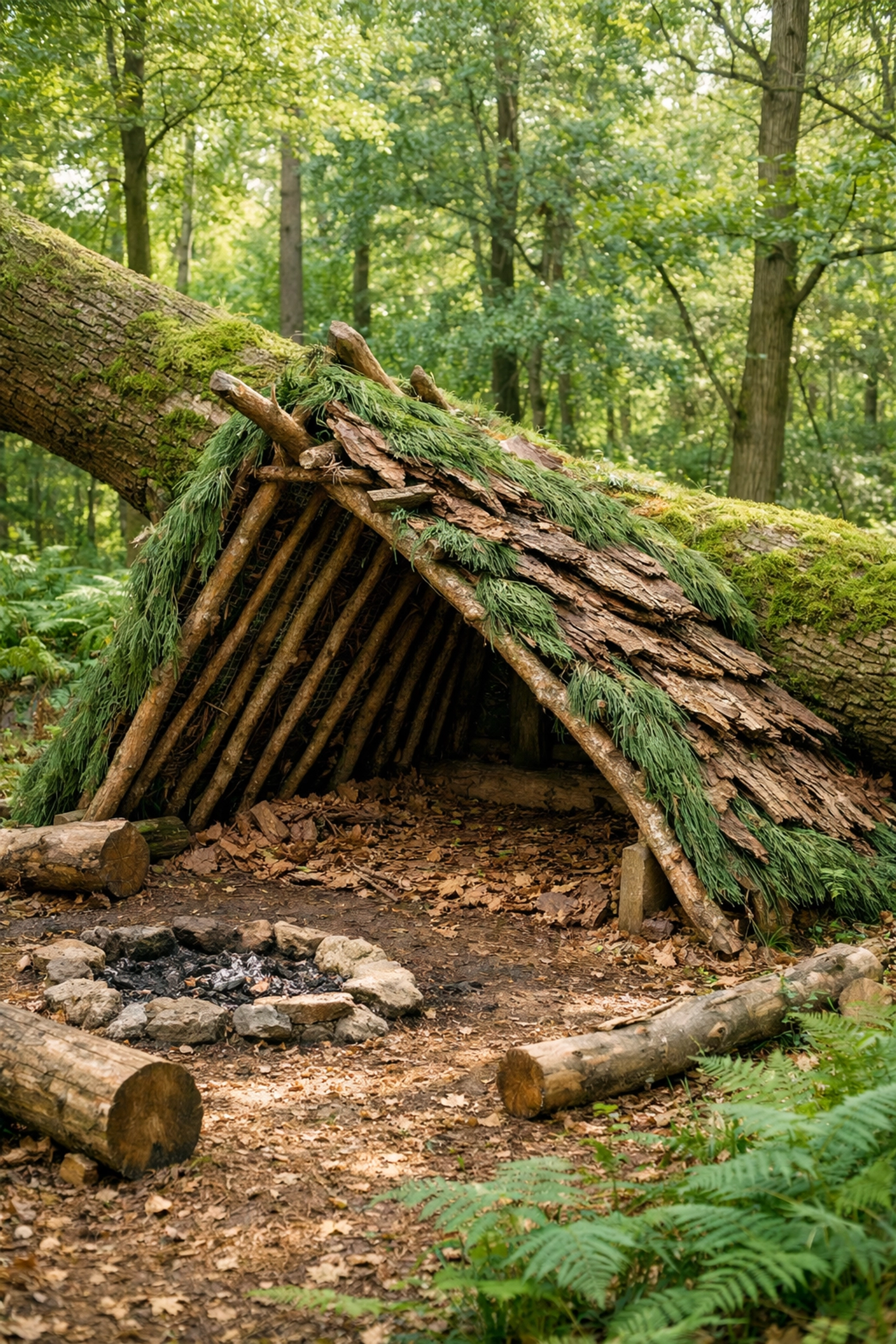
The Lean-To is a classic. It is easy to build. It uses natural supports.
- Find a fallen tree that is stuck at an angle.
- Check that it is stable. You do not want it to fall on you.
- Lean branches against the fallen trunk.
- Thatch the branches with leaves or bark. Start from the bottom. Work your way up. This makes water run off.
- Close off the sides if the wind is strong.
The Lean-To is good but it is open on one side. You need to position the back of the shelter against the wind.
Natural Shelters: Using the Landscape
Sometimes nature provides the shelter for you. This saves time. It saves energy.
Caves and Overhangs
Caves stay dry. Rock overhangs block the rain. But be careful. Look for loose rocks above you. Check for animal signs. Do not go too deep into a cave. You need air.
Tree Arbors
Large evergreen trees often have dry spots underneath. The thick branches block the rain. The trunk blocks the wind. You just need to add a bit of insulation on the ground.
Essential Gear to Carry
You should always carry "just in case" items. Even on a guided tour, bring your own kit. It makes you a better adventurer.
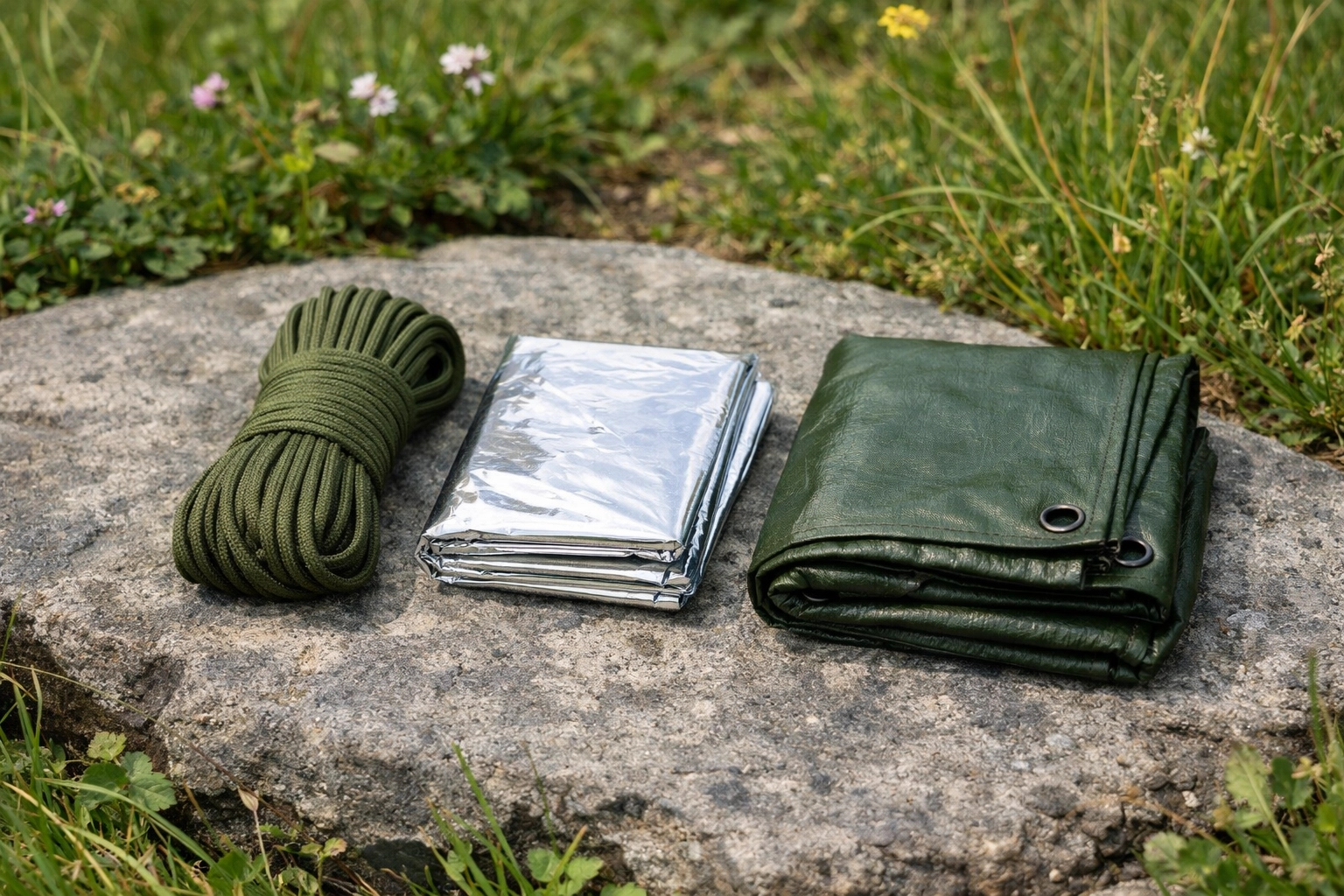
- Reflective Emergency Blanket: These are tiny. They weigh almost nothing. They reflect 90% of your body heat. Buy a few.
- Paracord: This is strong rope. Use it to tie poles together. Use it to hang a tarp.
- Tarp or Plastic Sheeting: A simple 2m x 2m piece of plastic is a lifesaver. It is 100% waterproof.
- Bivy Bag: This is a waterproof cover for your sleeping bag. In an emergency, it is your house.
How to Choose the Right Spot
Location is more important than the shelter itself. A great shelter in a bad spot will fail.
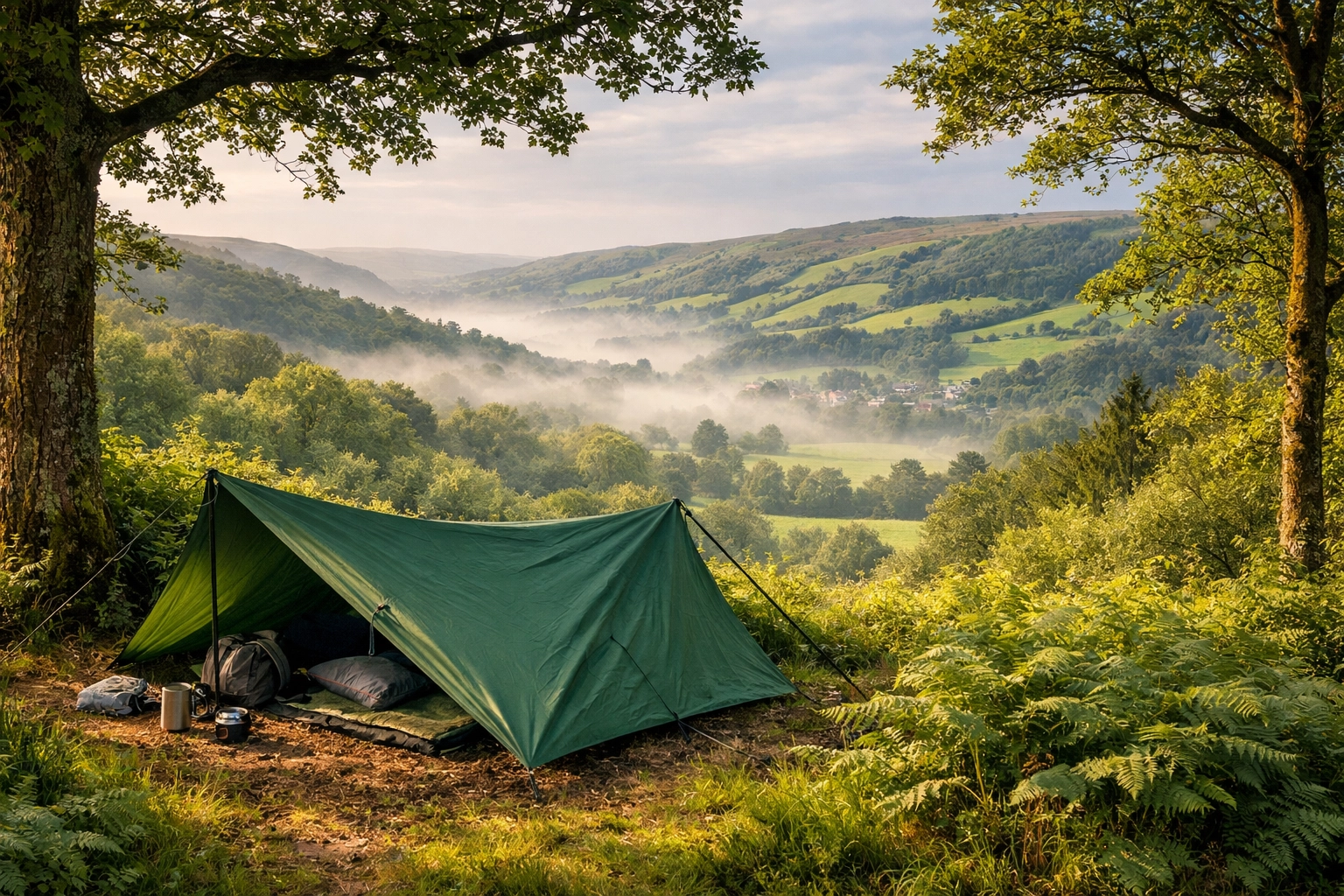
- Find the Leeward Side: This is the side of a hill or forest that is protected from the wind. Use a map or a compass.
- Avoid Ridges: Do not stay on top of a hill. It is too windy. It is too exposed.
- Avoid Low Ground: Do not stay in the very bottom of a valley. Cold air sinks. It gets much colder there at night. Water also pools there.
- Look Up: Check for "widow makers." These are dead branches that might fall. Do not sleep under them.
Comparing Your Options
| Shelter Type | Time to Build | Protection Level | Effort Level |
|---|---|---|---|
| Bivouac Bed | 20 Mins | Moderate | Low |
| Eagle's Nest | 40 Mins | High | High |
| Lean-To | 30 Mins | Moderate | Medium |
| Natural Cave | 0 Mins | High | Low |
Choose the Bivouac Bed if you are exhausted. Choose the Eagle's Nest if you need to stay for more than one night. Use a Natural Cave if you are lucky enough to find one.
Group Size and Safety
Are you traveling with a group? Your shelter needs to fit everyone.
A single 4-person emergency shelter is not enough for 10 people. If you are the leader, check your gear. Make sure you have enough space for everyone. Sharing a shelter also shares body heat. This is good. It keeps everyone warmer. But overcrowding can cause condensation. You will get wet from your own breath. Ensure there is a small air vent.
Leave No Trace in the UK
Wild camping in the UK has rules. You must respect the land.
- Seek permission if you are on private land.
- Do not cut down live trees. Only use dead wood.
- When you leave, take your shelter apart.
- Scatter the leaves and branches.
- Make the spot look like you were never there.
This keeps the UK countryside beautiful for everyone. It is part of being a responsible outdoor enthusiast.
Ready for Your Next Adventure?
Choosing an emergency shelter is about balance. Balance your time. Balance your energy. Balance the weather. Practice these skills before you need them. Go to your local woods. Try building a Lean-To. Try sleeping in a Bivouac Bed. It is fun and it builds confidence.
At Open Sky Adventure, we love teaching these skills. We want you to feel at home in the wild. Our guided tours are the perfect place to learn. You get to explore amazing trails while staying safe.
Check your gear bag today. Make sure you have a space blanket and some paracord. You never know when you might need them.
Go out and practice building a simple lean-to in your garden or local park this weekend.