
Hello there. Glad you made it. You want to go outside. You have the latest gear. You have a GPS on your wrist. You have a lightweight tent in your pack. You think traditional skills are for the history books. You are wrong.
Modern tech is great. It makes the outdoors accessible. But tech fails. Batteries die. Signals drop. Screens smash. When the gadgets stop working, your brain must take over. This is why bushcraft matters for your next camping adventure uk. It is not about living in a cave. It is about being capable.
Survival vs. Bushcraft
Understand the difference. Survival is an emergency. It is a crisis. You want to get home fast. You are cold, wet, or lost. Bushcraft is different. It is the art of living in the woods. It is about comfort. It is about using what you find.
Bushcraft teaches you to thrive. It gives you confidence. You don't just endure the rain. You manage it. You don't just sit in the dark. You build a fire. Learn more about these 15 essential survival skills to level up your wild camping experience in the uk.
The Fire Skill
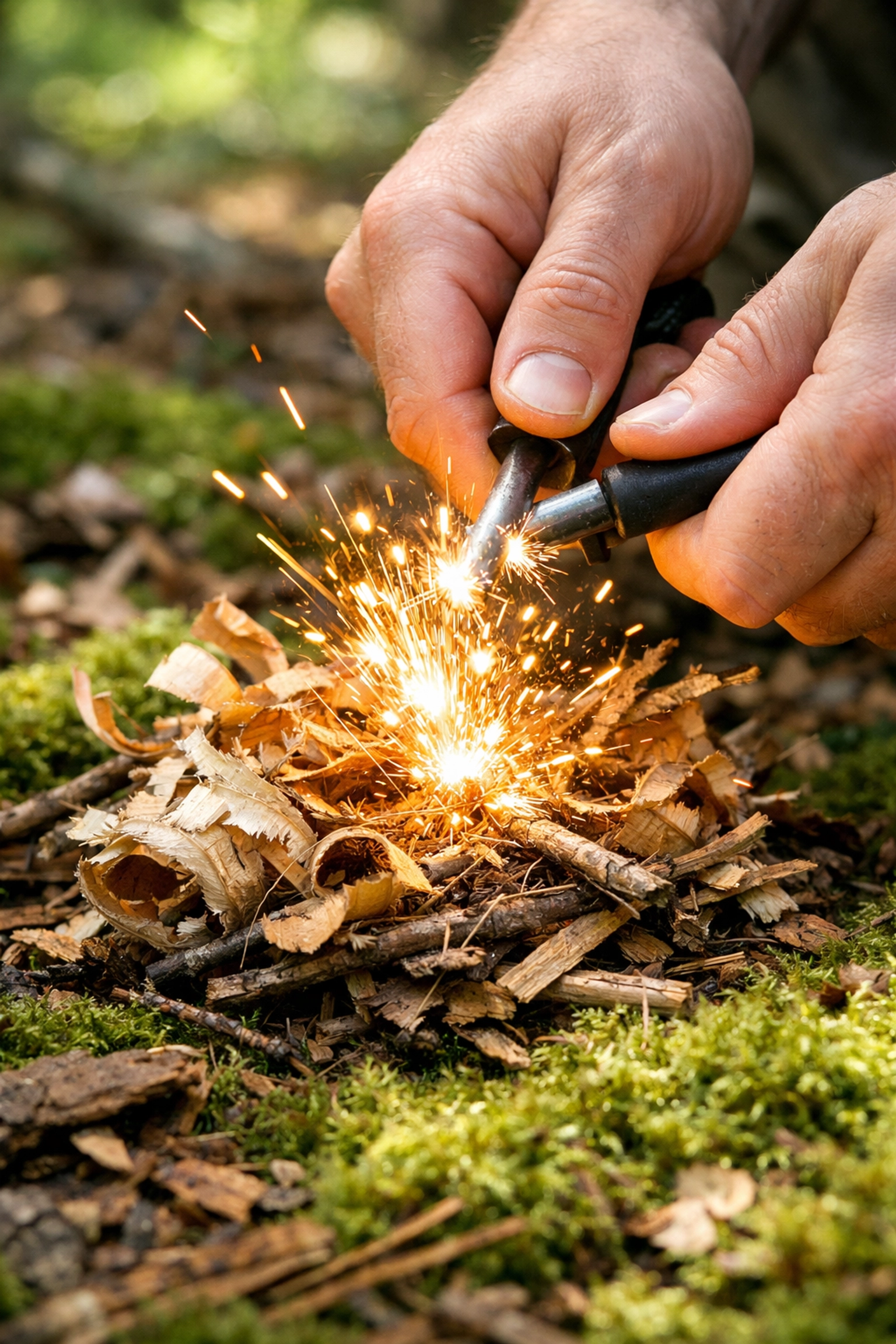
Fire is the heart of any camp. Modern lighters are easy. Use them. But carry a backup. Learn to use a ferrocerium rod. It works when wet. It never runs out of fuel. It lasts for thousands of strikes.
Find dry tinder. Look for birch bark. It burns hot. It burns even when damp. Collect small twigs. Matchstick size. Pencil size. Thumb size. Build your structure. Light the tinder. Feed the flame slowly. Do not rush. Fire provides heat. It cooks food. It dries your socks. Most importantly, it boosts your mood.
Shelter Building
Your tent is your primary home. But what if a pole snaps? What if the wind rips the fabric? You need a Plan B. This is where bushcraft saves your camping adventure uk.
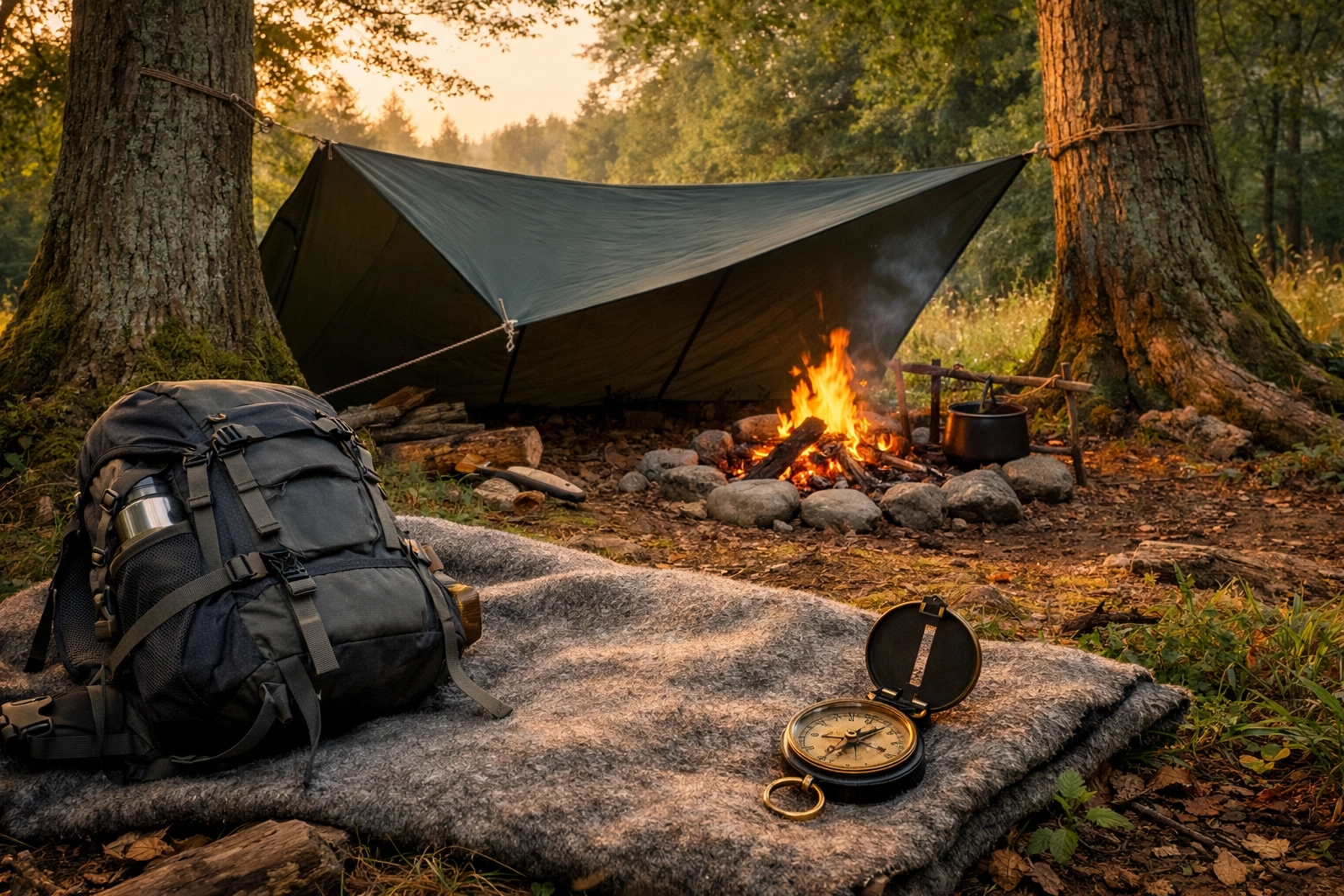
Carry a tarp. It is a simple sheet of waterproof fabric. Learn the knots. The evenk hitch. The taut-line hitch. These allow you to tension your lines. Use trees for anchors. If no trees exist, use your walking poles. A tarp is versatile. It can be a lean-to. It can be an A-frame. It provides a dry space to sit. It protects your gear from the dew.
Master the environment. Use the wind. Place your shelter so the wind hits the back. Avoid the face. Stay low to the ground in a storm. Check out more fire starting, navigation, foraging and shelter tips for your next trip.
The Tool Kit
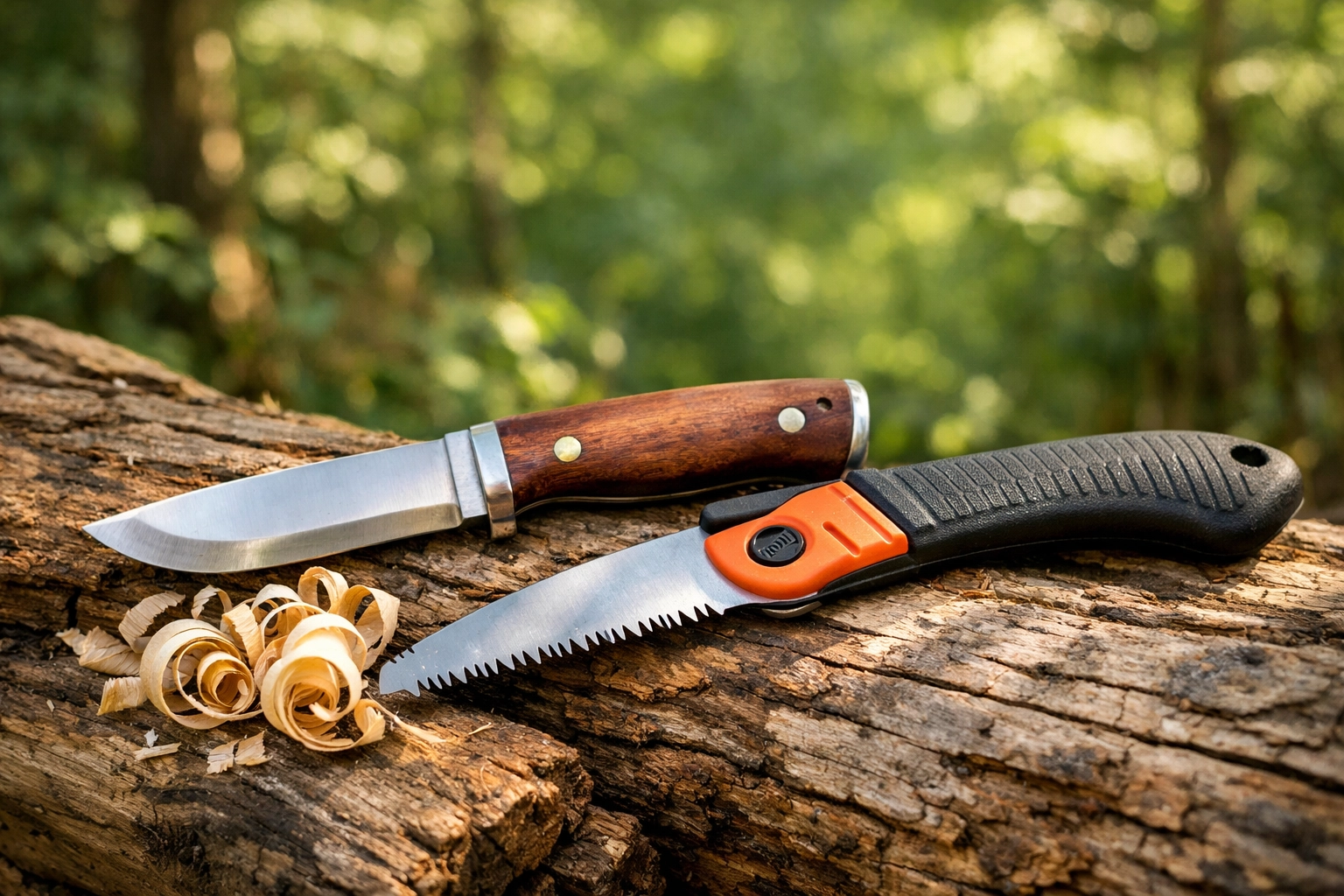
Traditional skills require tools. Don't carry a heavy toolbox. Carry a knife. Choose a fixed blade. Avoid folding knives for heavy tasks. They can collapse on your fingers. Use a full tang knife. This means the steel goes all the way through the handle. It is strong. It is reliable.
Keep your knife sharp. A dull knife is a dangerous knife. It requires more force. It slips. It cuts things you don't want to cut. Use your knife for small tasks. Carving tent pegs. Preparing food. Making feather sticks for your fire.
Add a folding saw to your pack. It is safer than an axe. It is lighter. It cuts wood for your fire with ease. Respect your tools. Keep them clean. Keep them dry.
Navigation Without Screens
Your phone is a map. It is also a distraction. It needs a battery. It needs a signal. In the UK hills, signal is a luxury. Do not rely on it.
Carry a paper map. Carry a compass. Learn to orient the map. Look at the landscape. Identify the peaks. Find the valleys. Match them to the lines on the paper. This is a vital skill for any wild camping guided uk experience.
Practice when the sun is out. Don't wait for the fog to learn. Know your pace. Count your steps. Know how long it takes to walk one kilometer. This is called pacing. It keeps you on track when visibility is zero. Navigation is not just about where you are. It is about where you are going.
Water Mastery
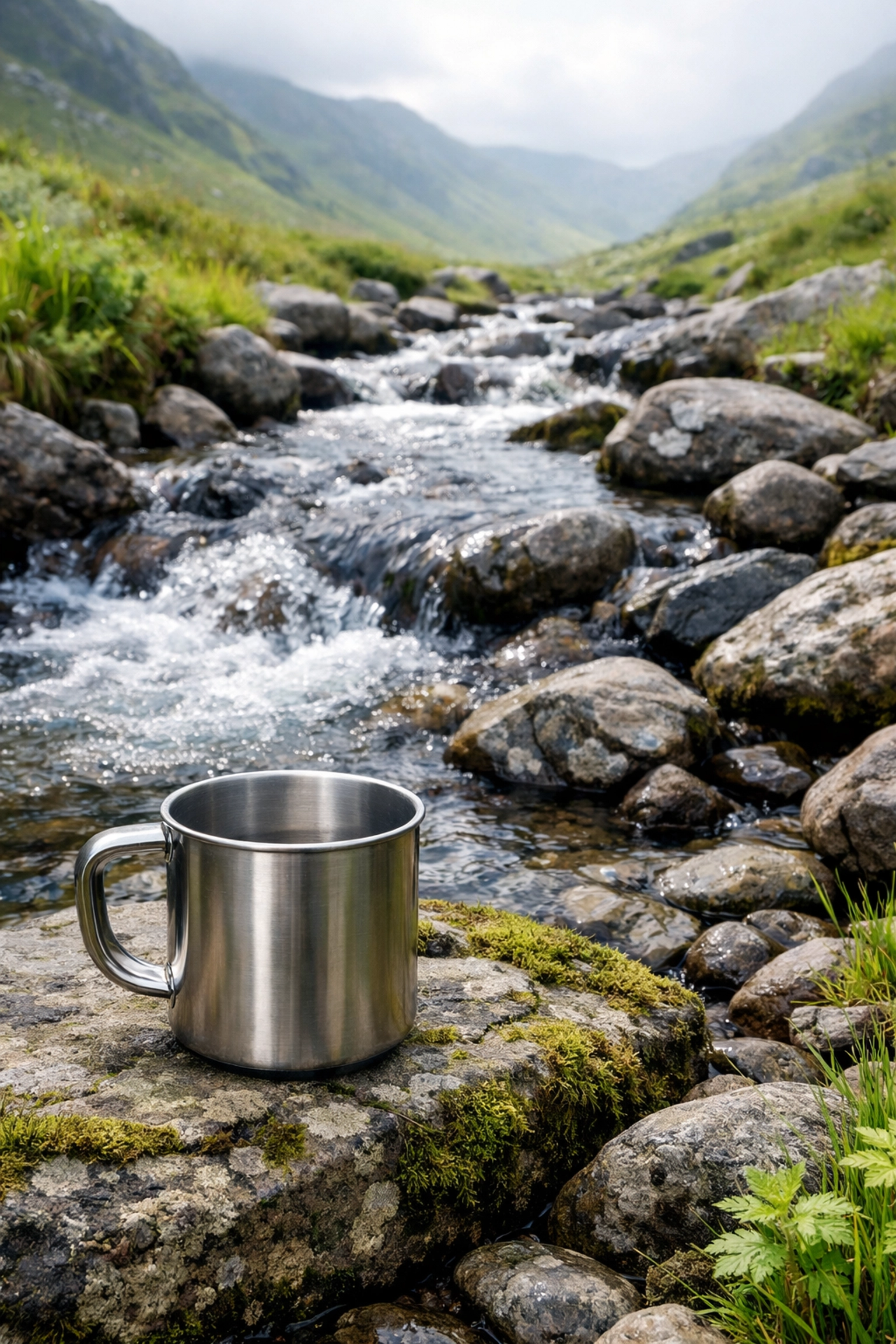
Water is life. You cannot carry enough for a long trip. You must find it. You must treat it. Even the clearest mountain stream can contain bacteria. Sheep graze in the UK uplands. They leave waste. Rain washes it into the water.
Carry a filter. Use a chemical treatment. Or boil the water. Boiling is the traditional way. It takes time. It uses fuel. But it is 100% effective. Learn to identify good water sources. Look for moving water. Avoid stagnant pools. Look upstream. Ensure no dead animals are in the flow. Stay hydrated. Stay healthy.
The Mental Edge
Traditional skills build resilience. They force you to think. You solve problems with your hands. This creates a deep connection to nature. You stop being a visitor. You become part of the woods.
When things go wrong, people panic. Panic leads to mistakes. Mistakes lead to accidents. Bushcraft gives you a routine. It gives you a process. You have a task to do. Build the fire. Set the tarp. Filter the water. This focus keeps you calm. A calm mind is your best survival tool.
Why the UK is Perfect for This
The UK has varied weather. It changes fast. You can have sun, rain, and wind in one hour. This is the perfect training ground. You don't need a jungle. You need a damp forest in the Lake District. You need a windy ridge in Scotland.
Traditional skills make these environments comfortable. They take the "suffering" out of the "outdoors." You learn to work with the weather, not against it. You find the dry spots. You find the fuel. You find the way home.
The Hybrid Approach
You don't have to choose. You don't have to be a pioneer or a tech-geek. Be both. Use your GPS to track your route. Use your bushcraft skills to make camp. Use your lightweight stove for coffee. Use your knife to carve a spoon.
This hybrid approach is the future of adventure. It is smart. It is safe. It is fun. It allows you to push further into the wild. You know you can handle what comes your way. You are prepared.
How to Get Started
Don't go into the deep woods alone yet. Start in your garden. Pitch your tarp. Light a small fire in a fire pit. Practice your knots while watching TV.
Read books. Watch videos. But most importantly, do it. Skills are like muscles. They atrophy if you don't use them. Go on a wild camping guided uk trip. Learn from people who do this every day. Ask questions. Make mistakes in a safe place.
Your Checklist for the Next Trip
- A sharp, fixed-blade knife.
- A ferrocerium rod.
- A lightweight tarp and 15 meters of paracord.
- A paper map of your area.
- A reliable compass.
- The knowledge to use all of the above.
Traditional skills are not dead. They are the foundation of every great adventure. They turn a walk in the park into a journey of discovery. They turn a cold night into a warm memory.
Now, stop reading. Go outside. Pack your bag. Check your kit. Practice your knots. Start your next camping adventure uk.