
Hey there, fellow explorer. Ready to own the dark? Most hikers head home when the sun goes down. You don’t have to. Navigating at night is a superpower for your next camping adventure uk. It turns a familiar trail into a brand-new world. It builds confidence. It keeps you safe when things go wrong.
The dark changes everything. Distances feel longer. Shapes look different. Shadows play tricks on your eyes. You need a system. Follow these five steps to master the night. Stay on track. Enjoy the stars. Get back to your tent safely.
1. Gear Up for the Dark
You cannot navigate what you cannot see. Your gear is your lifeline. Start with a high-quality headtorch. Choose one with at least 200 lumens. Look for a model with a red-light mode. Red light preserves your night vision. It allows your eyes to stay adjusted to the dark.
Pack spare batteries. Cold nights drain power fast. Keep them in an inside pocket to stay warm. Carry a second, smaller torch as a backup. Never rely on your phone flashlight. It drains the battery you need for emergencies.
Get a physical map and a compass. Digital apps are great, but they fail. Screens are too bright at night. They ruin your natural ability to see the terrain. Use a compass with a large, clear baseplate. Make sure the markings are easy to read under a dim light.
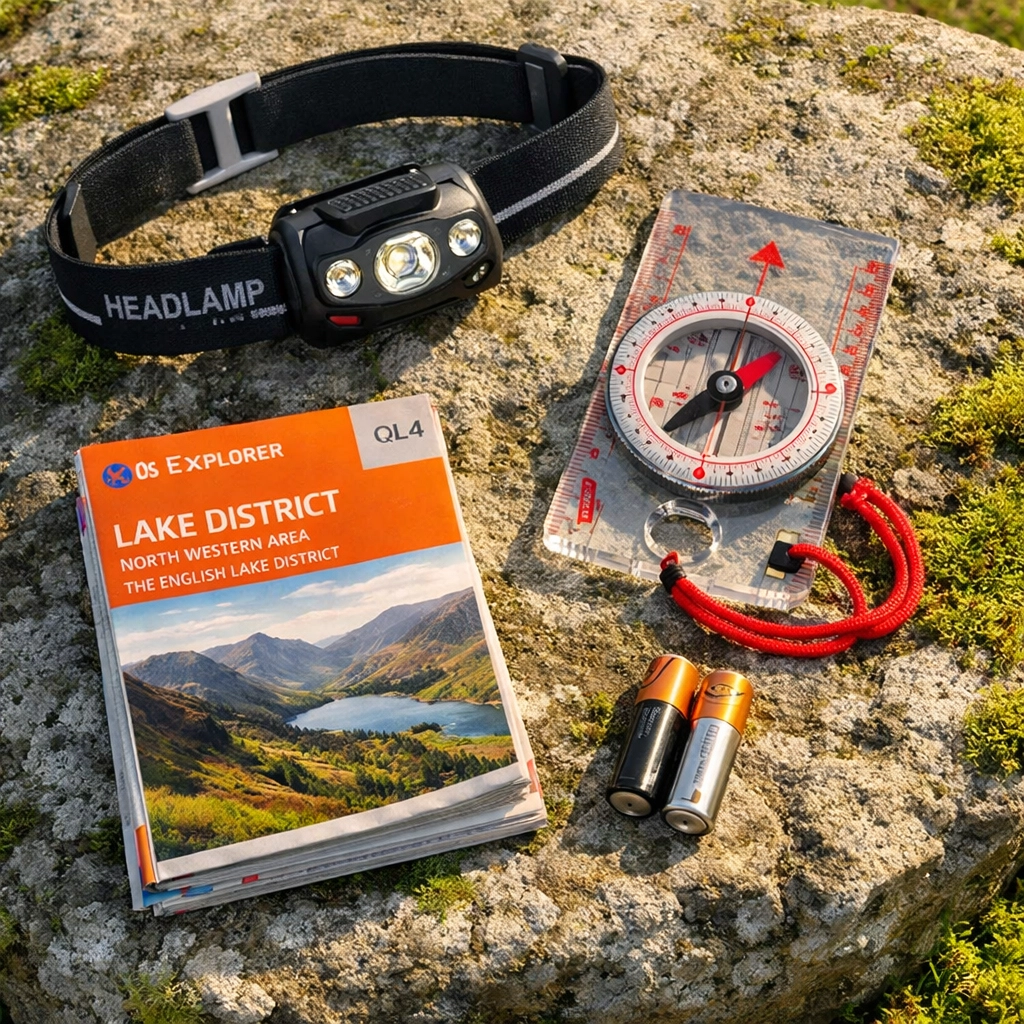
Check your clothing before you start. Night temperatures drop quickly in the UK. Wear layers. Choose moisture-wicking fabrics. Keep your waterproofs accessible. Being cold makes you lose focus. Losing focus leads to mistakes. For more gear advice, check out our guide on essential survival skills for your first camping adventure in the uk.
2. Master Your Compass Skills in Daylight
Don't wait for total darkness to learn your compass. Practice in your garden. Take a bearing on a tree. Walk to it. Practice in a local park. Learn how to set the dial. Align the North needle with the orienting arrow. Follow the direction of travel arrow.
Understand magnetic declination. In the UK, this is currently very small, but you must know it exists. Practice taking a bearing from a map. Transfer it to the real world. Do this until it becomes second nature.
Practice "walking on a bearing." Pick a distant object. Set your compass. Walk toward it without looking down the whole time. Glance down, confirm your direction, look up, and move. This builds muscle memory. You will need this skill when the fog rolls in or the moon disappears. Night navigation is just daylight navigation with less data. Master the basics first.
3. Learn the Art of Pacing and Timing
In the dark, you lose your sense of distance. A 500-meter stretch can feel like two miles. You must measure your progress. Use pacing. This is counting your double steps.
Find a flat 100-meter stretch of ground. Walk it at a normal pace. Count every time your right foot hits the ground. Most people take about 60 to 70 double steps per 100 meters. This is your "pace count."
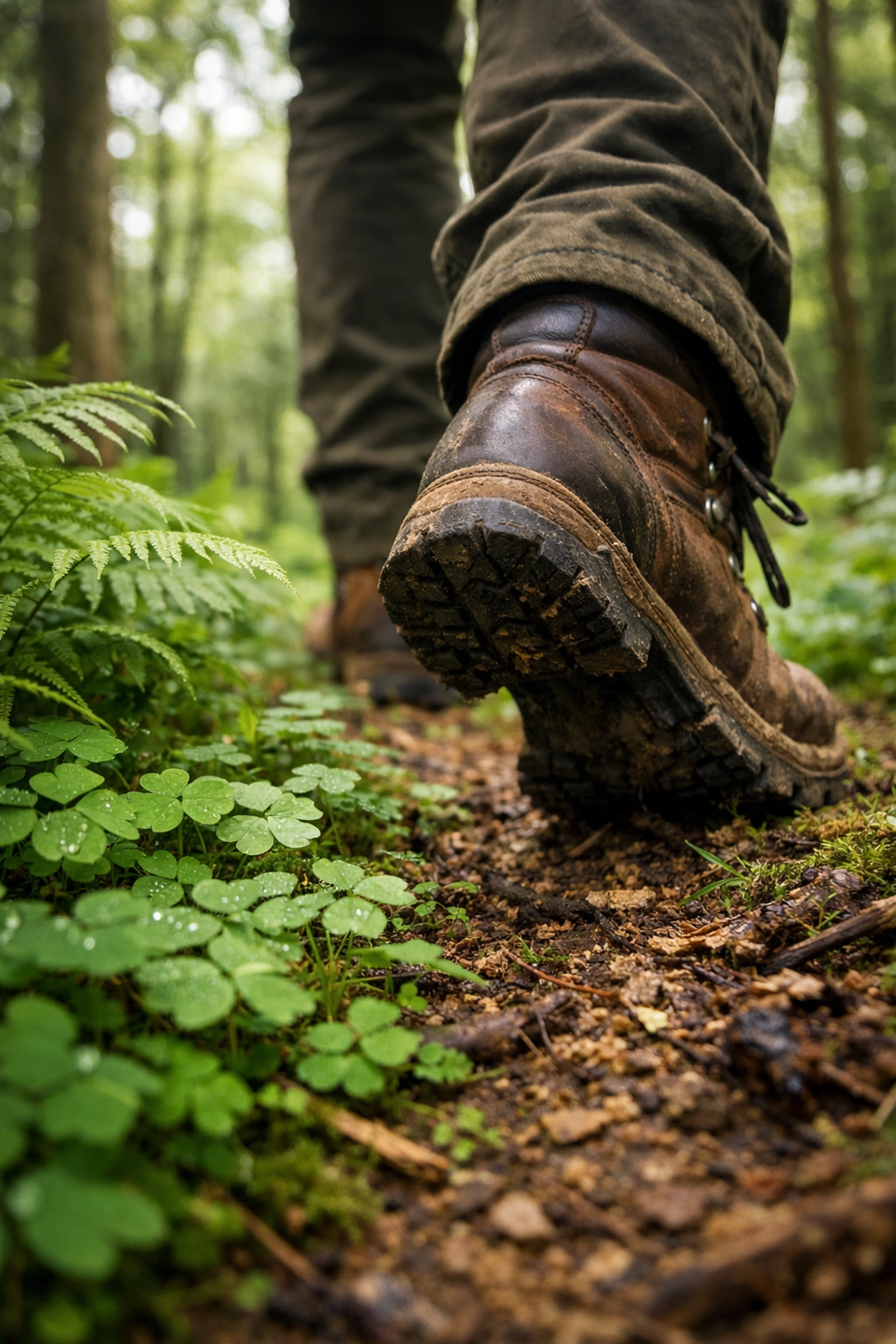
Remember that your pace changes. Uphill steps are shorter. You will take more of them. Downhill steps can be longer or shorter depending on the steepness. Rough terrain slows you down. Practice your count on different types of ground.
Combine pacing with timing. Use a watch. If you know you walk at 4km per hour, a 1km leg should take 15 minutes. If you have been walking for 25 minutes and haven't found your marker, stop. You have likely gone too far. This is a vital skill for wild camping guided uk trips where trails aren't always clear.
4. Break Your Route Into Navigational "Legs"
Never try to navigate a five-mile route in one go at night. Break it down. Create "legs." A leg is a short distance between two very obvious points. These points are your checkpoints.
Use the "5 Ds" for every leg:
- Distance: How far is the next point?
- Direction: What is the compass bearing?
- Duration: How long should it take to walk?
- Description: What does the ground look like? Is it rising or falling?
- Destination: What exactly am I looking for? A wall? A stream crossing? A path junction?
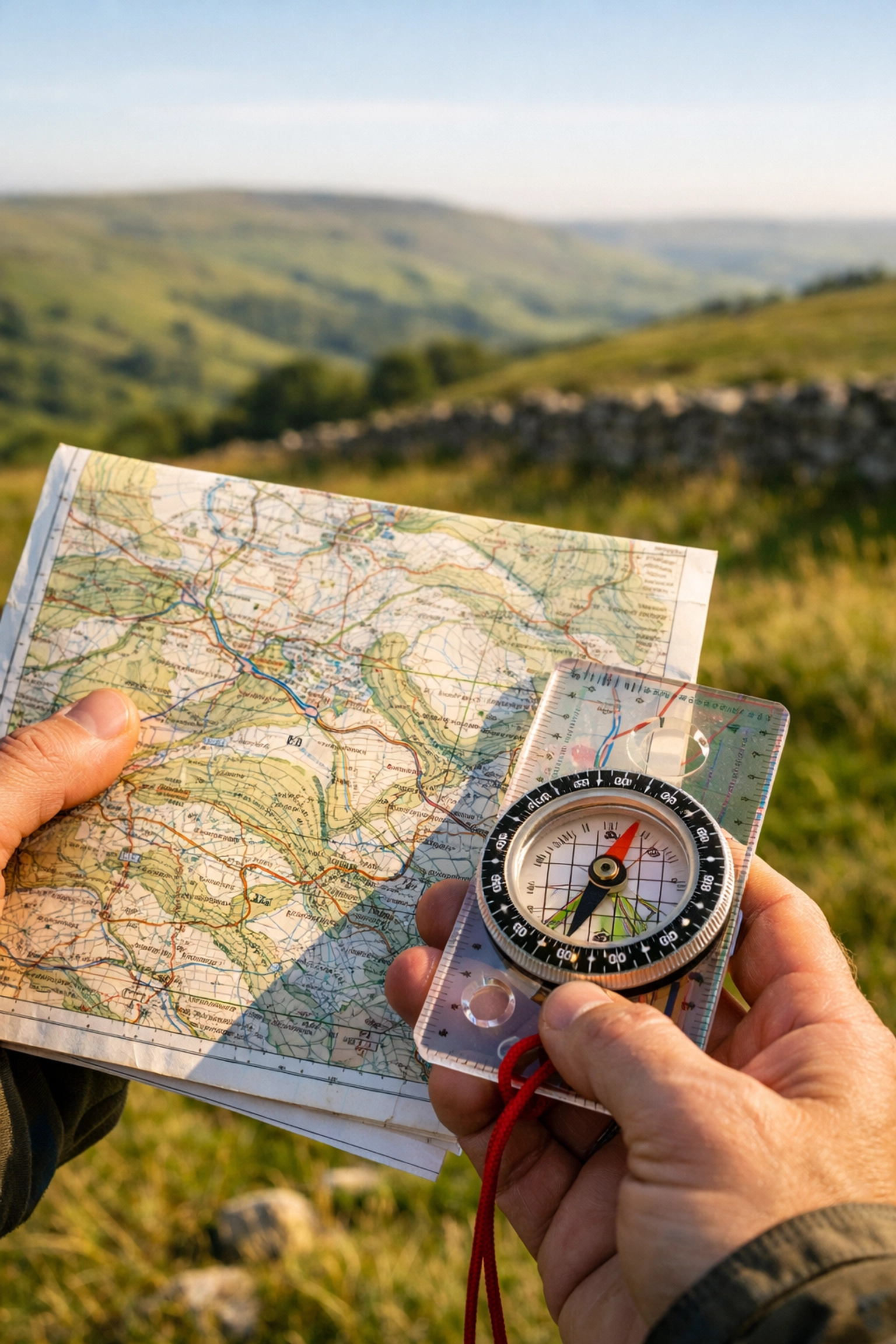
Write these down on a small card. Keep it in your pocket. Check off each leg as you complete it. This keeps your mind focused. It prevents "map fatigue." If you miss a checkpoint, you only have to backtrack a few hundred meters, not miles. This structure is exactly what we teach in our guided hiking tours uk.
5. Use Pro Techniques: Handrails and Catching Features
Night navigation requires smart strategies. Use "handrails." These are linear features on the map that you can follow easily. Think of fences, stone walls, streams, or the edge of a forest. Instead of walking across an open moor on a bearing, find a wall that goes in the same direction. Follow it. It’s much harder to get lost when you are physically next to a handrail.
Use "aiming off." If you are looking for a bridge over a stream, don't aim directly for it. If you miss it, you won't know if the bridge is to your left or your right. Instead, aim 100 meters to one side of the bridge. When you hit the stream, you know exactly which way to turn to find the bridge.
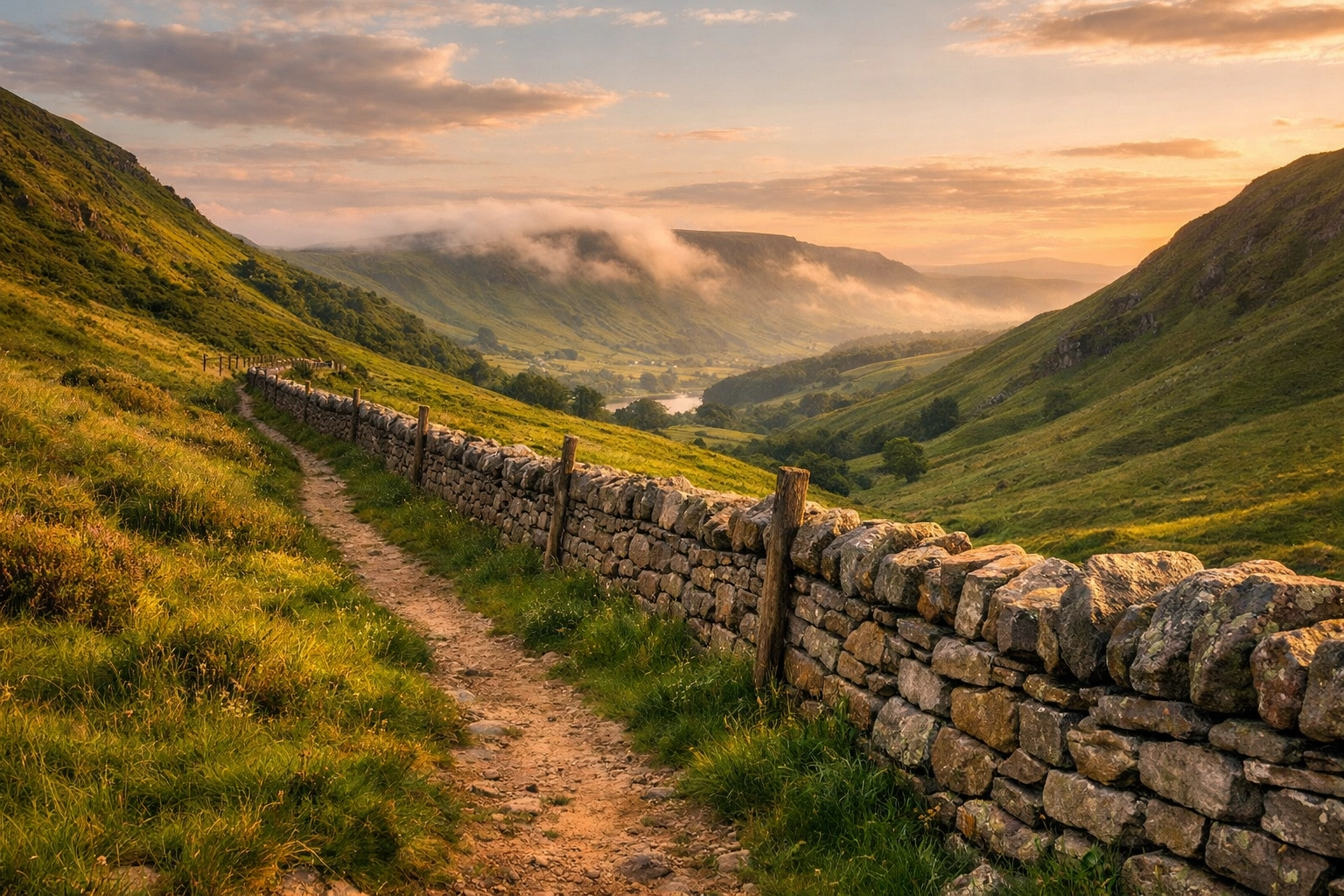
Always identify a "catching feature." This is a big, obvious landmark behind your destination. It tells you if you have gone too far. For example, if your campsite is before a certain road, the road is your catching feature. If you hit the road, stop. Turn around. You missed your mark. This keeps you within a safe "box."
If you want to see these skills in action before trying them alone, consider joining guided walking tours. Learning from an expert in the field is the fastest way to improve.
Stay Safe and Stay Bold
Night navigation isn't about being fast. It is about being accurate. Move slower than you do in the day. Lift your feet higher to avoid tripping. Stop often to listen and look around. Turn off your headtorch occasionally to let your eyes adjust to the natural light. You will be surprised how much you can see with just the moon and stars.
If you get lost, don't panic. Stop. Sit down. Have a snack. Put on a warm layer. Look at your map. Think about the last certain point you were at. Use your compass to orient the map to North. Identify any large features like valley shapes or distant town lights. If you aren't sure, stay put until dawn.
Mastering the dark opens up a whole new side of the UK wilderness. It turns a standard hike into a true camping adventure uk. You will see nocturnal wildlife. You will experience a silence you can't find during the day. You will feel a sense of accomplishment that few other skills provide.
Ready to test your new skills? Grab your map, check your batteries, and head out to your favorite local trail this evening for a practice run.