
Welcome to the world of minimalist shelter. You traded the heavy tent for a lightweight tarp. You wanted to feel the breeze, see the stars, and connect with the woods. Then the rain started. Your tarp sagged, the wind caught the fabric, and you ended up wet and frustrated. Tarp camping is an art form. It requires more skill than a pop-up tent. If your setup is failing, don't give up. Most mistakes are easy to fix with a little knowledge.
Whether you are preparing for a camping adventure uk or joining a wild camping guided uk group, mastering your shelter is essential. Here are 10 reasons your tarp setup isn't working and exactly how to fix them.
1. You Picked the Wrong Spot
Your setup starts before you even unpack your bag. Most beginners pick a spot because it looks pretty. They ignore the ground and the sky. If you pitch in a hollow, water will pool under you. If you pitch under dead branches, you are in danger.
Look up for "widow-makers," check the ground for drainage, find a flat area on a slight rise. Clear away rocks and sharp sticks, notice the direction of the wind, ensure you have sturdy trees for your ridgeline. A good site does half the work for you. Bad site selection is the main reason people have a miserable night.
2. Your Ridgeline is Too Loose
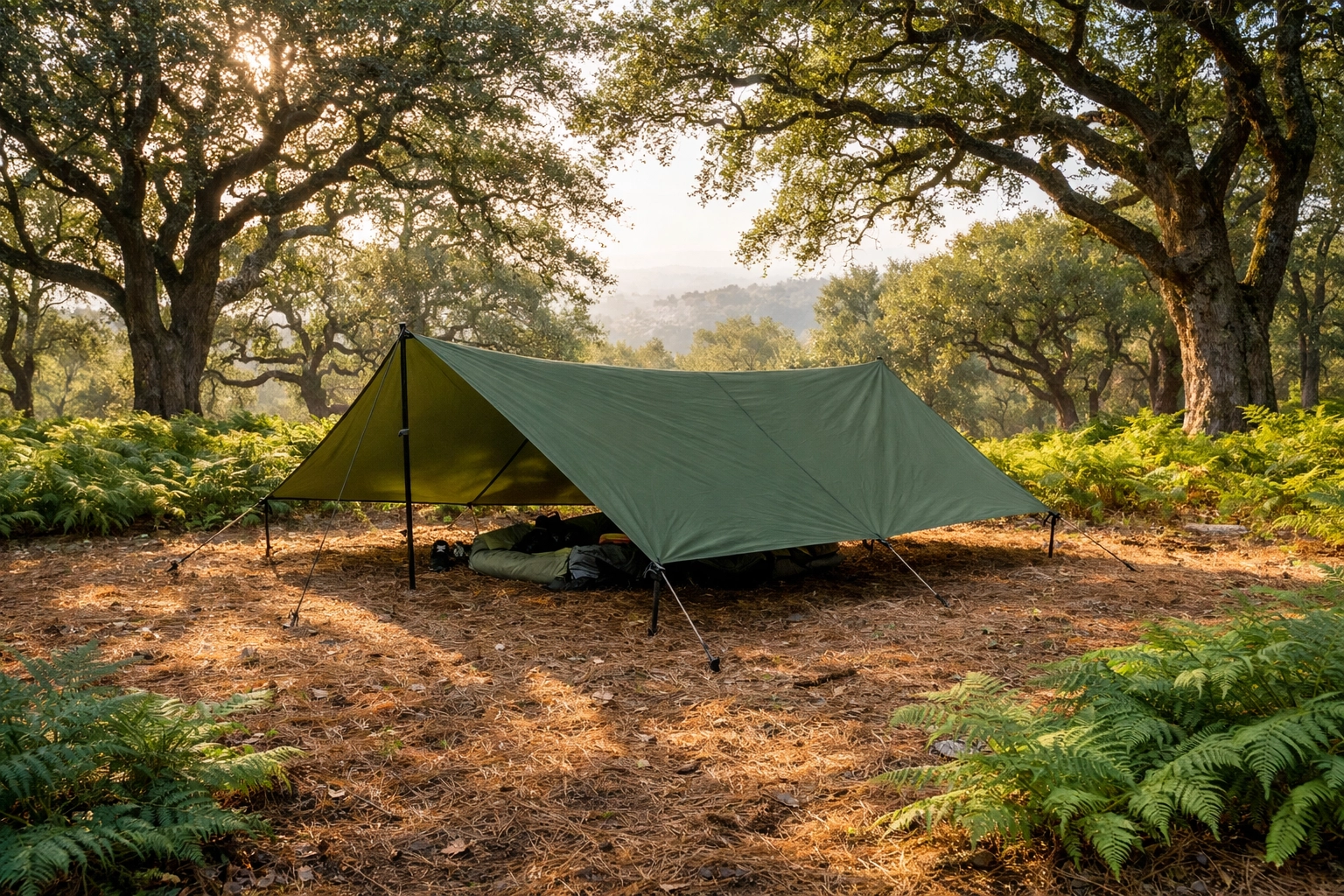
The ridgeline is the spine of your shelter. If the spine is weak, the whole body collapses. Many campers just tie a simple knot and hope for the best. Paracord stretches, trees sway, and the line goes slack within an hour.
You need a mechanical advantage. Use a trucker's hitch to pull the line tight, wrap the cord around the tree multiple times, use a toggle to lock it in place. Your ridgeline should be tight enough to "pluck" like a guitar string. A tight line keeps the tarp crisp and sheds water instantly. Learn more about gear prep in our guide on 10-essential-outdoor-survival-skills-for-your-next-camping-adventure-uk.
3. You Are Using the Wrong Knots
Granny knots will fail you. They slip under tension and jam when they get wet. If you have to cut your cord in the morning because the knot won't undo, you are doing it wrong.
Stick to the classics. Use a Bowline for a fixed loop, use an Evenk hitch for a quick-release start, use a Taut-line hitch for your guy lines. These knots are easy to tie, hold fast under pressure, and come apart easily with cold fingers. Mastering five basic knots will change your entire wild camping guided uk experience.
4. Guy Line Angles are Off
You have a tight ridgeline, but your tarp still flaps in the wind. This is usually caused by poor guy line angles. If you pull the corners straight down, you lose internal space. If you pull them too far out, you lose tension.
Aim for a 45-degree angle from the tarp corner to the ground. This creates a balance between downward pressure and outward tension. Use your trekking poles to add height if you need more room. A well-angled guy line turns a floppy sheet of plastic into a drum-tight roof.

5. You Forgot About Drip Lines
This is the "pro" tip that beginners always miss. It is raining hard. Your tarp is tight. You are dry. Suddenly, water starts dripping from the center of your ridgeline onto your sleeping bag. The water is traveling along the cord from the tree into your dry zone.
Fix this with a drip line. Take a six-inch piece of string, tie it to your ridgeline just inside the tarp edge, let the ends hang down. Surface tension pulls the water down the string and drops it onto the ground before it reaches your bed. It is a simple fix for a common disaster.
6. The Tarp is Too High
In fair weather, a high pitch is great. It feels airy and open. In the UK, fair weather is a rare luxury. If the wind picks up, a high tarp acts like a kite. It catches the gust, pulls on the pegs, and eventually rips out of the ground.
When the weather turns, go low. Pitch the windward side of the tarp all the way to the ground. Create a "lean-to" shape that deflects the wind over the top. Sacrifice the view for security. Staying low keeps the heat in and the rain out. This is a core part of 15-essential-survival-skills-to-level-up-your-wild-camping-experience-in-the-uk.
7. Condensation is Ruining Your Sleep
You woke up damp, but it didn't rain. This is condensation. You are breathing out moisture all night. If your tarp is pitched too low or sealed too tight, that moisture hits the cold fabric and turns back into water.
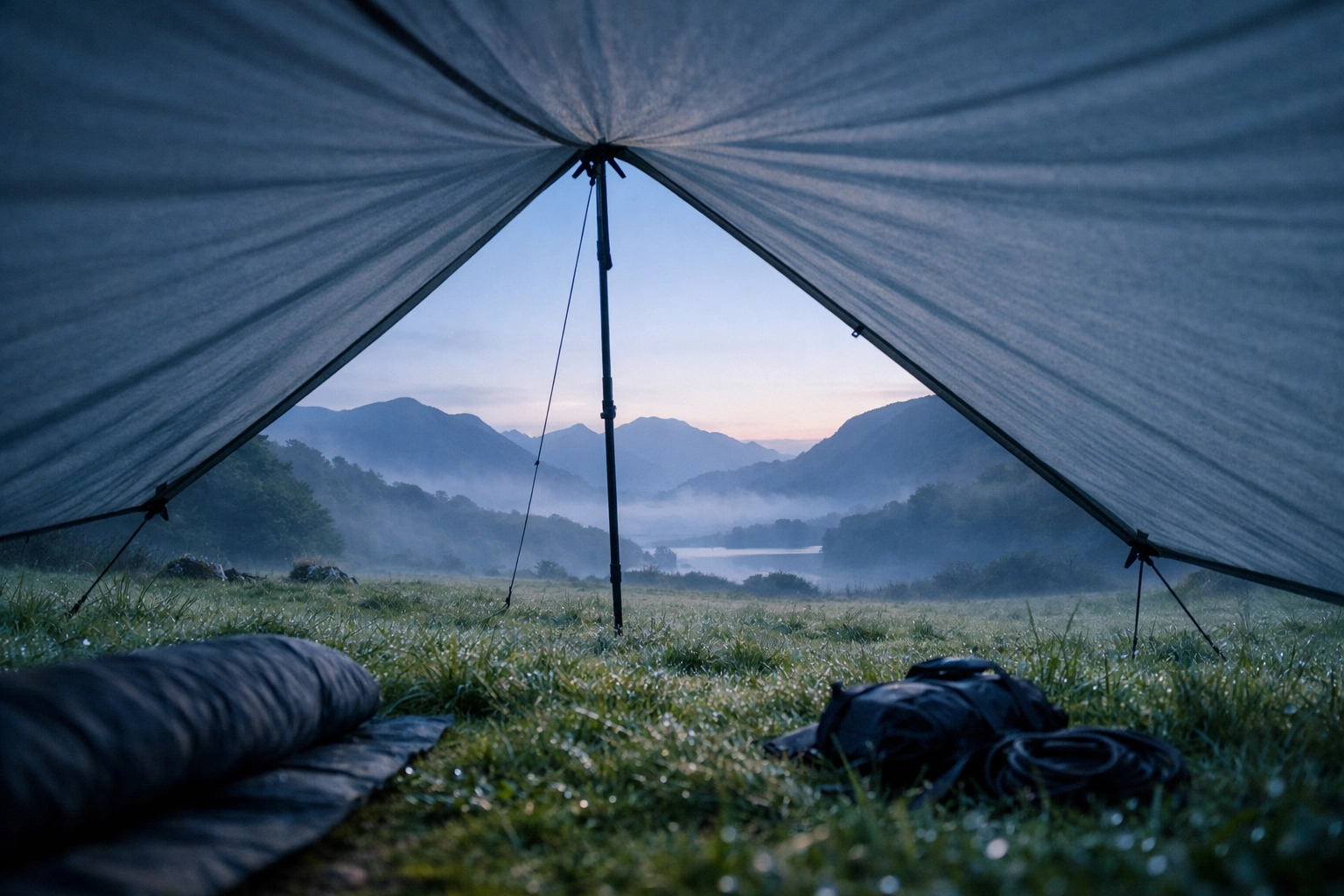
You need airflow. Leave a gap at the bottom of your tarp, open the ends of your A-frame, let the breeze move through. A tarp is not a tent. It shouldn't be airtight. Proper ventilation is the difference between a dry morning and a soggy sleeping bag.
8. Your Pegs Are Failing
Not all ground is the same. Standard aluminium pegs work in garden soil, but they fail in the wild. In the Lake District, you hit rocks. In the New Forest, you hit soft sand or deep leaf litter.
Carry a mix of pegs. Use Y-beams for general soil, use heavy-duty steel for rocky ground, use "dead-man" anchors (buried sticks) for sand or snow. Always push your pegs in at a 45-degree angle facing away from the tarp. If the wind is strong, put a heavy rock on top of the peg for extra security.
9. Nylon Stretch Issues
Many modern tarps are made of Silnylon. It is light and strong, but it has a secret flaw. Silnylon stretches when it gets wet or cold. You pitch it tight at 8 PM, then it rains at midnight, and suddenly the tarp is sagging onto your face.
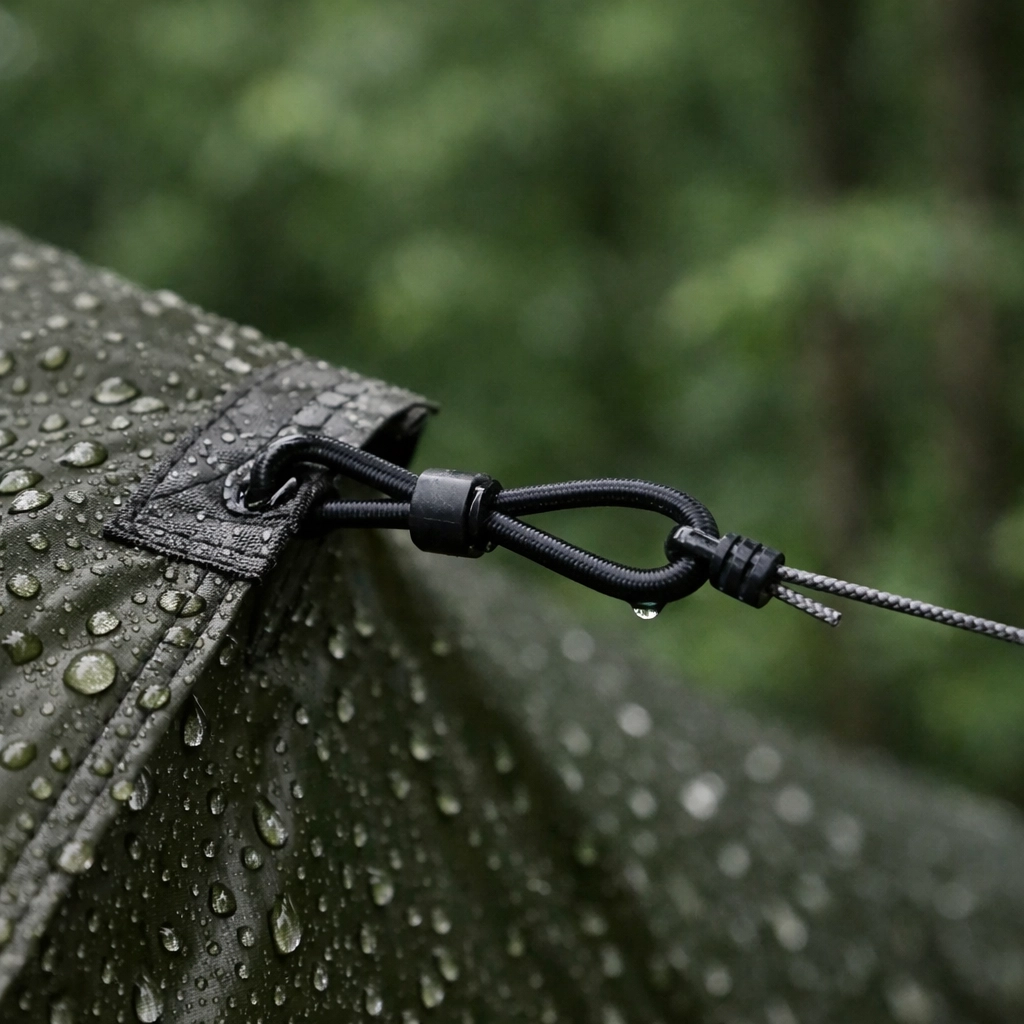
Check your tension before you go to sleep. Use shock cord loops on your guy lines. These bungee-style loops act as tensioners, they take up the slack as the fabric expands, keeping your pitch tight all night long. No more midnight adjustments in the pouring rain.
10. You Are Using the Wrong Geometry
An A-frame is the standard pitch, but it isn't always the best. If you are in a narrow spot between trees, try a Diamond pitch. If you are against a stone wall, try a Lean-to. If you want maximum protection, try a C-fly or a "Plough point."
Experiment with different shapes. Your tarp has multiple tie-out points for a reason. Don't be afraid to use trekking poles, paddles, or found wood to change the shape. Match your geometry to the terrain and the wind direction. Flexibility is the greatest strength of tarp camping.
Take Action
Tarp camping is about trial and error. Don't wait until you are on a mountain to practice. Take your tarp to the local park, set it up in the rain, try every knot, test every angle. Mastery comes from repetition.
Grab your gear, head into the woods, and practice your ridgeline today.