
Welcome to the wild. You are deep in the woods. The wind is picking up. Your tent peg just snapped. Do you reach for a expensive plastic replacement? No. You reach for your rope. You tie a knot. You solve the problem.
Stop buying every gadget in the shop. Complex gear fails. Good knots do not. Mastering a few simple loops changes everything. It turns a stressful night into a successful camping adventure uk. You gain confidence. You lose weight from your pack.
Knots are the ultimate outdoor survival skills. They cost nothing. They weigh nothing. They work every time.
1. The Bowline: The King of Knots
The Bowline is your best friend. It creates a fixed loop at the end of a rope. It will not slip under load. It is easy to untie even after heavy tension.
Use this to tether gear. Secure your hammock. Create an emergency handle.
Follow these steps:
- Form a small loop in the rope.
- Leave enough tail for your main loop.
- Pass the tail up through the small loop.
- Go behind the standing part of the rope.
- Bring the tail back down through the small loop.
- Pull the tail and the loop to tighten.
Imagine a rabbit coming out of a hole, going around a tree, and jumping back in. It is that simple. This is essential for any wild camping guided uk experience.
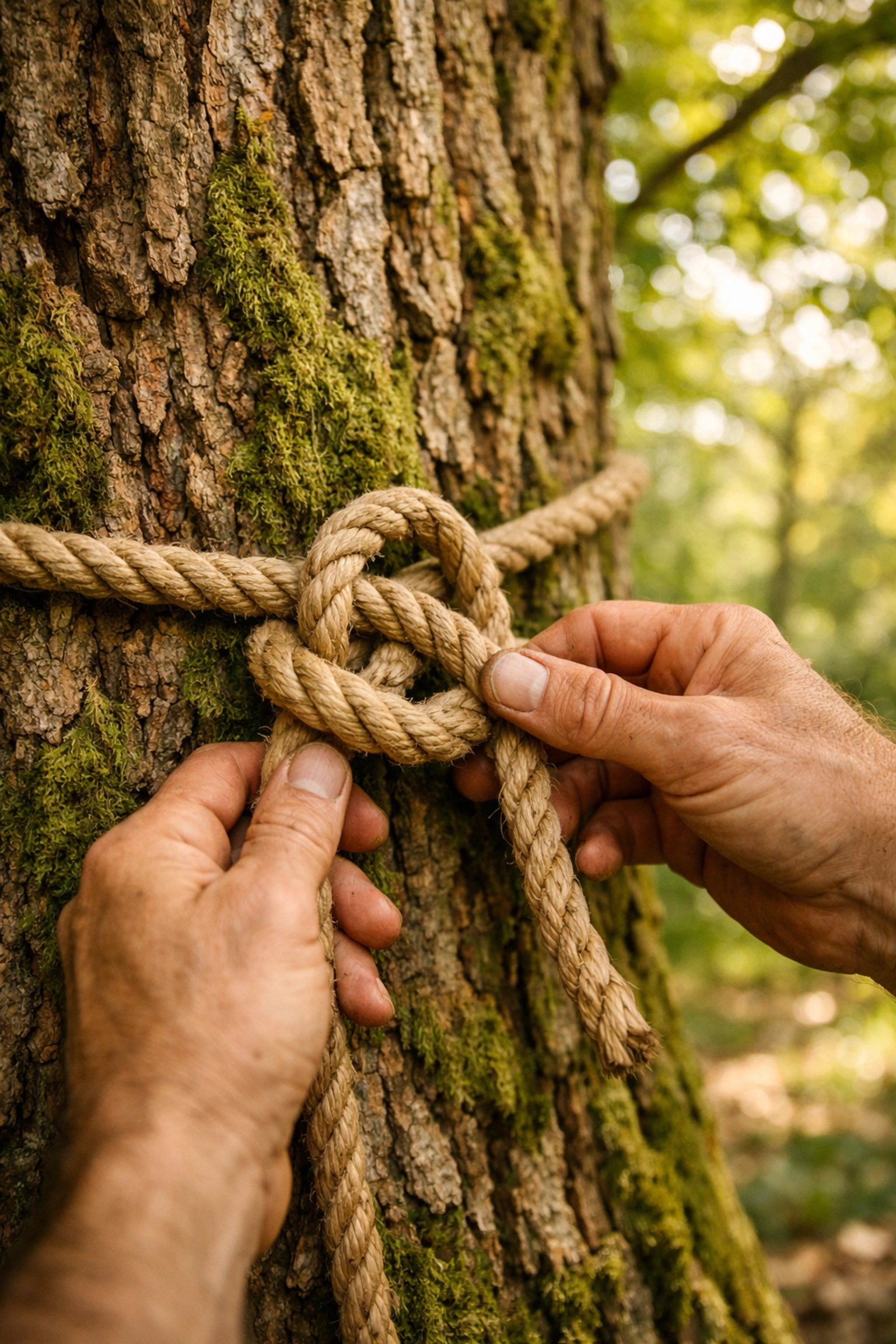
2. The Square Knot: Joining Forces
Sometimes one rope is not enough. You need to join two pieces. The Square Knot is the classic choice. It is perfect for securing bandages or tying up bundles of firewood.
Do not use this for critical safety loads. Use it for light utility.
Follow these steps:
- Hold one rope end in each hand.
- Cross the left end over the right end.
- Tuck the left end under the right.
- Now cross the right end over the left end.
- Tuck the right end under the left.
- Pull all four ends to cinch.
Remember: Left over right, then right over left. If you do it wrong, you get a Granny Knot. It will slip. Watch your loops. Keep them symmetrical.
3. The Clove Hitch: Speed and Simplicity
You need to tie a rope to a tree fast. You need to secure a tarp pole. Reach for the Clove Hitch. It is a quick-release anchor.
It works best when the rope is under constant tension. It is the backbone of many essential survival skills.
Follow these steps:
- Wrap the rope around the post.
- Cross the rope over itself to form an X.
- Wrap around the post again.
- Tuck the end under the second wrap.
- Pull both ends tight.
Practice this until you can do it in the dark. In the UK rain, you will be glad you did.
4. The Trucker’s Hitch: Power and Tension
Need to secure gear to a roof rack? Need a drum-tight ridgeline for your tarp? The Trucker's Hitch gives you mechanical advantage. It works like a pulley system.
This knot is a game-changer for your camping adventure uk. It keeps your shelter stable in high winds.
Follow these steps:
- Tie a loop in the middle of your rope using an overhand knot.
- Pass the free end around your anchor point.
- Feed that free end through the loop you made.
- Pull the end to create massive tension.
- Secure it with two half-hitches.
You can now tighten ropes with your bare hands. No plastic tensioners required.
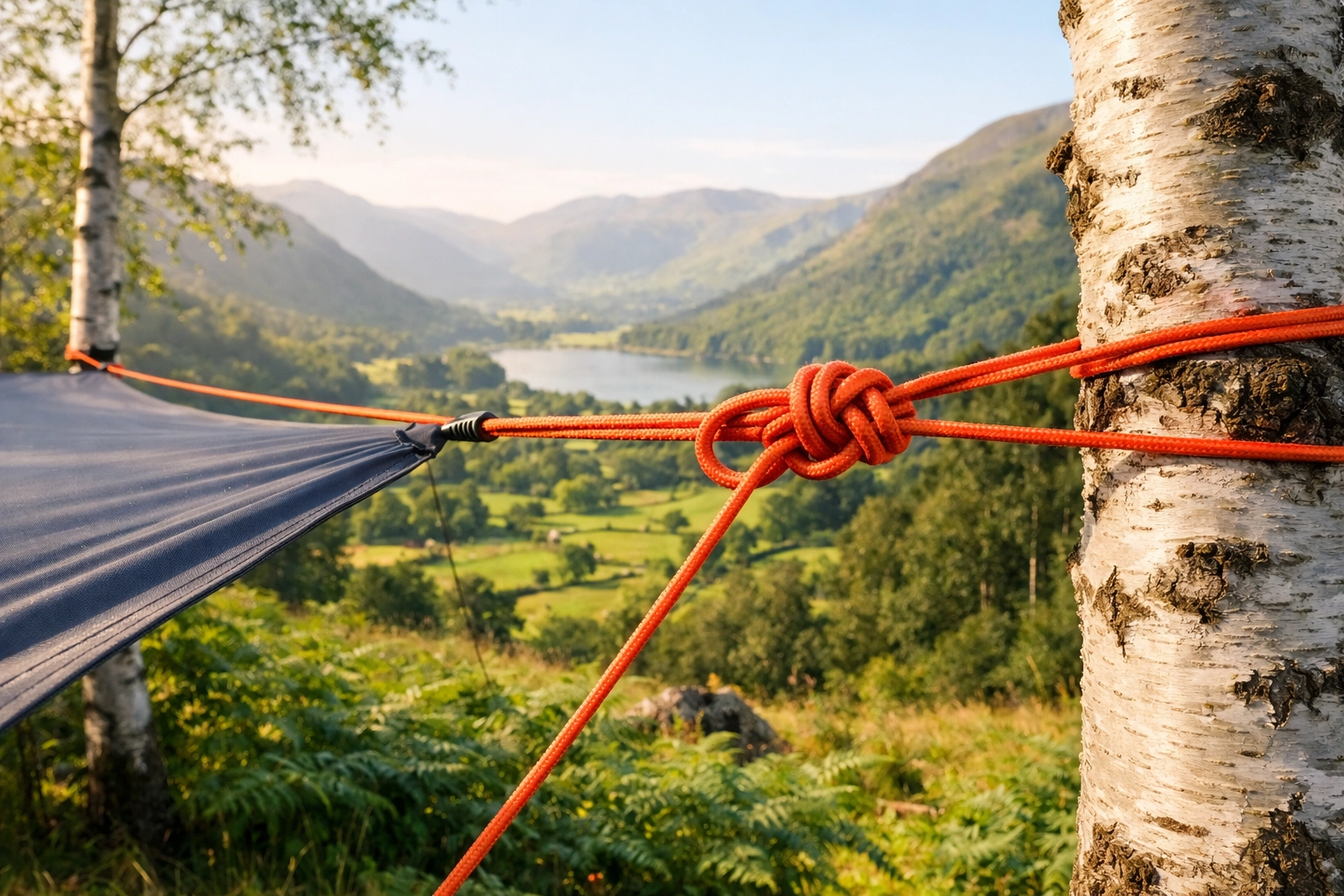
5. The Prusik Knot: The Friction Hitch
This knot is magic. It slides freely when loose. It bites hard when pulled. It is used by climbers for safety lines.
Use it to attach gear to your tarp ridgeline. Use it to create adjustable guy lines. It is one of the most versatile survival skills to master.
Follow these steps:
- Use a smaller loop of cord.
- Lay the loop over your main rope.
- Pass the knotted end of the loop through the other end.
- Wrap it through again, inside the first wrap.
- Repeat for a third wrap if the rope is slippery.
- Pull it tight to set the friction.
Test it. Slide it. Pull it. See how it grips.
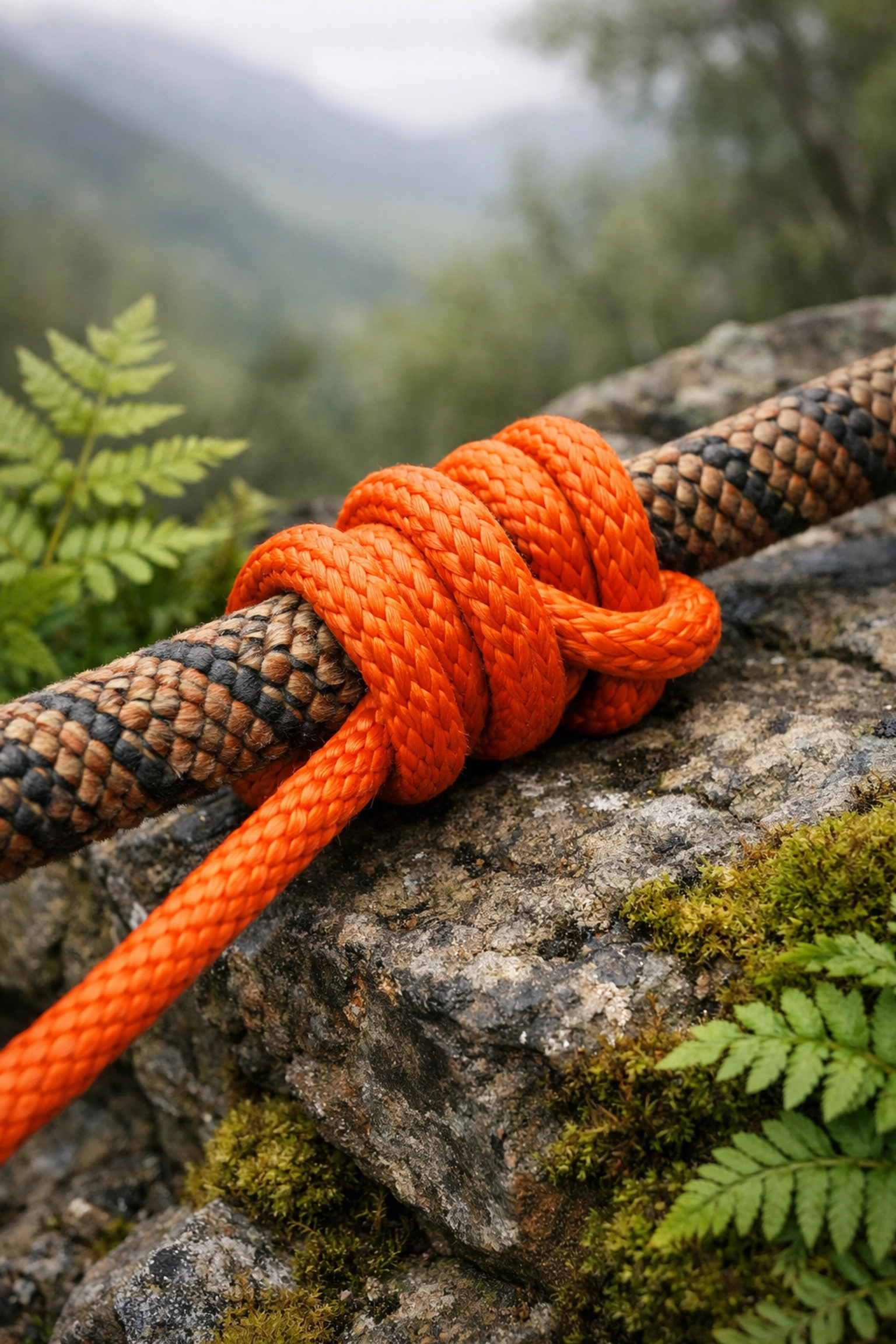
6. The Sheepshank: Shorten Without Cutting
You have too much rope. You do not want to cut it. You want to shorten it without losing strength. The Sheepshank is the answer.
It is ideal for taking up slack in long lines. It only holds under tension.
Follow these steps:
- Gather the extra rope into an S-shape.
- Make a loop in the standing part of the rope.
- Pass the loop over one end of the S.
- Repeat on the other side.
- Pull the main line tight.
The middle section stays secure. When you let the tension go, the knot vanishes. It is temporary and efficient.
7. The Figure-Eight: The Ultimate Stopper
You don't want your rope sliding through a hole or a pulley. You need a bulky knot that stays put. The Figure-Eight is more stable than a standard overhand knot.
It is easy to see if it is tied correctly. It is also easy to untie after it has been jammed.
Follow these steps:
- Make a loop in the rope.
- Pass the tail end around the standing part.
- Bring the tail back through the loop from the front.
- Pull tight to see the "8" shape.
This is a foundation for climbing and guided hiking tours uk. It keeps you safe.
Why Skills Beat Gear Every Time
You can buy a £500 tent. You can buy fancy titanium pegs. But if the wind hits 40mph in the Lake District, gear can fail. Your ability to adapt does not.
Learning knots is about freedom. It is about knowing you can fix a broken strap or build a shelter from a piece of plastic and some string. This mindset is what separates a tourist from an adventurer.
When you join a wild camping guided uk group, you see these skills in action. You see how experts move through the landscape with less weight and more efficiency.
Rope Care and Maintenance
Your knots are only as good as your rope. Treat your cordage with respect.
- Keep it clean. Dirt acts like sandpaper on the fibers. Wash your rope in cool water if it gets muddy.
- Check for fraying. A damaged rope is a dangerous rope. Cut out sections that look worn.
- Avoid the sun. UV rays break down synthetic fibers. Don't leave your rope in the garden for weeks.
- Store it dry. Mould can ruin natural fibers and weaken synthetics over time.
Putting Your Skills to the Test
Don't wait until you are shivering on a hillside to practice. Grab a piece of paracord now. Sit on your sofa. Tie these knots until your hands remember the movements.
Once you have the basics, take them outside. Use a Trucker's Hitch to hang a clothesline in your garden. Use a Bowline to secure a bag to your bike.
The British countryside is beautiful but unforgiving. The weather changes fast. Being prepared with essential outdoor survival skills makes every trip safer and more enjoyable.
Whether you are exploring the Lake District or trekking through the Scottish Highlands, these 7 knots will serve you well. They are the tools that never break.
Stop relying on gadgets that require batteries or instructions. Rely on your hands. Master these hacks. Transform your next camping adventure uk.
Pack your bag, grab your rope, and head out into the open sky.